
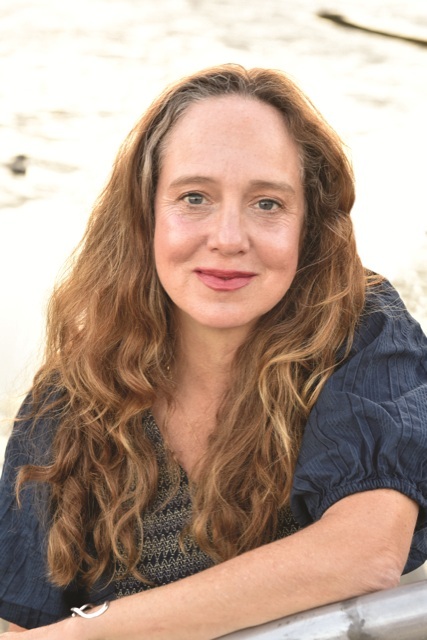
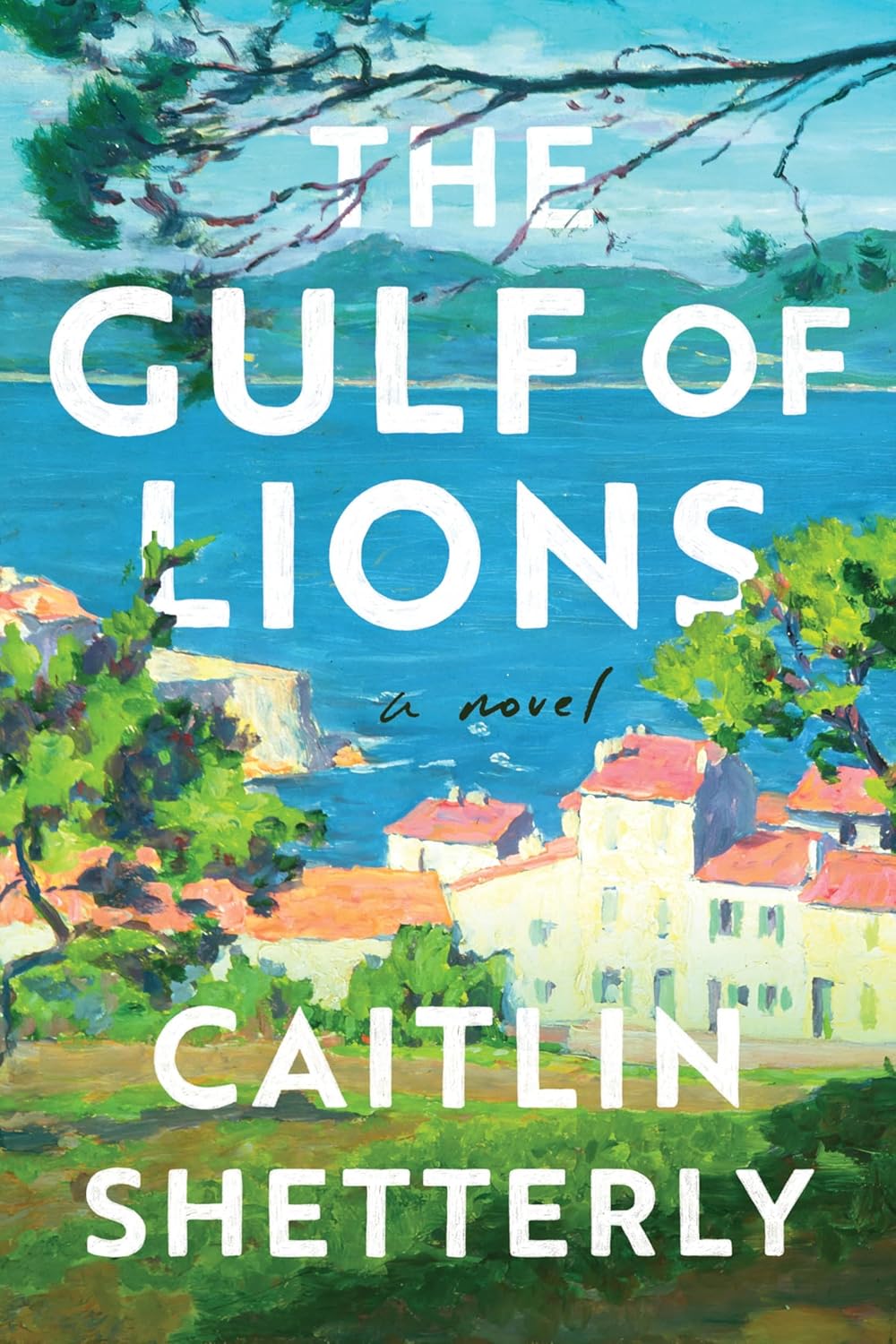
In Caitlin Shetterly’s novel “The Gulf of Lions,” Alice is recovering from breast cancer in the wake of her husband’s affair when she is assigned to write a magazine story about camping in France. Alice and her two daughters — 13-year-old Sophie and 8-year-old Iris — stray off the beaten path for an intimate glimpse of France’s landscape, culture and people. A follow-up to Shetterly’s debut novel, “Pete and Alice in Maine,” “The Gulf of Lions”offers a tender portrait of motherhood, mistakes, healing and forgiveness.
She spoke with the Portland Press Herald about breast cancer, France and living moment-to-moment.
Six months after you sent “The Gulf of Lions” to your editor, you were diagnosed with breast cancer — the same exact kind of cancer you’d researched for Alice. Can you share a little bit about that experience?
Long before I knew I had cancer, I really wanted to investigate a mother who has nursed her children, had a difficult marriage and gone through the isolation of COVID. Then she finds out she has cancer and needs to lose her breast. I wanted to track her coming back to herself, finding her own sensuality again, feeling sexy again — not sexual — just alive in her body. The way jean shorts fit her, how they feel against her skin, the way a blouse flutters in the breeze. What is that like for a middle-aged woman who has lost a breast, whose husband’s betrayed her and she’s gone through this terrifying trauma?
When I found out I had cancer, I didn’t know what to do. I was astounded. I was also kind of mad because I felt afraid that people were going to think the book is about me. I’ve come around to realizing there’s nothing I can do to control that.
What inspired the novel?
I lived in France before I went to college. After COVID, my family and I went back in 2022. I had completed my book, “Pete and Alice in Maine,” in 2021, and we had this amazing once-in-a-lifetime trip. By that, I don’t mean it was fancy or expensive — it was that we were just so available.
When I was there, there was a novel that I was interested in starting — and I still want to write — that took place in France. I was making notes for it, but I kept feeling like I wanted Alice and her daughters to come here. I wanted to share it with her. People you love — you want to share things with them. They became really real for me.
Alice and a friend she makes in France, Marie, tell each other their secrets, and it’s so much more intimate and emotionally satisfying than when Alice communicates with her American friends via text. The book seemed to be saying something about the way the French see people. What interested you there?
I think that Americans are so obsessed with, “What do you do?” “What do you drive?” “How much money do you make?” That is not the first question a French person asks you. They don’t ask you what you do. They aren’t going to define you by your job. They’re much more interested in just discussing your viewpoint on things.
It’s a belief system that we are more than just what we do, what we drive, what we look like. It’s more like, “What do you love?” “What moves you?” “What do you like to eat?” It feels much more open and expansive.
There was so much wisdom about parenting in the novel. You write, “Sometimes parenting, I am slowly understanding, is about undoing everything you said before.” How did your experience of parenting help shape the character you wanted Alice to be, and what were you hoping her experiences might offer readers?
I was interested in taking some things from my life, some questions I had, some thoughts about parenting and about mothers who make mistakes — and loving and forgiving them anyway — and putting that with a Gen X mother who really does want to fix things but whose life goes off track. She does it messily and she makes mistakes. I wanted to put my arms around the whole thing.
Like so many endings of great books, the ending felt both surprising and inevitable. At what point in your writing process did that ending come to you?
I can’t remember writing that ending. It just poured out of me over a few days.
If you look back at the beginning of that book and you read it again, you’ll see I was already telling you, but I hadn’t told you. Did I know it was going to hurt that much? No. That ending cost me a pound of flesh.
How does it pour out of you? What’s your process?
I write for 15 minutes a day, and then I’m vacuuming and cleaning up kitty litter and figuring out what to make for dinner. A lot of it happens when I’m running, or when I’m baking a pie or chopping up carrots.
I’m a very grounded person, but let me just say, it’s like my hands become a vessel for this thing. I don’t feel entirely conscious. At the end of that book, I was crying. I had no idea how this was going to go, and I was in pain because of the pain that my characters were in.
I used to study acting, and I had this amazing teacher. She used to say, “It’s about living moment-to-moment.” That’s how I write: it’s moment-to-moment. Being honest, being real. This is how we all live in the world — we actually live moment-to-moment. What happens when you drop into yourself and you experience it moment-to-moment? That’s how I write, and I think that’s what makes it honest, and real and surprising. That’s how I drop in. I’m going from one emotional moment to the next, completely open.
Do you have more books planned for Pete and Alice?
I feel like I wrote the best book I could possibly write about that family with that second book, and I’ve got other things I want to write. It takes me a while to calm down from one book to write another book. I find all the stuff — the editing, publicity — very disregulating, so I’ve got to calm down and drop back in. That takes time for me, and I’ve got this other world I’m interested in. I went to Brown, and it’s centered on Brown. It’s a made-up story, but kind of like I wanted to write a love letter to France, I want to write a love letter to Brown. I loved it there. I want to write a complicated story about a family and their connection to the school.
Liz Iversen’s writing appears in The New York Times, Gulf Coast, Creative Nonfiction and elsewhere. She lives in Maine, where she is at work on a novel.
IF YOU GO
Caitiln Shetterly will be in conversation with author Richard Russo and NPR Weekend Edition Saturday host Scott Simon at Mechanics’ Hall in Portland at 6 p.m. May 20. For more, go to mechanicshallmaine.org
We invite you to add your comments. We encourage a thoughtful exchange of ideas and information on this website. By joining the conversation, you are agreeing to our commenting policy and terms of use. More information is found on our FAQs. You can update your screen name on the member's center.
Comments are managed by our staff during regular business hours Monday through Friday as well as limited hours on Saturday and Sunday. Comments held for moderation outside of those hours may take longer to approve.
Join the Conversation
Please sign into your Press Herald account to participate in conversations below. If you do not have an account, you can subscribe here. Questions? Please see our FAQs.