
When his estranged parents die in a car accident, Eben Turner returns to the orchard where he was raised, after a decade away. His return drudges up his inheritance, his forbidden love of the past and the religious judgment of his rural town. As he faces the love of his youth — the pastor’s son, Chris Hartley — these young men must reckon with their queer coming-of-age.
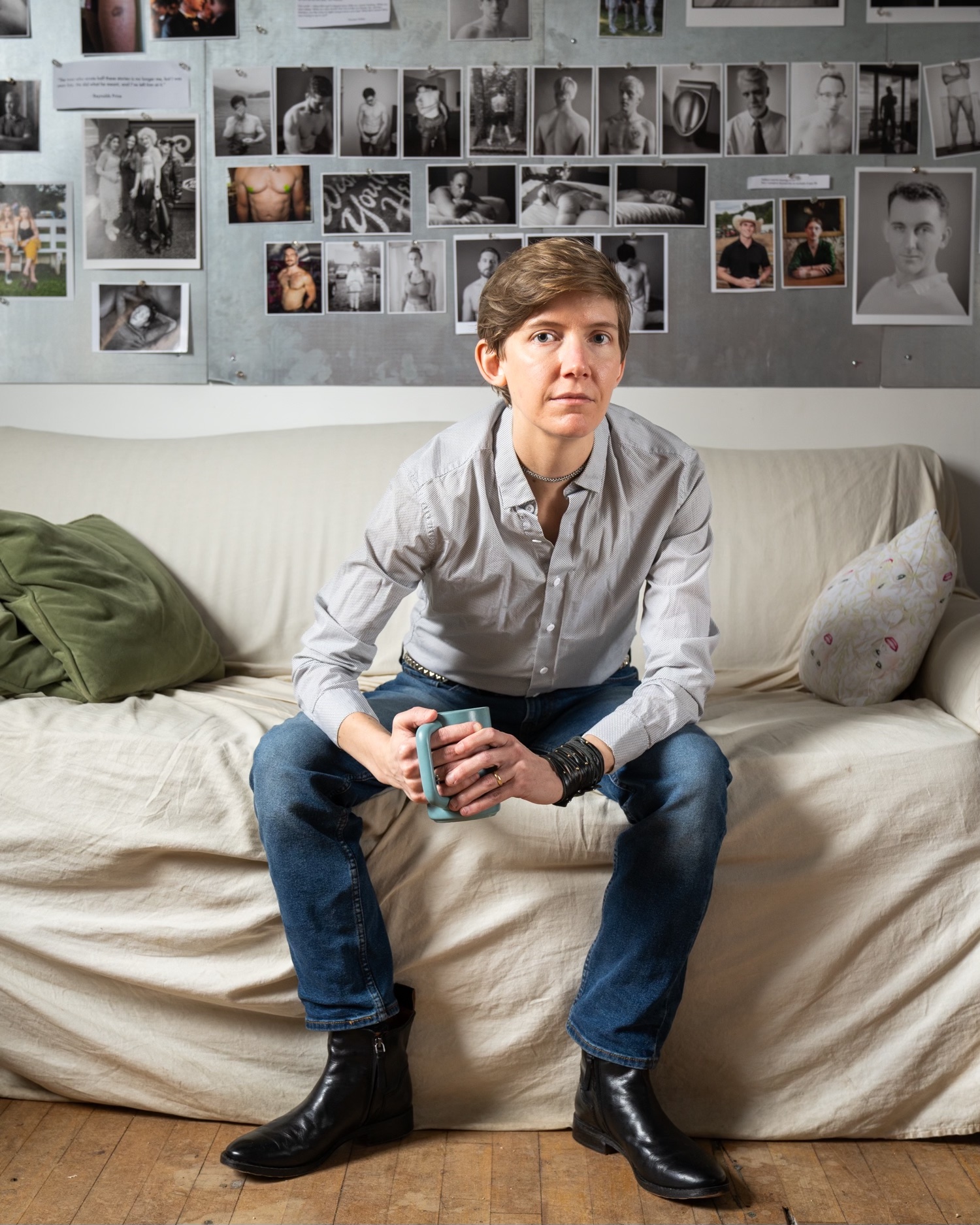
The story unfolds through these men’s dual perspectives in Rylan Hynes’ debut novel, “Grafting.” Hynes is a rising star of Maine’s writing community — they have received fellowships from the Maine Writers and Publishers Alliance and serve as the communications and editorial director at The Telling Room. They spoke with the Portland Press Herald about the depths of Maine’s apple history, forbidden love and the journey that comes from the most intimate of exiles.
How did you know you wanted to set a story at an apple orchard?
I’m born and raised in Maine. There are so many communities that have an apple orchard at their heart. When I started writing this book, I was commuting from Auburn to Farmington, where I was working at a poetry press. I would drive by these beautiful apple orchards all the way there. My mind wandered a lot on that drive, and I just got curious about them. I started to uncover this very rich and interesting history of apples in New England and in Maine — what a key part of the agricultural landscape they’ve been, and also what it meant to have an apple orchard hundreds of years ago. It meant that you were committed to a tract of land and were going to stay there. Most of the apple trees that were grown centuries ago were actually for cider. So the thought was, “I’m going to stay here; I’m going to drink the fruits of this land.” Maine used to have so many different varieties of apples. It’s been watered down in the marketplace, but there are still orchards in Maine where you can buy these obscure apples. People have worked very hard to preserve that history of orcharding.
Grafting is this process that allows preservation. It becomes a touchstone during this queer coming-of-age tale for your two main characters. Where did the novel start for you?
For me, it was really important to tell a rural queer story. “Brokeback Mountain” was such a pivotal moment for our generation. What I received a lot as a young person was an urban, metropolitan, very camp version of queerness. In media, I didn’t see a lot of representation of people like me. When I encountered “Brokeback Mountain,” I thought, these people are camping, tending livestock, riding horses and eating too many beans around a campfire. These are all things that are closer to what my childhood was like in Maine. I wanted to get into that — what it’s like to be queer in a rural space where I think a lot of queer people actually feel more comfortable because nature doesn’t judge you. There’s a lot of peace and contentment, and just being outdoors where you can be yourself. But of course, politically, there’s a lot of friction that can come along with that. I was interested in that story. I wanted to read it, so I figured I should probably write it.
Another thread that both of these young men have in the novel is tough relationships with their parents. How did you navigate gender in these parallel relationships?
With the two families, I was interested in exploring what those different dynamics could look like — and what different kinds of harm are queer people experiencing. There are very explicit physical threats of violence that people get and then this more passive-aggressive display, which is what Chris experiences, a kind of “I love you, but.” The family cares about him but doesn’t understand how to exhibit that care in an appropriate way.
How did an argument about gender start to make a case for itself as you wrote the novel? I’m thinking of the parallel father figures, especially.

Both of the father figures struggle with the fact that their sons aren’t performing their masculinity in the way that they want or expect. For Chris and Eben, they both naturally have a softer, better relationship with the maternal figures in their life. Chris’ mom knows who her kid is and also struggles with trying to square that with their household and the established values where they are.
There are so many cisgender men who are terrified of anything remotely soft about masculinity and what that might mean. There’s this real fear of different kinds of masculinity. At the time “Grafting” takes place, the culture is trying to reject that as an option, while at the same time culture is expanding what gender means. It’s more of a very loud minority of people who think that they can restrict and set these narrow gender norms and what that means in terms of sexuality and gender presentation. As a trans author, I definitely have some tension with that. My trans childhood and my queer childhood didn’t exactly look like this, but there’s a need for us to acknowledge that there are many different ways of being masculine, feminine and that there’s no real right answer.
Were you reading field guides about orcharding as you wrote this book? Is some of your vision about living in Maine?
I think yes to both of those things. I definitely read a lot of really nerdy books about orchards, and my husband started to tease me about it eventually. I also just really love Maine. I think that a lot of people from Maine adore this place. I lived in Chicago for about three years, and even though that city was rich in so many ways, it became apparent to me that this is not where I belong. I need to be closer to nature. That’s part of what the book gets at. For some people, that is just where they need to be to thrive.
The book’s dedication is: ‘For the rural queers.’ What is your hope when the book comes out for that community specifically?
I hope that they feel some affirmation in it, and that it gives them a sense of belonging to that environment and nods to the fact that queer people exist in this space. One of the books that I read when I was doing a lot of research for this was “Farm Boys” by Will Fellows. As I was reading those firsthand accounts, there was so much that resonated with me about these gay men living in the Midwest. There are some people who had a strong connection to the farm that they grew up on, and some people who never wanted to see it again, and some people who wish that they could go back but live in a more urban space and believe, “I don’t think I could make it out there because I wouldn’t be welcome.” I hope that some readers will say, “Yeah, I do have a right to be in this space,” and hopefully seeing some other people grappling with that will spark some joy.
Lisa Hiton is a writer living in Brooklyn, N.Y. She is the author of the poetry collection “Afterfeast,” and her work has been featured or is forthcoming in the Kenyon Review, The Slowdown, NPR, New South and elsewhere.
We invite you to add your comments. We encourage a thoughtful exchange of ideas and information on this website. By joining the conversation, you are agreeing to our commenting policy and terms of use. More information is found on our FAQs. You can update your screen name on the member's center.
Comments are managed by our staff during regular business hours Monday through Friday as well as limited hours on Saturday and Sunday. Comments held for moderation outside of those hours may take longer to approve.
Join the Conversation
Please sign into your Press Herald account to participate in conversations below. If you do not have an account, you can subscribe here. Questions? Please see our FAQs.