


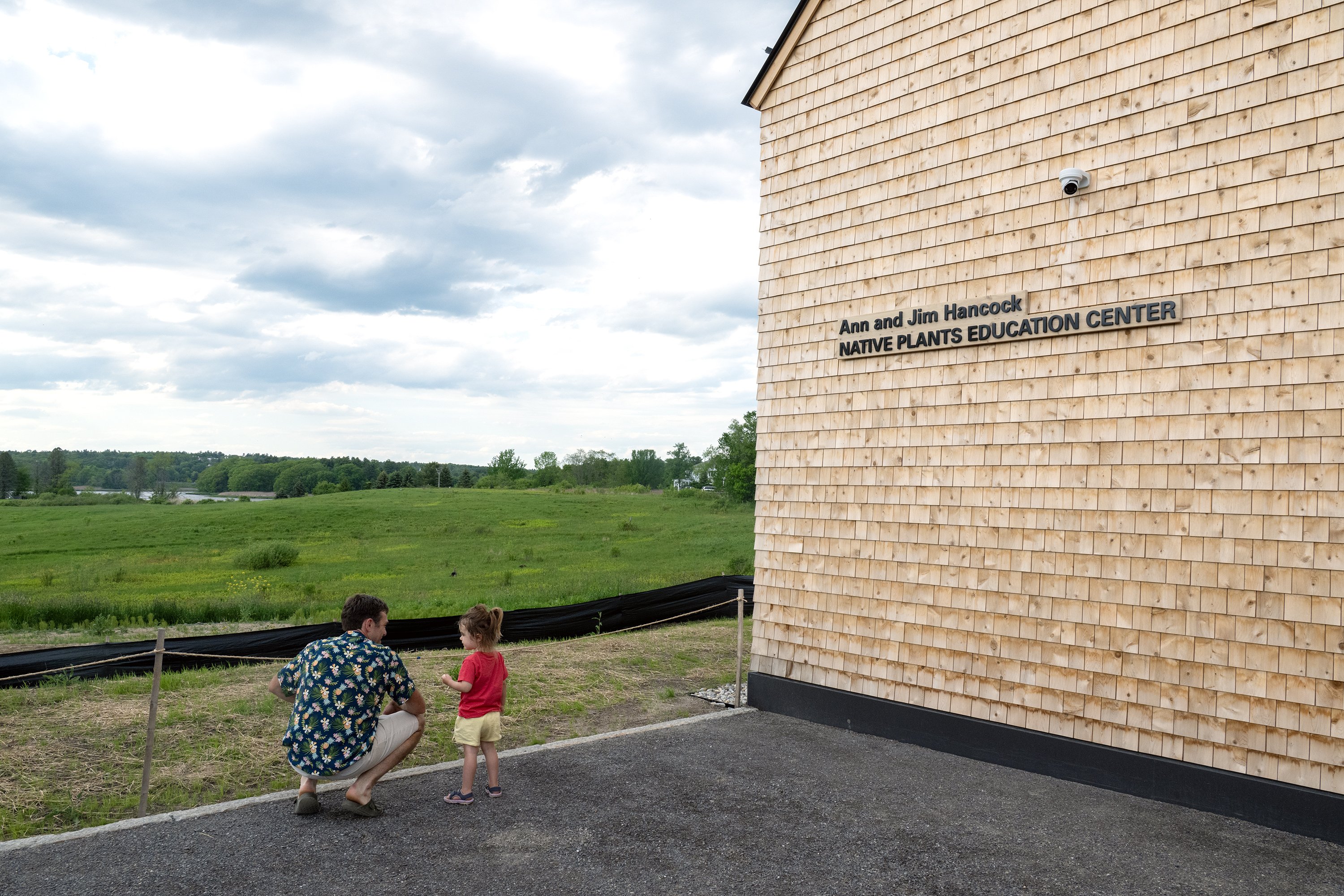
FALMOUTH — On one side of the Ann and Jim Hancock Native Plants Education Center, two birders scan the grassy field with binoculars. On the other side, an array of native plants sit in pots, ready to be distributed to homeowners across Maine who are looking to support local ecosystems.
These two sides also represent the mission of the new education building at Maine Audubon’s Gilsland Farm, the headquarters of the statewide environmental organization.
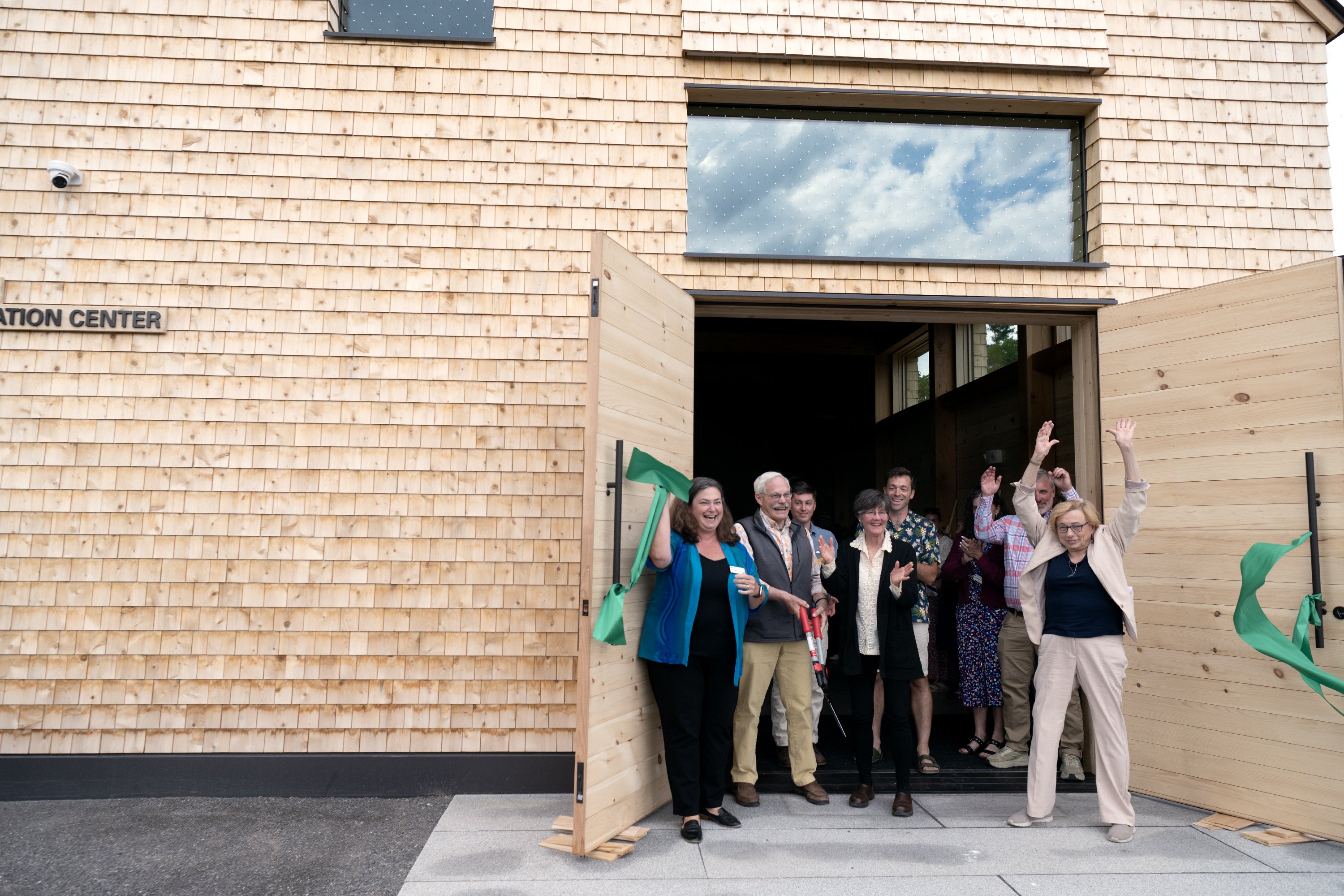
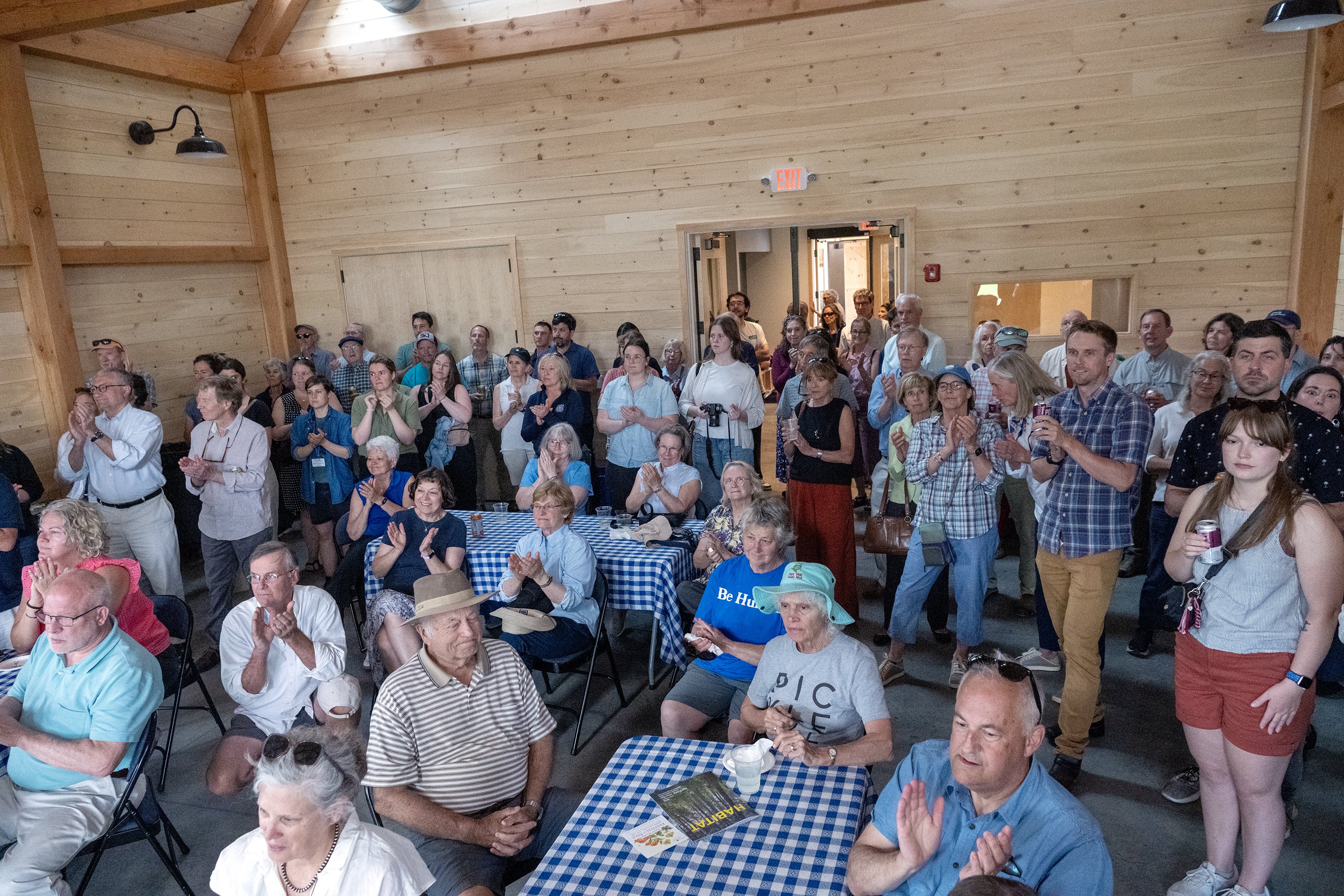
Maine Audubon cut the ribbon on the building Wednesday, joined by over 200 supporters, donors and staff. The center is dedicated to the organization’s native plant program and associated events.
The building was initially supported by a donation from Falmouth residents Ann and Jim Hancock. Ann Hancock grew up in Falmouth, where she fell in love with nature, leading her to a career in horticulture. The Hancocks’ passion that led to the center started when they read the book “Bringing Nature Home,” which argues for homeowners planting native species to help insects, birds and other wildlife thrive.
Through volunteering and donations, the couple helped Maine Audubon start its native plants program in 2016. The initiative’s goal is to help migratory birds in Maine that live on insects that in turn need native plants to survive.
“This new building and space has been years in the making, and will serve as the hub of our education and habitat restoration activities, impacting communities and landscapes statewide,” said Ann Hancock.
In its first year, the nonprofit sold less than 500 plants. Next week at its Native Plant Festival and Sale on June 6, it is on track to sell 5,000 native ferns, shrubs and trees.
Maine Audubon raised over $5 million for the project, with donations ranging from $500 to $1.5 million, said Maine Audubon chief development officer Kate Lewis.
“This center gives our movement a home,” said Andrew Tufts, Maine Audubon’s native plants program manager.
In addition to local representatives, Gov. Janet Mills joined the celebration just in time for the ribbon cutting, giving the Hancocks the countdown to close the oversized scissors.
Beyond the native plant center, which includes both a large event space and storage area for research equipment, the project included building an annex for storing facilities equipment and renovating the farmhouse where Maine Audubon staff meet. Of the 50 full-time Maine Audubon staff across the state, 40 are based in Falmouth, with dozens more seasonal workers joining for summer programming.
The design incorporates a concept seen on many farms across Maine, “big house, little house, back house, barn,” said Sam Bell-Hart of Kaplan Thompson Architects. The “barn” is the native plants center, which was built where an older barn stood when the property was gifted to Maine Audubon in 1974. Gilsland Farm gets about 100,000 visitors annually, according to the Maine Audubon website.
“The work of every project, function and staff member at Maine Audubon will benefit directly from the spaces we are introducing to the public today — not just the native plan program, which is super important — but every program,” said Maine Audubon director of education Eric Topper.

We invite you to add your comments. We encourage a thoughtful exchange of ideas and information on this website. By joining the conversation, you are agreeing to our commenting policy and terms of use. More information is found on our FAQs. You can update your screen name on the member's center.
Comments are managed by our staff during regular business hours Monday through Friday as well as limited hours on Saturday and Sunday. Comments held for moderation outside of those hours may take longer to approve.
Join the Conversation
Please sign into your Press Herald account to participate in conversations below. If you do not have an account, you can subscribe here. Questions? Please see our FAQs.