

There is a certain sense of renewal and optimism that accompanies the creeping shift of the changing seasons. The visceral awe at the first sights of buds on trees. The full-blown delight of basking in the inaugural rays of the seemingly fleeting sun. I peer out the office windows to harbor in the novel lushness of my surroundings, which seemed deeply bleak and bare just a few weeks prior.
As the days become longer and lighter, I reenter my routine of pedaling across the Casco Bay Bridge while absorbing the morning light. I often catch glimpses of the expansive blue coast, a slight smile from a fellow biker, and the familiar faded red outline bending towards South Portland.
For a brief moment, I glide along a shaded stretch of the Greenbelt Trail. Shielded from the congested cars of Broadway, I’m grounded in the rhythm of the smooth pavement for these reliable 20 or so seconds that I’ve come to savor each morning: a refuge from bustling intersections. I predictably laugh while zooming by the dog stick-lending library, an indication that I will shortly turn left onto Sawyer Street, reaching the culmination of my ride.
Movement is a transient daily ritual that connects us all. How we get around our neighborhoods — to libraries, schools, or work — entwines with our collective well-being and safety. Active transportation encompasses getting from here to there with people-powered energy. Access to active transportation networks, including bike lanes, multiuse trails, and sidewalks builds community resilience. As an alternative to car-centric commutes, networks of trails and sidewalks allow people to dynamically move through our city, reducing emissions while supporting health.
In our continuing quest to work towards transportation resilience, the sustainability department launched the city’s first neighborhood byway in August 2025. Our goal with this project is to provide a safe route for walking, biking, scootering, or any other form of active transportation to South Portland’s middle school. Spanning the Thornton Heights, Cash Corner, and Ligonia neighborhoods, the byway utilizes local streets and trails as an alternative to busier roads. With this byway, kids can build healthy and sustainable habits, foster independence through navigation, and find joy in riding or walking to school.
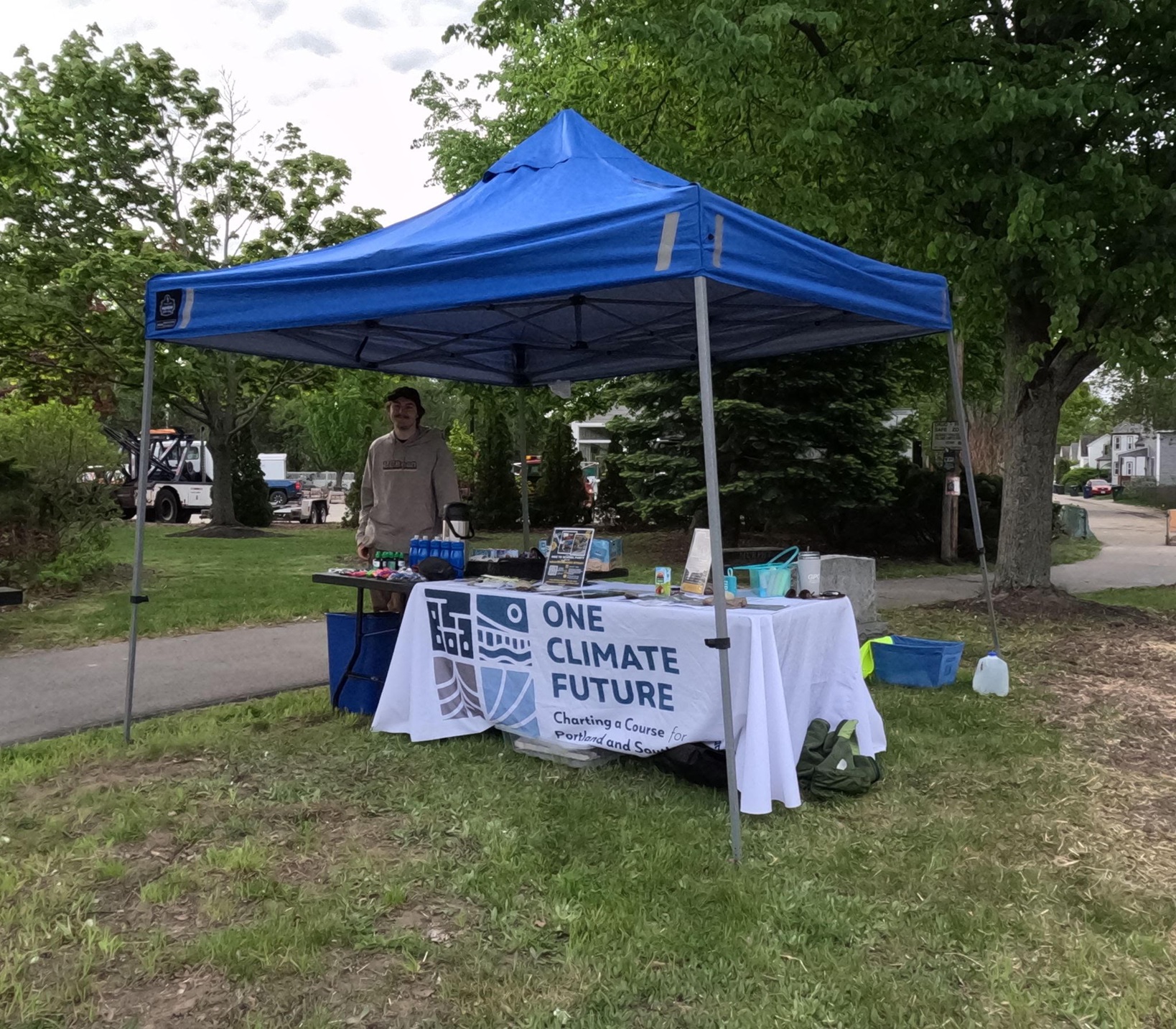
On Thursday, May 21, in collaboration with the Portland Gear Hub and Bicycle Coalition of Maine, we organized a spring bike party for middle school students to ride to school together. Instead of pedaling along congested roads, bikers can follow the stencils and signs to reveal a quieter, more secluded path.
Continuing to embrace the changing seasons, we co-hosted a gardening swap with the parks and rec department in early May. Community members gathered to share plants, pots, tools, and gardening tips, gearing up for the growing season. As our gardening tools cease to collect dust, the 2026 Resilient Yards Program is officially underway with 31 volunteer coaches and 58 participants. You can find resources for how to cultivate resilient landscapes at www.southportland.gov/resilientyards.
A CALL FOR INPUT
We want to hear from you! What sustainability topics are you interested in learning more about? How can we better connect you with climate action in your community? Please reach out to me at [email protected] to share your ideas.
Robyn Landes is an AmeriCorps Resilience Fellow with the South Portland Sustainability Department.
Comments are not available on this story. Read more about why we allow commenting on some stories and not on others.
We believe it's important to offer commenting on certain stories as a benefit to our readers. At its best, our comments sections can be a productive platform for readers to engage with our journalism, offer thoughts on coverage and issues, and drive conversation in a respectful, solutions-based way. It's a form of open discourse that can be useful to our community, public officials, journalists and others.
We do not enable comments on everything — exceptions include most crime stories, and coverage involving personal tragedy or sensitive issues that invite personal attacks instead of thoughtful discussion.
You can read more here about our commenting policy and terms of use. More information is also found on our FAQs.
Show less