

Longtime club member, Allan Fuller, has been coordinating Penobscot Paddle & Chowder Society (PPCS) paddling trips on Twenty-Five Mile Stream in Unity and Burnham for many years. For a variety of reasons, I’ve never had an opportunity to participate. This year, I was intent on paddling what would be a new stream for me.
Allan scheduled the Twenty-Five Mile Stream trip for May 9. A few days before, he sent a detailed description of the trip via club email. The distance would be 8 miles, not 25, and paddlers would travel between Route 139 in Unity and Route 100 in Burnham. He was anticipating high water levels and the possible need to carry boats around downed trees during the early part of the trip. Some Class I and II rapids were expected and wildlife sightings probable. Best of all, the weather forecast called for sunny skies, warm temperatures and light winds. I was psyched!
Eleven PPCS Chowderheads and one dog met on Route 139 next to Twenty-Five Mile Stream in Unity. The group consisted of three tandem canoe teams, five solo kayakers and one canine passenger. After transporting shuttle vehicles to Burnham, we began our voyage.
Initially, we traveled in quick water through a scenic, twisting, swampy area in a sparsely wooded landscape. After a short distance, we encountered a downed tree blocking the entire stream. That was the only obstruction on the trip that necessitated a portage.
The required carry was a fortuitous one. We found a large patch of fiddleheads ripe for picking. ziplock bags and small containers were filled with the delicious ferns. Foraging for fiddleheads has been a popular spring activity in rural Maine for centuries. Only edible for a short period of time each spring, the PPCS has carried on the tradition during paddling trips since its inception in 1969.
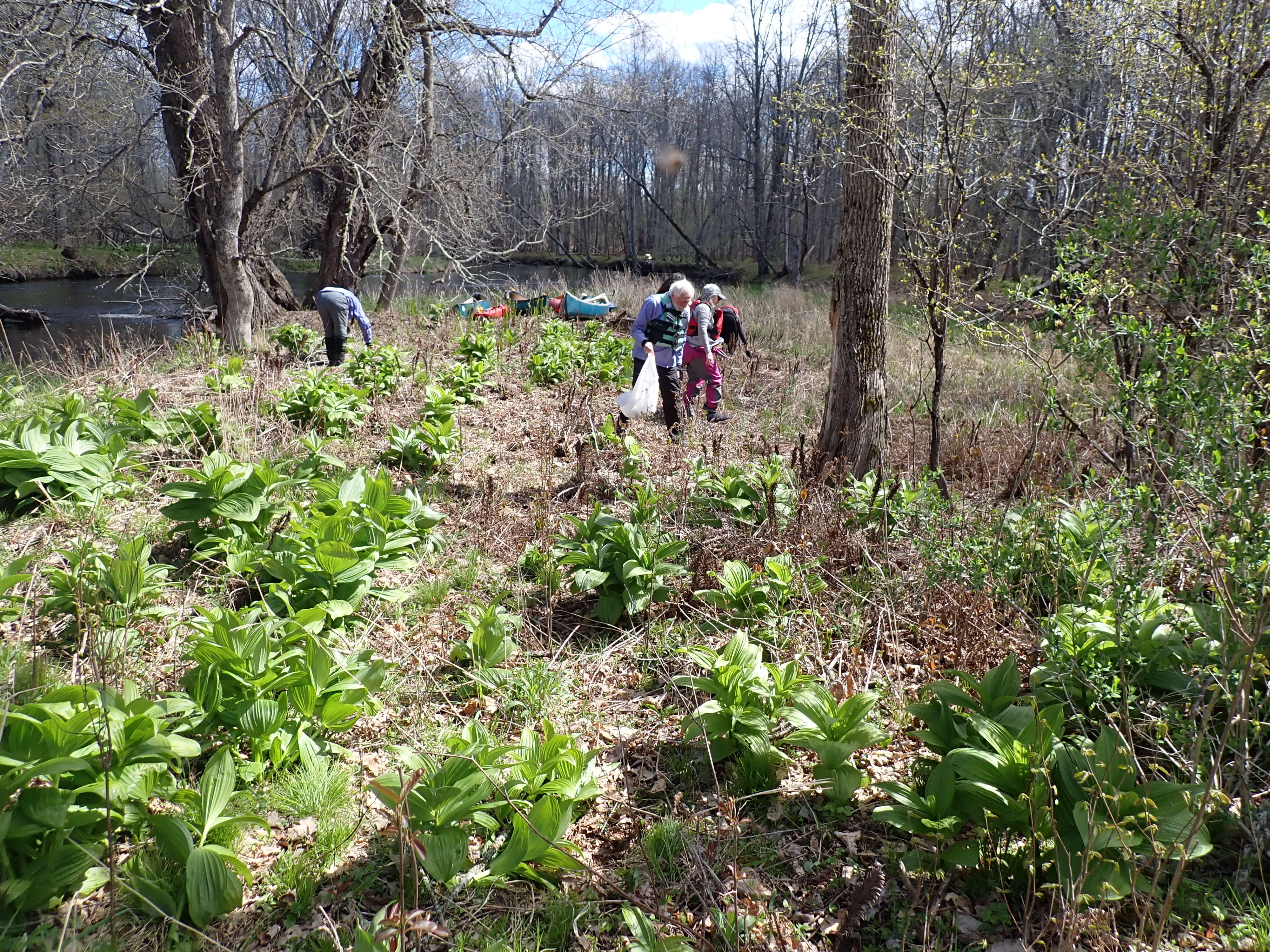
Miles of picturesque paddling followed. Birders in the group took advantage of the opportunity to identify many spring avian visitors. In one section, we passed a washed-out dam where entertaining rapids were encountered. Soon after, we stopped for lunch in a low-lying area on the right side of the river hoping to find another patch of fiddleheads. Instead, the location was infested with ticks. A hurried lunch resulted.
Quick water continued while we boated in an idyllic setting to a railroad bridge. An exciting rapid was just below. A few Chowderheads simply paddled through the falls while others used the moment for some stimulating wave surfing. One tandem canoe team practiced their ferry technique immediately below the bridge by turning upstream and crossing the waves from river right to river left. While the canoeists executed the precise maneuver, their little dog warily observed the process from the middle of the boat.
More exceptionally scenic paddling continued to the Troy Road Bridge in Burnham. Just below was the most demanding whitewater on the trip, a tricky pitch followed by a substantial wave train.
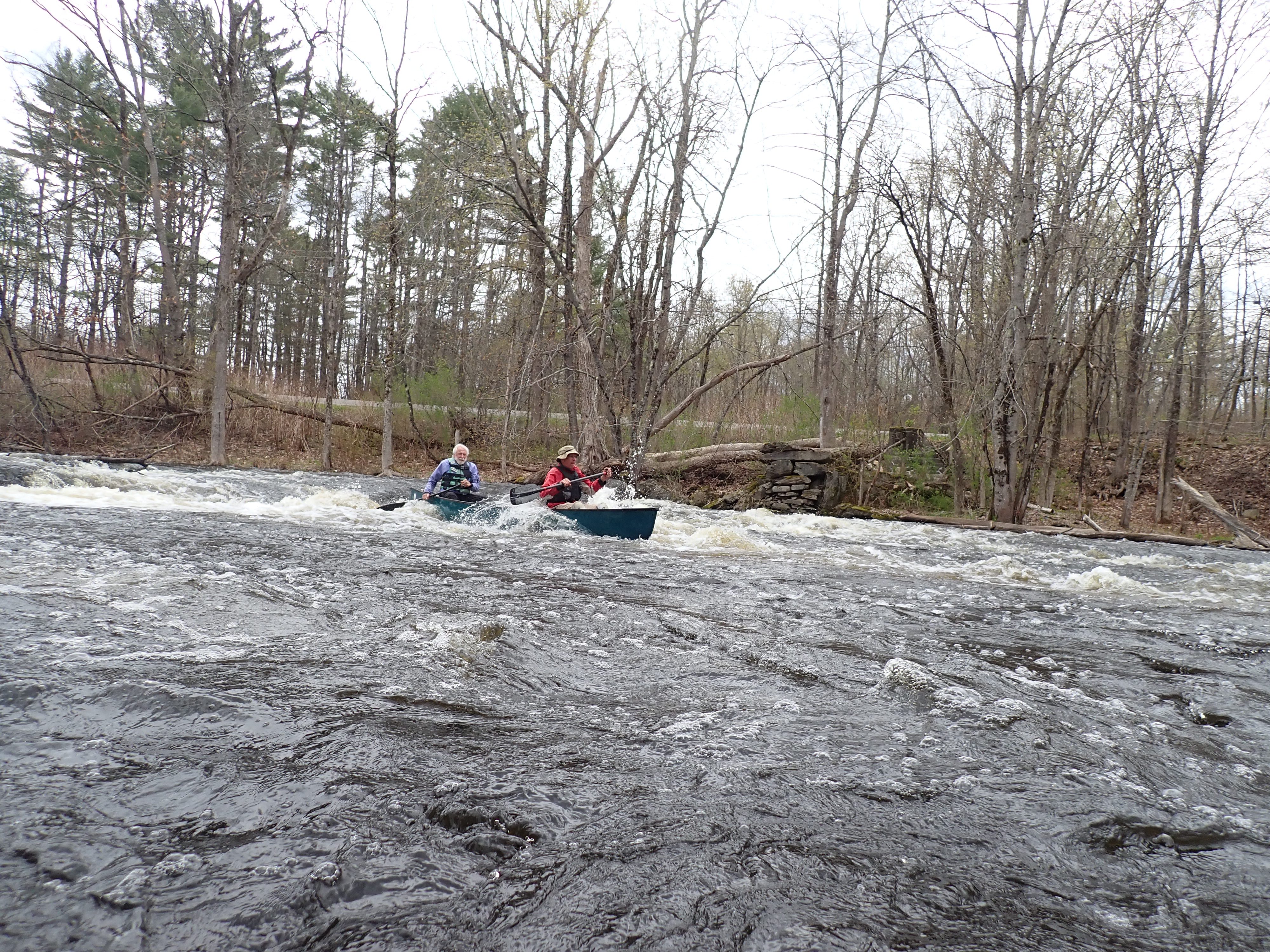
While viewing the rapid from the road above during the shuttle, the pitch appeared to be a relatively uncomplicated descent. Actually, at water level, we found it fairly complex. Paddlers needed to navigate around a substantial log protruding from the right shore, ferry to an eddy on the left and plummet down the right side of the pitch while avoiding submerged rocks lurking below.
Our capable band of Chowderheads flawlessly completed the intricate maneuvers. Trip coordinator and octogenarian, Allan Fuller, and his bowman, Kyle Duckworth, were the final boaters to successfully take the plunge. They navigated a 17-foot Tripper canoe through the drop without taking water. Everyone negotiated through the waves that followed without incident. Shortly after, we joined the Sebasticook River, passed under another bridge and disembarked at the takeout on the right next to Route 100 in Burnham.
Ours had been an outstanding day of scenic paddling, foraging for fiddleheads and navigating through challenging whitewater on an exceptional little-known stream in the heart of Maine. While this was a unique trip in many respects, virtually all PPCS outings provide entertaining, enriching outdoor experiences.
My book, “Maine Al Fresco: The Fifty Finest Outdoor Adventures in Maine,” narrates numerous exciting PPCS trips mountain climbing, biking, sea kayaking, whitewater paddling, Nordic skiing, lake paddling and multiday canoe trips around the state.
The author of “The Great Mars Hill Bank Robbery” and “Mountains for Mortals – New England,” Ron Chase resides in Topsham. His latest book, “Maine Al Fresco: The Fifty Finest Outdoor Adventures in Maine,” is available at North Country Press and through online retailers. Visit his website at ronchaseoutdoors.com or he can be reached at [email protected].

The Times Record Sustaining Sponsor
We believe a community must be informed to thrive. bowdoin.edu
Comments are not available on this story. Read more about why we allow commenting on some stories and not on others.
We believe it's important to offer commenting on certain stories as a benefit to our readers. At its best, our comments sections can be a productive platform for readers to engage with our journalism, offer thoughts on coverage and issues, and drive conversation in a respectful, solutions-based way. It's a form of open discourse that can be useful to our community, public officials, journalists and others.
We do not enable comments on everything — exceptions include most crime stories, and coverage involving personal tragedy or sensitive issues that invite personal attacks instead of thoughtful discussion.
You can read more here about our commenting policy and terms of use. More information is also found on our FAQs.
Show less