
An increase in protected open space, recreation opportunities and a working farm are in the future for Lakes Region residents as four projects were chosen to receive funding through the Land for Maine’s Future program.
Grant money was given to projects on Pleasant Mountain in Denmark and Bridgton, Clark Farm and Forest in Windham, Pisgah Hill in New Gloucester and Libby Hill in Gray.
On July 8 the Land for Maine’s Future Board voted to approve 46 land conservation projects across the state, including eight farms. In all, the board decided to spend $17 million approved by voters last fall to protect more than 36,000 acres.
Some land will be protected by purchase while conservation easements, limiting the type or amount of development on an individual’s property while retaining private ownership of the land, will be placed on other parcels.
The largest grant approved in the Lakes Region was $761,000 to help preserve a proposed 950 acres on Pleasant Mountain in Bridgton and Denmark, a decision which continues a several year long effort to protect the mountain and surrounding areas.
“Loon Echo is thrilled to have been chosen for an LMF grant,” said Carrie Walia, executive director of the trust. Since 1987 the Loon Echo Land Trust has protected more than 3,300 acres of land in Raymond, Casco, Naples, Harrison, Sebago, Bridgton and Denmark.
“It is our goal to protect a large percentage of Pleasant Mountain to ensure our community and area wildlife have natural areas to enjoy in the years to come,” Walia said.
“It’s so much a part of Maine history and so much a part of the recreation in this whole area,” said JoAnne Diller, a trust volunteer. “It’s a huge piece of habitat that’s largely untouched in southwestern Maine.”
From 2003-05 the Loon Echo Land Trust raised $1.5 million to purchase 1,300 acres on Pleasant Mountain in Denmark and Bridgton. Added to this tract was 160 acres donated from Camp Winona and two conservation easements on and around the mountain, for a total of 1,500 acres. In 2005 the Nature Conservancy received a donation of another 1,400-acre conservation easement on the west side of the mountain.
In addition to the 2,900 acres conserved on the mountain itself, the property abuts the state-managed Brownfield Bog and upper Saco River properties protected by the Nature Conservancy and the Upper Saco Valley Land Trust, all together nearly 10,000 acres of protected land. Walia said the land trust is now determining what parcels to purchase with the award from the Land for Maine’s Future.
With 10 miles of trails and an expansive view, Pleasant Mountain is a popular destination for outdoor recreation. Diller, 68, who volunteers to maintain the trails, said the mountain has a long human history.
A hotel was built on the mountain in 1845. It eventually burned and was rebuilt in 1873. The hotel offered billiards, a dance hall and a bowling alley, Diller said. Visitors would often travel by lake steamer, stagecoach and railroad to get to the top of the mountain from Portland.
The Land for Maine’s Future program was created in 1987 in response to concerns over the loss of critical natural areas and wildlife habitat and to increase access to undeveloped lands for hunting, fishing and outdoor recreation.
The Land for Maine’s Future program has protected over 490,000 acres of recreational and natural areas. The program also protects farmland through purchasing development rights, thus designating land as farmland forever and making it more affordable for farmers.
One of the farm projects the Land for Maine’s Future decided to fund is in Windham, where the Trust for Public Lands, the Maine Farmland Trust and the Windham Land Trust are collaborating to protect the 550-acre farm and forest belonging to the Clark family.
The property will be split into a 235-acre working farm, 240-acre conservation easement on property that the Clark family will continue to own and a 75-acre parcel to be owned by the Windham Land Trust.
“With the economy looking at being more green and shopping locally, this would fit right into the scheme of things,” said Dennis Hawkes, president of the Windham Land Trust. Placing a conservation easement on the land will bring another working farm to town, and the property also provides opportunities for people to hike, fish, hunt, snowmobile and ski on what Hawkes called the largest contiguous property in Windham.
Wolfe Tone, a project manager with the Trust for Public Land, said the $568,000 award from the Land for Maine’s Future is a good start towards the goal of eventually protecting all 550 acres at the Clark farm and forest, adding that they have found some federal funding as well through the Farm and Ranchland Protection Program.
The rest of the money will come from fundraising. “We work hard to get projects in a position to be funded to maximize our chances for success,” Tone said.
Land for Maine’s Future also dedicated around $260,000 to help protect approximately 260 acres on Pisgah Hill in New Gloucester through the Royal River Conservation Trust. The Royal River Conservation Trust, which has roughly 700 acres in easement and owns 200 acres in 12 area towns, has been working on the Pisgah Hill project for almost a year, according to Executive Director Henry Nichols.
“It’s going to provide access to an area they haven’t been able to get to before,” Nichols said, adding that it is one of the last large unbroken blocks of wildlife habitat in the area. The group plans to develop a trail system and eventually connect to other conservation land in the area.
The conservation trust is working with the owners of six to seven parcels to either buy the tracts of land or put them into conservation easement. Nichols said the group will need to raise additional money to complete the project.
Though the Land for Maine’s Future’s award for the Libby Hill Forest Recreation Area in Gray is smaller in acreage than in New Gloucester, Windham or Bridgton, involved residents show no less enthusiasm.
Adjacent to the Gray-New Gloucester middle and high schools, Libby Hill is overseen by the Gray Parks and Recreation Department and the Gray Community Endowment. The more than six-mile trail system, which opened in 2001, spans five properties owned by the town of Gray, School Administrative District 15, the Gray Community Endowment and Hancock Land Management.
The Gray Community Endowment, a nonprofit founded in 2000 to “help build a better Gray,” according to secretary Anne Gass, purchased 29 acres from the Hancock Land Corporation June 30 with a loan from local business people and residents.
The Land for Maine’s Future award will cover $69,000 of the total $129,000 loan, which the group plans to pay off within two years. The rest of money will come from fundraising and other grants.
“It allows us to protect some open space in the town,” Gass said. “It’s great to have a free trail system in the town when I live.” Gass added that this project has helped build community and introduced her to others in the town.
“We’re really grateful to the Land for Maine’s Future,” Gass said. “It would have been pretty hard for Gray to come up with this money on our own.”
 Local preservation gets a state boost
 Libby Hill, comprised of a network of hiking trails near Gray-New Gloucester High School, was enhanced by the purchase of an additional 29 acres, paid for in part by a grant from Land for Maine’s Future.
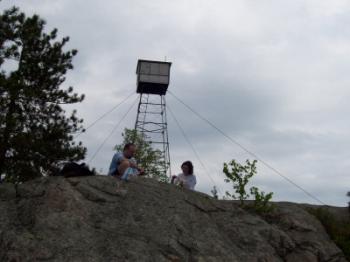 An additional 950 acres could be added to land owned by the Loon Echo Land Trust on the western side of Pleasant Mountain. The trust received more than $761,000 from a Land for Maine’s Future grant.
 Local preservation gets a state boost
Comments are no longer available on this story