


Carie Bernard and her neighbors on Glenwood Avenue in Portland started noticing rabbits hopping around their yards a couple years ago. In September, when newborns appeared in her garden, she called animal control out of concern for their survival.
Two women came, picked them up with gloves and put them in a carrier, according to Bernard, saying they’d be taken care of until they were ready to return to the wild.
“Maybe don’t release them in my neighborhood,” Bernard said she requested. The rabbits had been eating her plants.
Social media posts from the past couple years talk of bunnies on the West End, Parkside and Munjoy Hill, eliciting speculation — and misinformation — about why they seem to be all over the city all of a sudden. Although most people are tickled to see the buck-toothed balls of fluff that we associate with spring (and Easter, specifically), the truth is that those spotted around Portland are invasive, non-native eastern cottontails.
Not only do they nibble on gardens, they pose a threat to the nearly identical New England cottontail, whose endangered population conservationists have been working to restore.
The first sightings were on the Eastern Promenade around 2017.
“Since then, the number of reports from Portland has increased exponentially,” said Cory Stearns, a small mammal biologist with the Maine Department of Inland Fisheries & Wildlife, who oversees the agency’s database of rabbit sightings. Just recently, they’ve expanded west of Interstate 295, like where Bernard lives in Deering Center.
She’s already feeding them involuntarily, but if you see them around as they start venturing out to forage for greenery this spring, don’t let those big eyes and ears trick you into thinking they need your help.
Wild Rabbits of the West End
by u/DaniDevoursMaine in portlandme
Now found in most of the U.S., eastern cottontails were first introduced into southern New England around the turn of the last century for hunting purposes. The state hadn’t received reports of them in Maine until around 2016, in Kittery.
Because getting from there to Portland would be “a pretty large jump,” Stearns said, he doesn’t believe they migrated that far but arrived in another way, such as through potted plant shipments, where they’ve previously been intercepted.
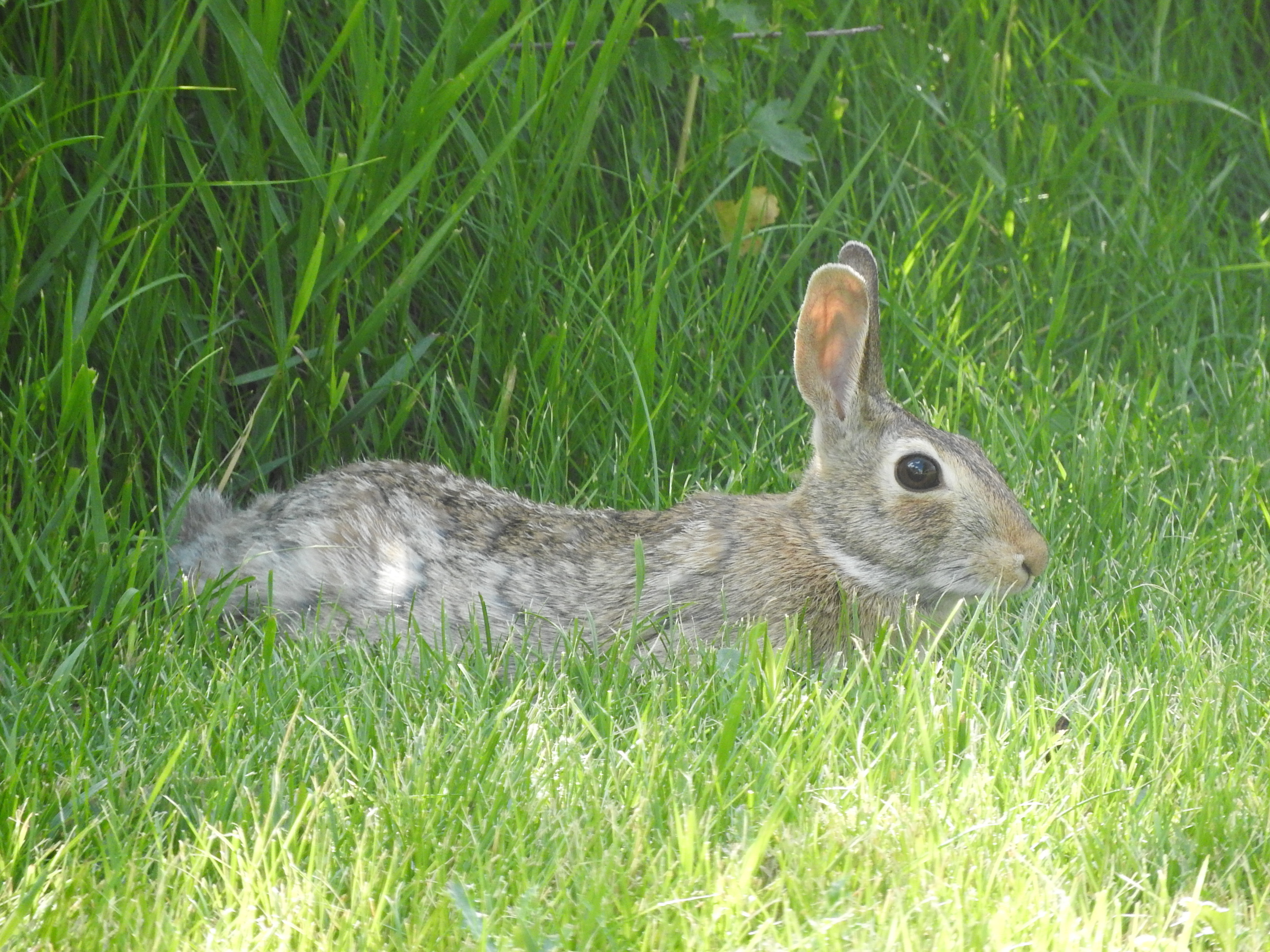
They’re well suited to city life. While New England cottontails need thickets and shrubs (where they can hide from predators like hawks and foxes), the eastern cottontail, he said, “can live in one person’s ornamental bush.”
Although the two species aren’t competitive, because the eastern cottontails — which also tend to produce more young — have the edge in survivability, over time, they’ll overtake the New England cottontail population if they’re living in the same place, Stearns said.
It hasn’t happened yet, but there have been a couple confirmed eastern cottontails in Cape Elizabeth, the home of the majority of the state’s New England cottontails (the rest are in towns farther down the coast). Keeping track of the two populations is complicated by the fact that they look so similar, aside from a white spot that’s sometimes found on the forehead of the eastern cottontail.
“We’re hoping that our New Englands can hang on,” Stearns said.
He said the state wouldn’t start to trap and euthanize eastern cottontails unless they became a real nuisance to property owners. The focus is on building up the New England cottontail population by restoring their habitat and releasing rabbits bred in captivity into the wild. If they have enough of a stronghold on certain areas, the eastern cottontails might chose to live elsewhere, said Sarah Dudek, the state’s New England cottontail habitat restoration coordinator.
The efforts have resulted in the New England cottontail population doubling in the past eight years, to almost 400 rabbits, Stearns said. But it was a hard winter with significant die-off. This is the northern tip of their range, he said, and they can’t camouflage themselves in the snow.
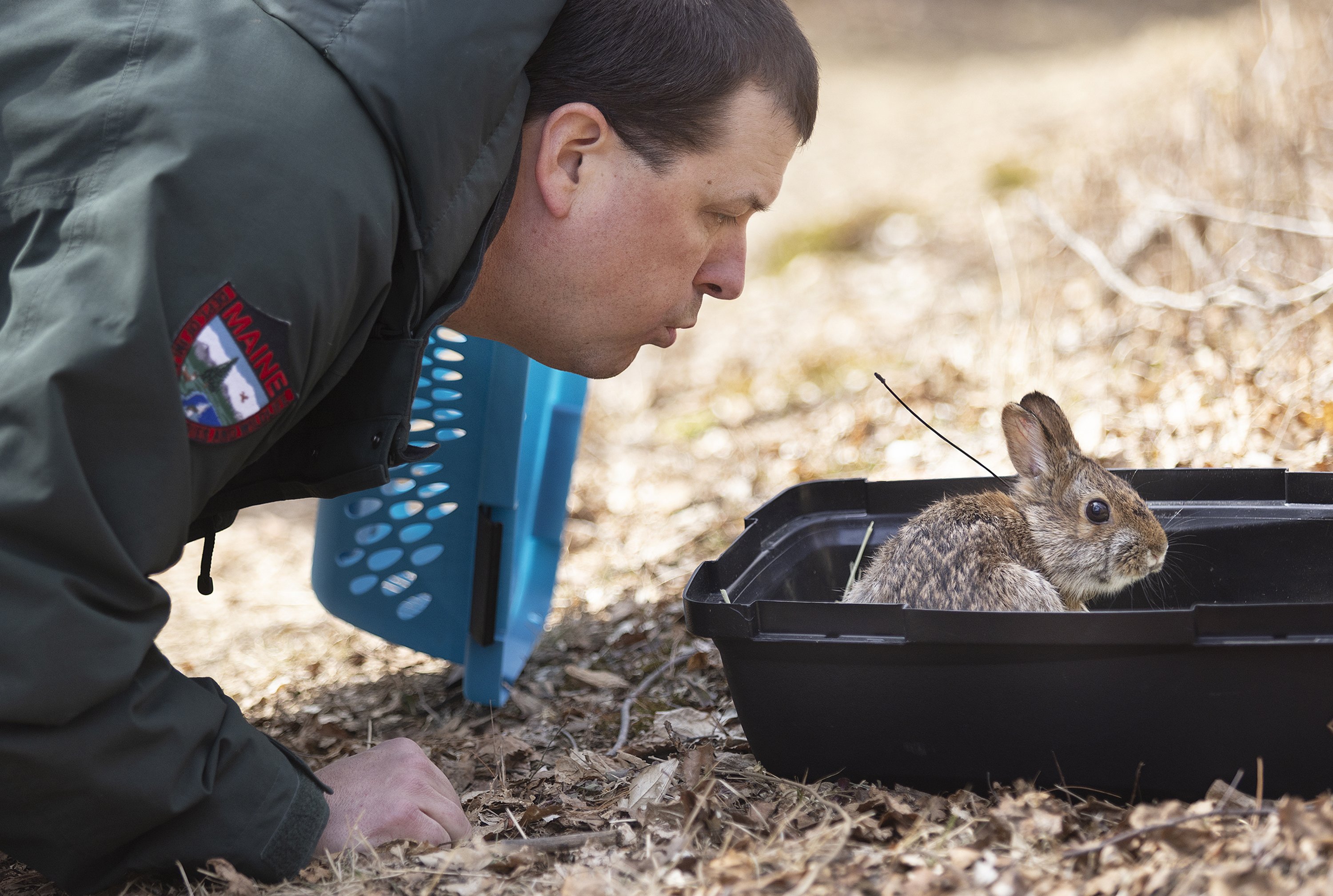
The numbers grew slightly on Monday, when Stearns, Dudek and others met in Cape Elizabeth to introduce four New England cottontails born in a Rhode Island breeding colony into Winnick Woods, the northernmost location they’ve been released.
The rabbits, each named after a pasta shape while they were quarantining for the previous two weeks at the Rachel Carson National Wildlife Refuge in Wells, were set down in their crates, one by one, off the edge of a trail facing a thicket.
First up was Penne. Stearns got on his knees, lifted the latches of her crate, then gently blew on the bunny until she hopped out onto the trail and then back into the brush, where she easily blended in with the branches and vines.
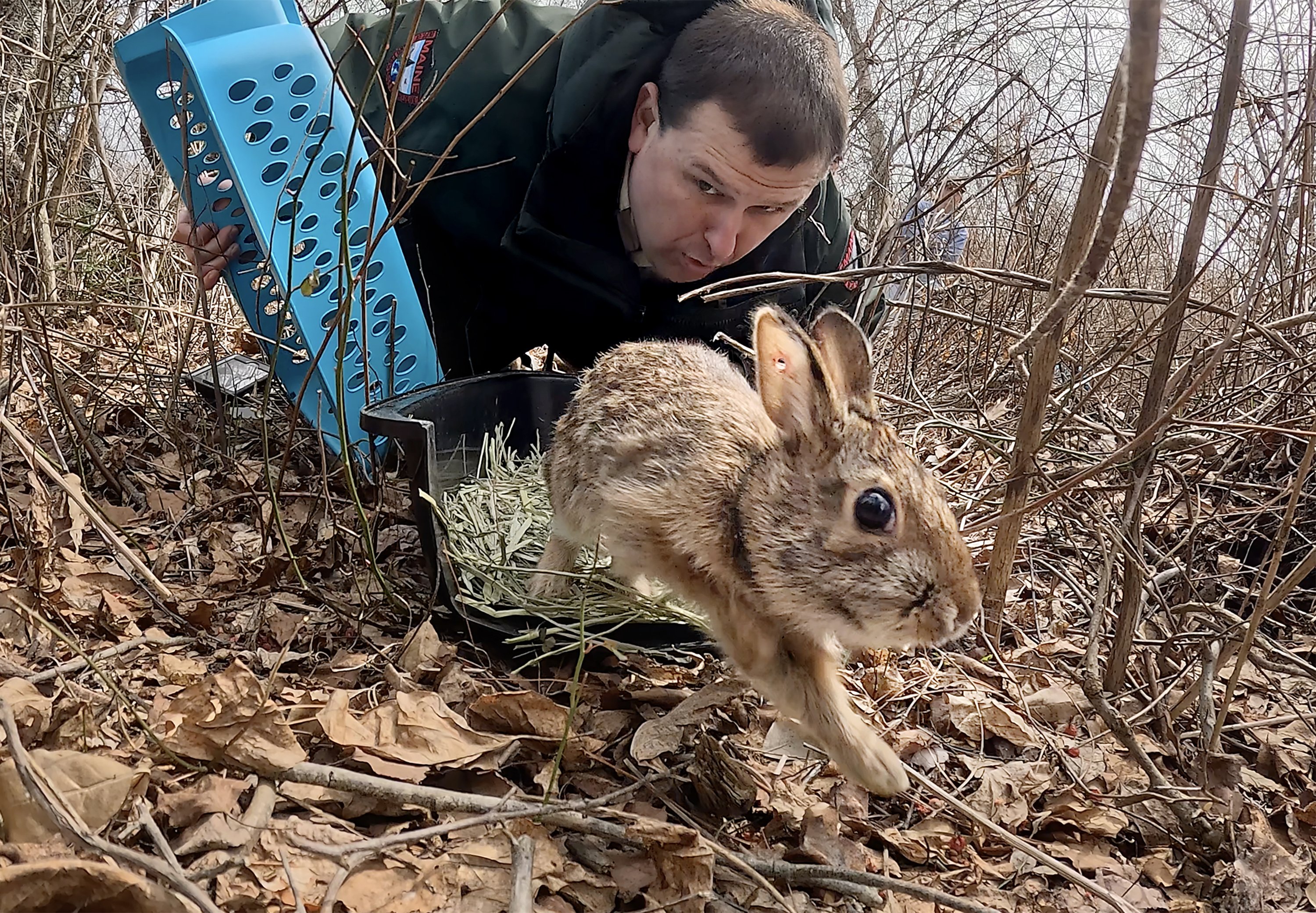
Gnocchi, on the other hand, looked around for a while, nose twitching, before taking off into the woods. Tortellini, the only male, hopped back across the trail, then through a field on the other side. Last was Ziti, who had been showing the most signs of stress and so was carried further into the woods, away from the trail, where she left the crate and quickly disappeared.
They expect to release two rabbits that are still quarantining next week and more this summer.
“That’s as much as we can do,” Dudek said. “We’re hoping that will be enough.”

We invite you to add your comments. We encourage a thoughtful exchange of ideas and information on this website. By joining the conversation, you are agreeing to our commenting policy and terms of use. More information is found on our FAQs. You can update your screen name on the member's center.
Comments are managed by our staff during regular business hours Monday through Friday as well as limited hours on Saturday and Sunday. Comments held for moderation outside of those hours may take longer to approve.
Join the Conversation
Please sign into your Press Herald account to participate in conversations below. If you do not have an account, you can subscribe here. Questions? Please see our FAQs.