

After a recent report suggested that a Portland policy may be slowing housing development, city officials have opted to hold a series of workshop discussions rather than pursue immediate changes.
But some say more urgency is needed to advance stalled housing projects.
After the Housing and Economic Development Committee decided on the more cautious route this week, City Councilor Ben Grant didn’t hold back.
“This guarantees that nothing will happen for six months, and I’m pretty frustrated by that,” he said.
Grant, however, is not a member of the committee, and councilors that are said the policy is just one factor within a complicated system that affects housing production.
The city’s inclusionary zoning policy, strengthened by voters in 2020, requires that 25% of units be affordable to households earning at or below 80% of the area median income. Developers can also pay a per-unit fee of $186,077 to opt out.
Many developers have said the requirements are untenable and have coincided with skyrocketing costs of construction, land and borrowing. They’ve also said the council’s decision could make or break hundreds of units in the pipeline.
Following the release of the report in May, Grant moved quickly to pitch a return to the pre-2020 iteration of the policy, which required 10% of units be affordable at 100% of the area median income. He referred to that proposal as simply a starting point but said “after five-plus years in effect, I think it has become clear that the policy must be reformed.”
Councilor Kate Sykes, who serves on the housing committee and has supported inclusionary zoning, said she hoped for a more nuanced approach. Sykes came up with the idea of holding multiple workshops with stakeholders, especially in light of voters supporting the policy changes.
“I hope the workshops help us move beyond a simple ‘keep it’ versus ‘repeal it’ debate,” she said Friday. “I know we’re smarter than that. This is an opportunity to bring people together, review what has worked, what hasn’t, and whether there are ways to better align affordability requirements, housing production and public subsidy.”
Sykes said she’d like to have the committee hear from organizations like DSA for a Livable Portland, the Maine Democratic Socialists of America effort that wrote and campaigned for the ordinance in 2020; the Urbanist Coalition of Portland; the Portland Regional Chamber of Commerce; MaineHousing; the Portland Housing Authority; and affordable and market-rate housing developers.
During Tuesday’s committee discussion, Planning Director Kevin Kraft said inclusionary zoning has frequently been cited as a barrier to housing production in Portland and noted that the city had hired consulting firm CZB LLC to review the policy and put some data behind the debate.
Charles Buki, who wrote the report, suggested that officials either maintain the current policy, “recalibrate” it, or decide on a different approach that introduces public subsidy to fill financing gaps.
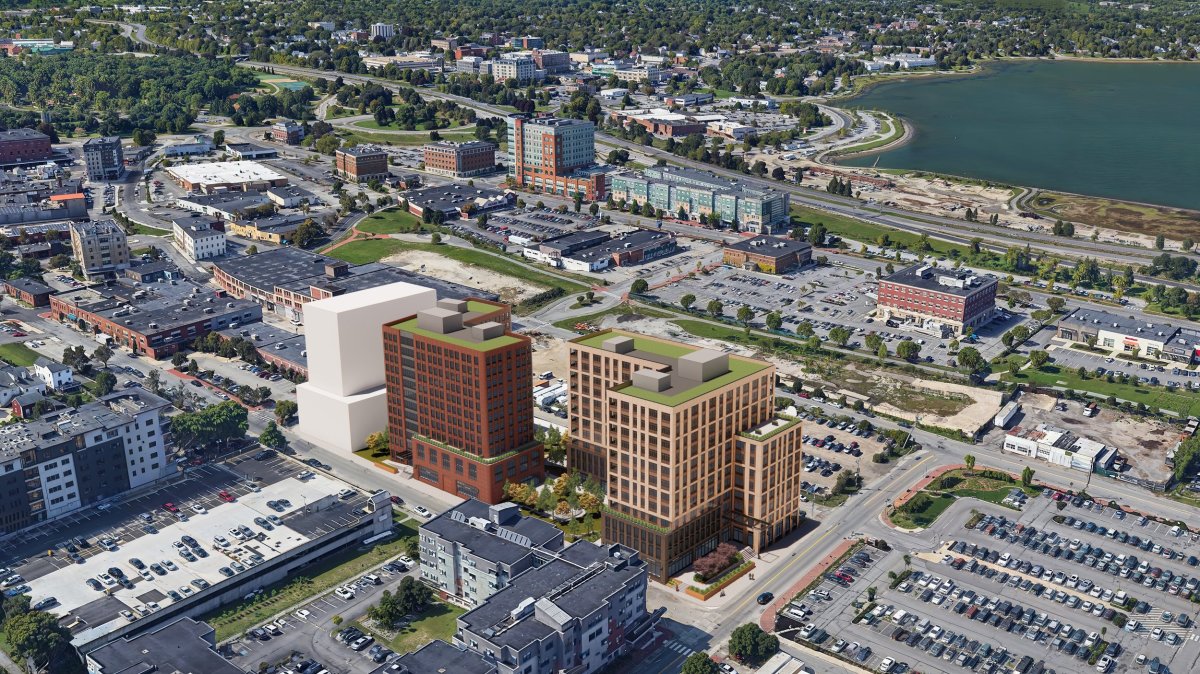
At least one development group, Redfern Properties, has said a 325-unit project on Washington Avenue is stalled until the city either amends or abandons the policy. The company has also encouraged the city to embrace social housing, or city-owned properties of various affordability levels.
When asked by committee members if the current inclusionary zoning rules are to blame for some stagnation, Buki said it’s difficult to blame one variable for bringing a project “from feasible to infeasible,” but that the 25% mandate “is significant and becomes a magnified variable when conditions aren’t favorable.”
Sykes said the goal of inclusionary zoning is to make sure that when market-rate housing is built, especially in hot markets, there is a mechanism to site affordable housing so that areas don’t “become a luxury housing enclave.”
Councilor Wes Pelletier also believes that there are a number of factors playing a role in fewer units being built, and said that “IZ is the punching bag.”
“I worry that we’re looking at this like a dial we can turn that will solve the problem,” he said.
Buki was also asked whether he believed repealing the rules would result in a housing boom. He responded that units that are currently in the pipeline would likely get built, but that he doubts a windfall of new projects would follow because of other economic factors.
Mayor Mark Dion said Friday that he’d “like to see the ball move faster” on potential changes in order to “unlock the housing that’s been approved.”
The committee was originally slated to settle on proposed amendments to the policy later this month for the planning board to consider, but the workshop plan will change that timeline.
Assistant City Manager Dena Libner said she’s working with committee Chair Pious Ali to schedule the workshops.

We invite you to add your comments. We encourage a thoughtful exchange of ideas and information on this website. By joining the conversation, you are agreeing to our commenting policy and terms of use. More information is found on our FAQs. You can update your screen name on the member's center.
Comments are managed by our staff during regular business hours Monday through Friday as well as limited hours on Saturday and Sunday. Comments held for moderation outside of those hours may take longer to approve.
Join the Conversation
Please sign into your Press Herald account to participate in conversations below. If you do not have an account, you can subscribe here. Questions? Please see our FAQs.