


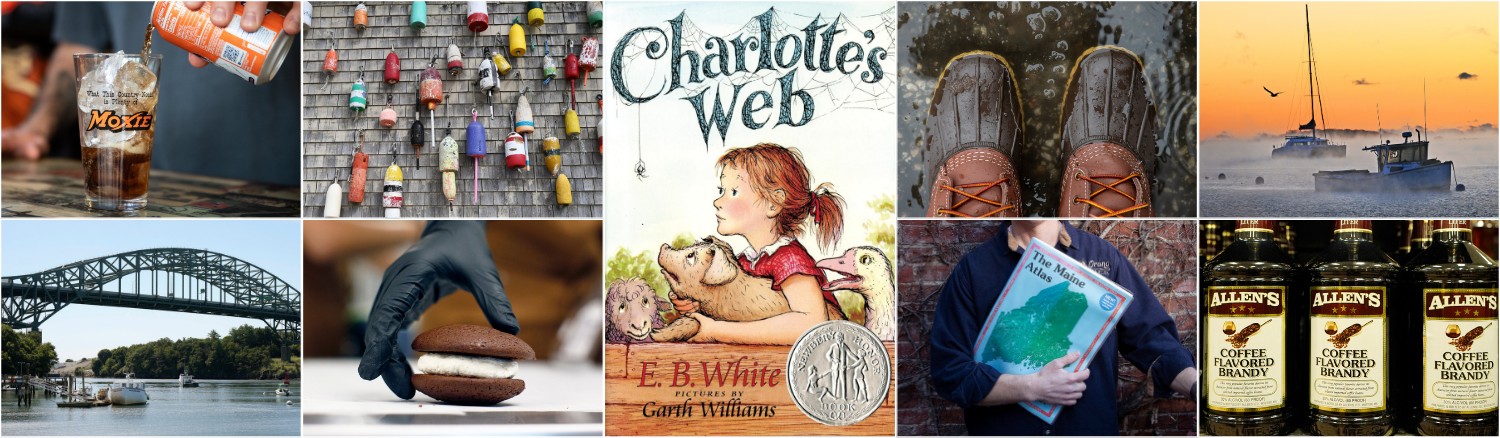
How does one explain Maine?
Lots of people do it with flowery prose about the state’s natural beauty or the rugged individualists who settled the land. But for those of us who live and work in Maine, the state is revealed to us everyday in the things we use and see: L.L.Bean boots, whoopie pies, cribbage boards, the Piscataqua River Bridge, a Maine Italian sandwich, Mount Katahdin, blaze orange hats.
As the country celebrates its 250th anniversary this summer, we’ve compiled a list of 40 things we think help define and explain Maine, past and present. But paring the list was not easy.
We debated, for instance, the definition of an object. Mount Desert Island, home of Acadia National Park, is world-famous and closely linked to Maine’s history and lore. But is an island an object? We thought about the quirky Maine County Song, which Maine school kids have memorized for decades as a way to learn about the state’s 16 counties.
Some items we left off the list might seem obvious, like clams and lobsters. But we do have lobster boats and lobster rolls. We also left off some other prominent places, like the 1807 Portland Observatory or the Paris Hill and Bangor homes of Abraham Lincoln’s first vice president, Hannibal Hamlin. They are certainly all part of Maine’s story.
So this list is in no way exhaustive, because that would be an impossible task. But it is an initial stab at identifying some of the things that say “Maine” to us. Let us know what you might add to the list.
BOOKS AND ART
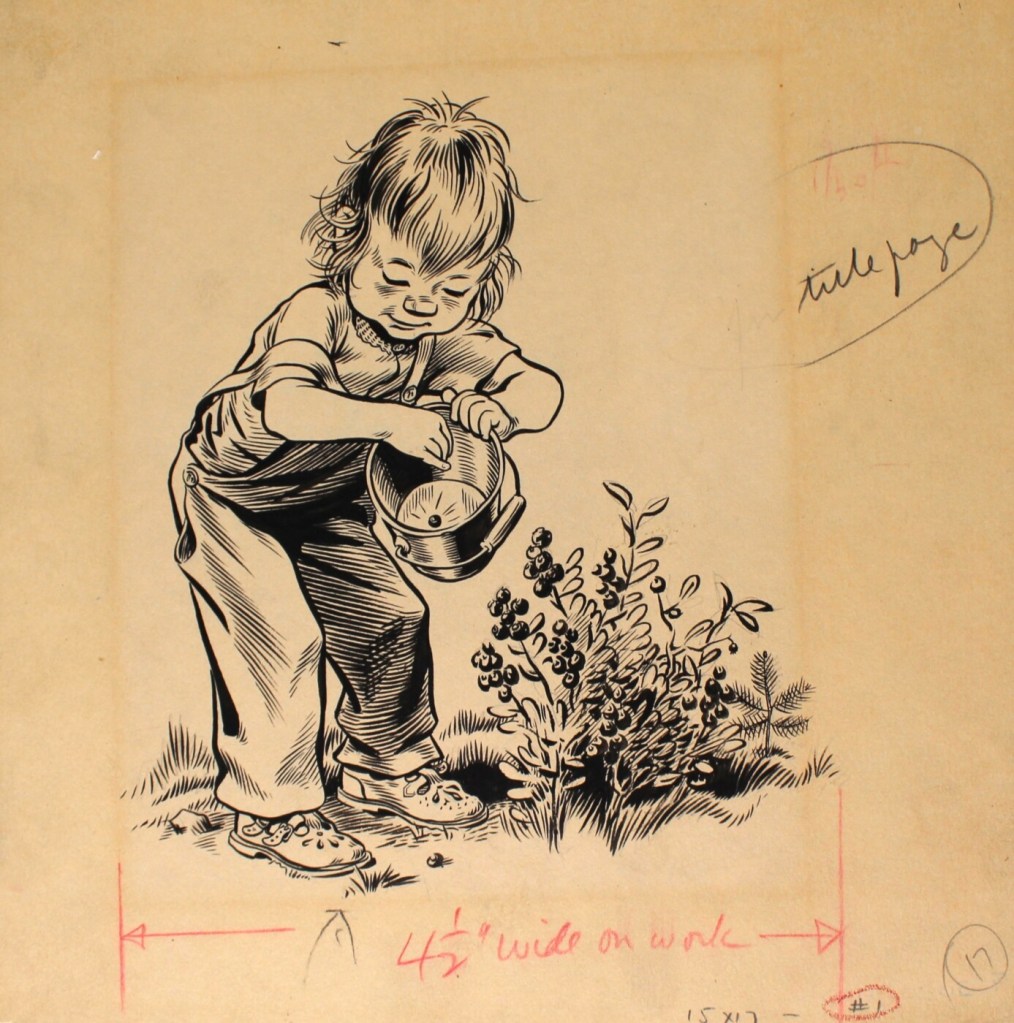
‘Blueberries for Sal’
Robert McCloskey’s 1948 children’s book, about a little girl picking blueberries and meeting friendly bears on a tiny island, celebrates the simple pleasures of Maine life. McCloskey had written the classic Boston-based picture book “Make Way for Ducklings” a few years earlier, but this book established him as one of Maine’s most influential authors. He had a home on Scott Island off Little Deer Isle for years and his own daughter, Sally, was the model for the little girl in the story.

‘Charlotte’s Web’
E.B. White’s beloved 1952 children’s classic about a pig named Wilbur and his spider friend, Charlotte, was set on a farm inspired by the author’s home in Brooklin, where he died in 1985. The subsequent longtime owners of the 44-acre property, a couple who in 2017 moved to their other home in South Carolina, largely preserved its character, including the barn and rope swing featured in the book.
‘Christina’s World’

Most Maine artworks depict seaside or mountain scenes, but the most famous painting both of the state and by a Maine artist shows a woman lying in a field looking up at farm buildings in the background.
Andrew Wyeth’s “Christina’s World” (1948) was inspired by Anna Christina Olson, a woman from Cushing who had a neuromuscular disorder that prevented her from walking. The model for the painting, however, was Wyeth’s wife, Betsy, who had introduced the artist to Olson. The Olson family’s property, pictured in the painting, was recently donated to the Georges River Land Trust, which will keep it open to the public for free year-round. You can see the painting in person at the Museum of Modern Art in New York.

Maine Atlas and Gazetteer
Standard issue for any new Mainer, this 96-page map book is full of secrets. It lists dirt roads that are only “occasionally passable,” private roads, washed out roads, paddling routes, fishing spots, tribal land boundaries, eskers and dozens of other things. That’s why, 50 years after it was first published by map maker David DeLorme, so many Mainers favor it over GPS or Google Maps. People mark routes and favorite spots and keep their duct-taped and coffee-stained Gazetteers for decades.
Wabanaki basket

Basketry is the oldest art form practiced in Maine and an endangered one, as the ash trees used to make the wooden strips that are woven into the vessels (often accented with sweetgrass) have been decimated by a beetle called the emerald ash borer. Because the baskets were long sold in markets to tourists, they were viewed more as souvenirs than fine art until recently, a change that can be partly attributed to the demand for the work of Passamaquoddy basketmaker Jeremy Frey.
BUILDINGS AND LANDMARKS

Abyssinian Meeting House
The Abyssinian Meeting House, built in Portland’s East End in 1828, was just the third church in the nation constructed by an African American congregation. Considered a northern hub of the Underground Railroad and anti-slavery movement, it’s among the sites on the Portland Freedom Trail. The building, which was later turned into a tenement that fell into disrepair, has been undergoing a lengthy restoration, with the latest stage of work starting this summer. The hope is that the project will be completed by its 200th anniversary.
Moody’s Diner

It began as a roadside lunch wagon in Waldoboro in 1927, a year after Route 1 officially opened and began leading visitors into Maine. Today, run by the same family, Moody’s Diner is loved by tourists for its old-fashioned charm, and by locals for its inexpensive comfort food and its history as a community gathering spot. And, of course, both groups love the fresh-made pies. When humorist Tim Sample published a book of Maine stories in the 1980s, he chose to call it “Saturday Night at Moody’s Diner.”
Paul Bunyan statue
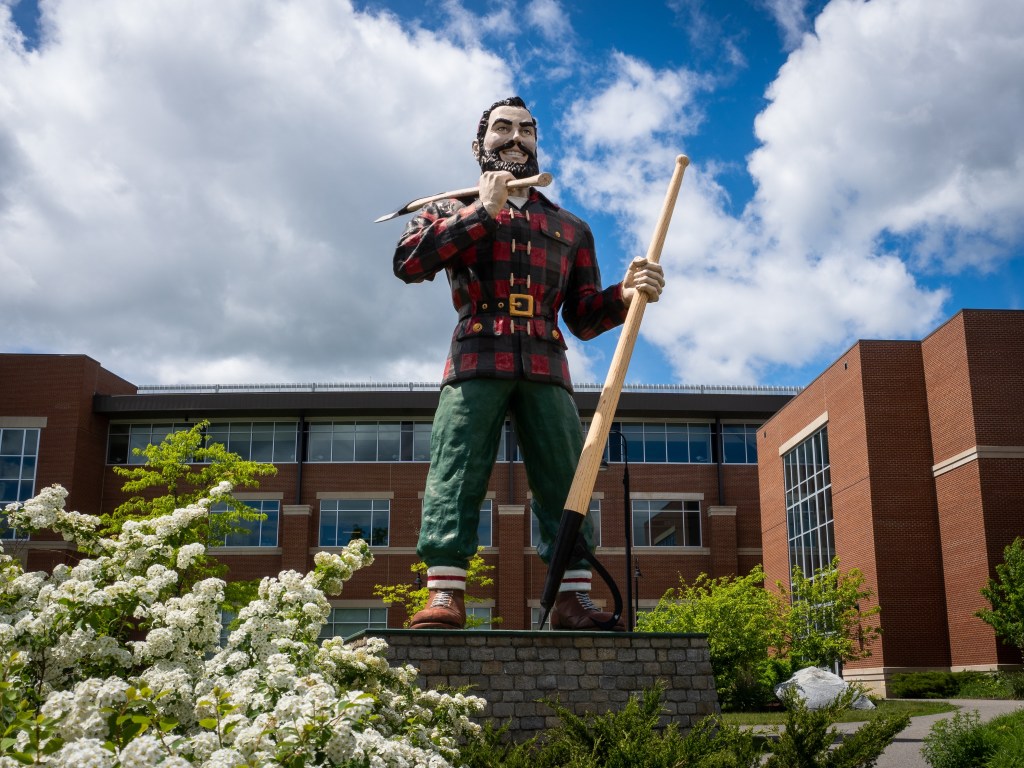
In the mid-1800s, Bangor was known as “The Lumber Capital of the World.” Logs from the state’s North Woods came down the Penobscot River to the city, before being shipped around the world. The Maine lumberjack, or logger, continues to be a symbol of Maine’s independent and rugged workforce. So it makes sense that a 31-foot-tall statute of Paul Bunyan, the giant lumberjack of folklore, stands on Main Street in Bangor. It was put up in 1959, to celebrate the city’s 125th anniversary.
Piscataqua River Bridge

There are other ways into the state, but the Piscataqua River Bridge is the grand entrance. Opened in 1972, it spans nearly a mile between Portsmouth, New Hampshire, and Kittery. It’s also the busiest, carrying more than 70,000 cars on an average day. Spotting the bridge’s green steel arch can symbolize different things for people: the start of vacation, the return home or a new life chapter, whether coming or going.
Portland Head Light
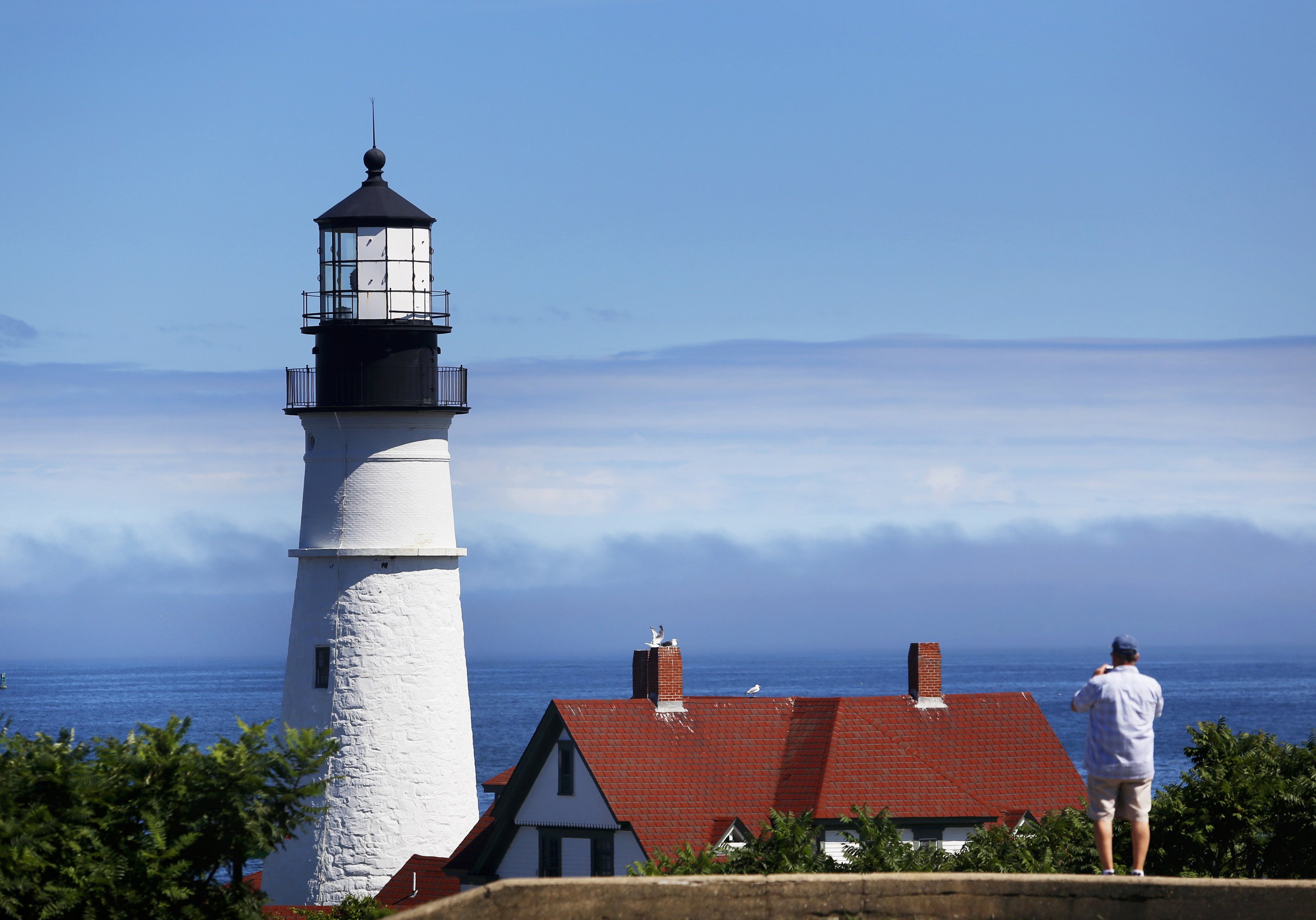
Maine is a state of many lighthouses — some 67 — and Portland Head is both the oldest and most photographed. First lit in 1791, it’s located in Cape Elizabeth’s Fort Williams Park, home to several historic structures to explore, along with trails, a small beach and pickleball courts. While the museum housed in the former keepers’ quarters is open daily in season, the 80-foot tower is only accessible to the public on Maine Open Lighthouse Day, which is Sept. 12 this year.
Stephen King’s house
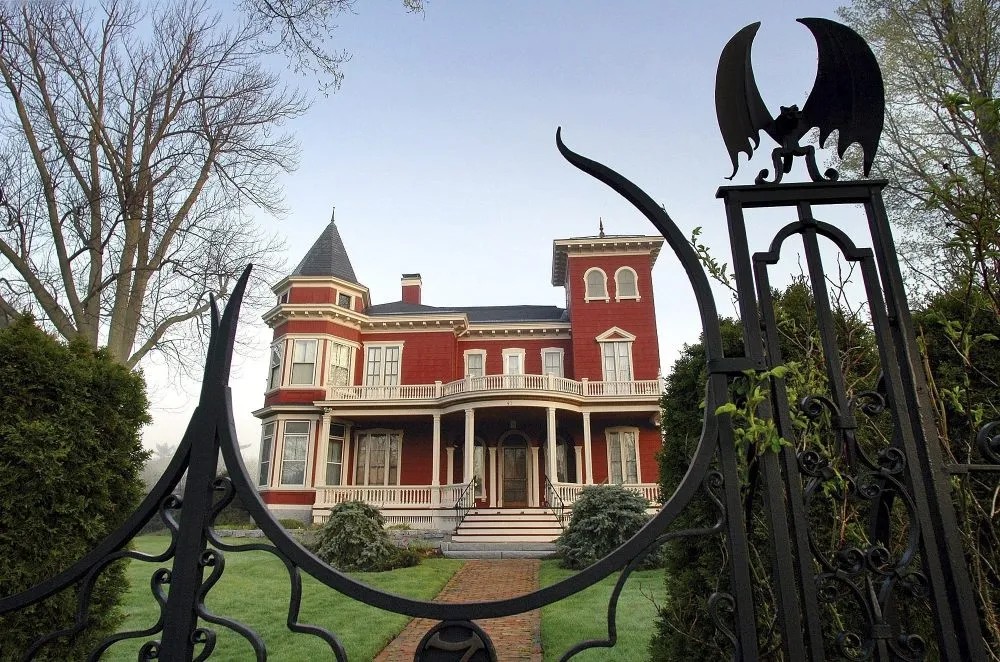
Stephen King’s longtime Bangor home is a source of pride for Mainers. He’s one of the most famous authors in the world, yet he chose to live most of his adult life in a spooky-looking Victorian near downtown Bangor, not exactly the stomping ground of the rich and trendy. It shows King’s sense of humor. With bats on the wrought-iron gates, it looks like something out of one of his books. It’s also a major tourist attraction, drawing King fans from all over the world. King doesn’t stay there much anymore, as the house is now home to his personal archives.
‘The Way Life Should Be’ sign
The state slogan, “The Way Life Should Be,” first appeared on the welcome sign on the Maine Turnpike in Kittery after being introduced through a tourism campaign in the late 1980s. The placard got an addendum in 2011, when then-Gov. Paul LePage attached a smaller sign below that said “Open for Business.” Both signs were replaced in 2019 by Gov. Janet Mills with one that said “Welcome Home.” A few months later, a second sign with the old slogan was added back to the bottom. We’ll see if whoever wins the governor’s race in November has his or her own ideas about the words that should welcome drivers into our state.


Wadsworth-Longfellow House
Right in the middle of downtown Portland, tucked in between banks and restaurants, is the home of the Mainer who was arguably America’s most famous poet. Henry Wadsworth Longfellow was born in 1807 and grew up in this brick house on Congress Street, built in 1786. By the mid-1800s, he was something of a rock star. His poems, including “Paul Revere’s Ride” and “Evangeline” could be recited by school kids and adults alike. Today, the house is part of the campus of the Maine Historical Society.
World Traveler Signpost
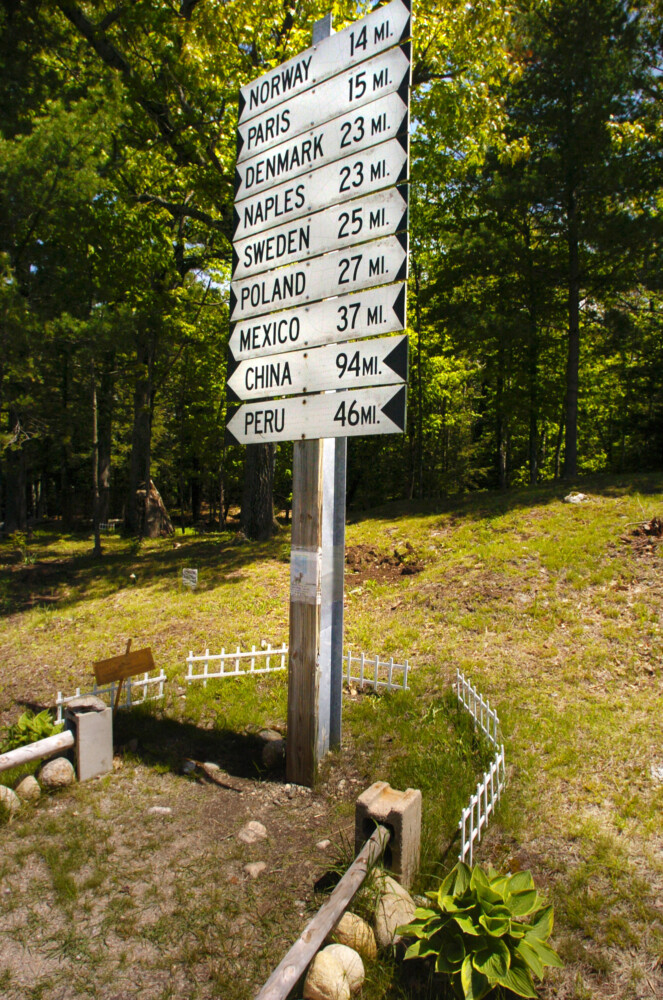
There’s a sign on Route 35, south of Bethel, that lists the distances to Norway, Paris, Denmark, Naples, Sweden, Poland, Mexico, China and Peru. None are more than 94 miles away. That’s because Maine famously has more than two dozen towns named for foreign countries and cities, largely by settlers in the 1800s who had grand plans for their little towns. The sign was put there in the late 1930s, to promote auto tourism and prove Mainers have a sophisticated world view.
CLOTHING
Earmuffs

Chester Greenwood of Farmington supposedly had big ears. By the time he was a teenager, in the 1870s, he became frustrated that the hats of the day didn’t keep his ears warm. So, at the age of 18, he applied for and was granted a patent for earmuffs. They weren’t the first ear coverings, but Greenwood’s innovation was to hold the fabric ear pieces together by a strip of metal over the head, which is the basis for modern earmuffs. Each year around the winter holidays, Farmington hosts Chester Greenwood Day to celebrate his achievement.
1901 flag design

Maine’s first state flag in 1901 was simple and uncluttered, with just a pine tree and the North Star. But it never became widely used and, by 1909, was replaced by a blue flag with all sorts of things, including a farmer, a sailor, a moose, a pine tree and some water. But, in 2017, the Maine Flag Company started selling a version of the 1901 design, and it struck a nerve among Mainers. It soon hung over porches and doorways where the actual state flag never has, and started appearing on T-shirts, hats and lots of other items. In 2024, there was a statewide referendum to make it the official state flag once more. Even though that measure failed, a similar design is now available on Maine license plates.
Bean Boots
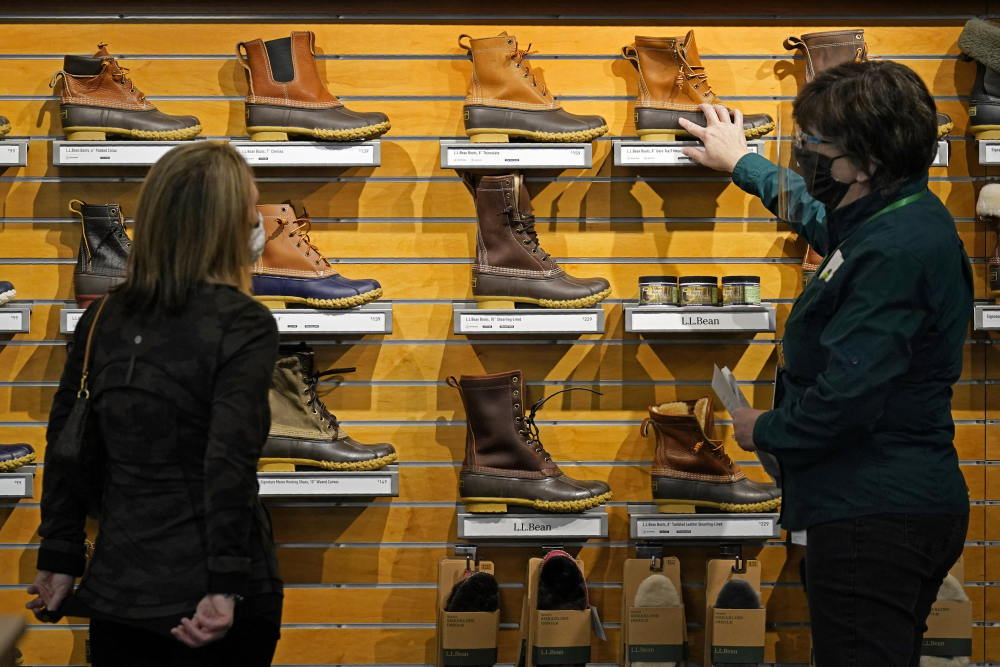
The dirty secret about Bean Boots is that their soles aren’t really compatible with Maine winters, but that won’t stop us from wearing them all season long. The staple of Maine wardrobes, also known as duck boots and the Maine Hunting Shoe, has made its way into high fashion at times and was even called “chic” by renowned shoe designer Manolo Blahnik. The design — a leather upper stitched to a rubber sole — was invented by Leon Leonwood Bean in 1912 and was the basis for his now world-famous Freeport-based retailer. Out of his first 100 boots sold, however, 90 were returned because the two pieces had separated, leading to a change to the stitching.
L.L.Bean Boat and Tote
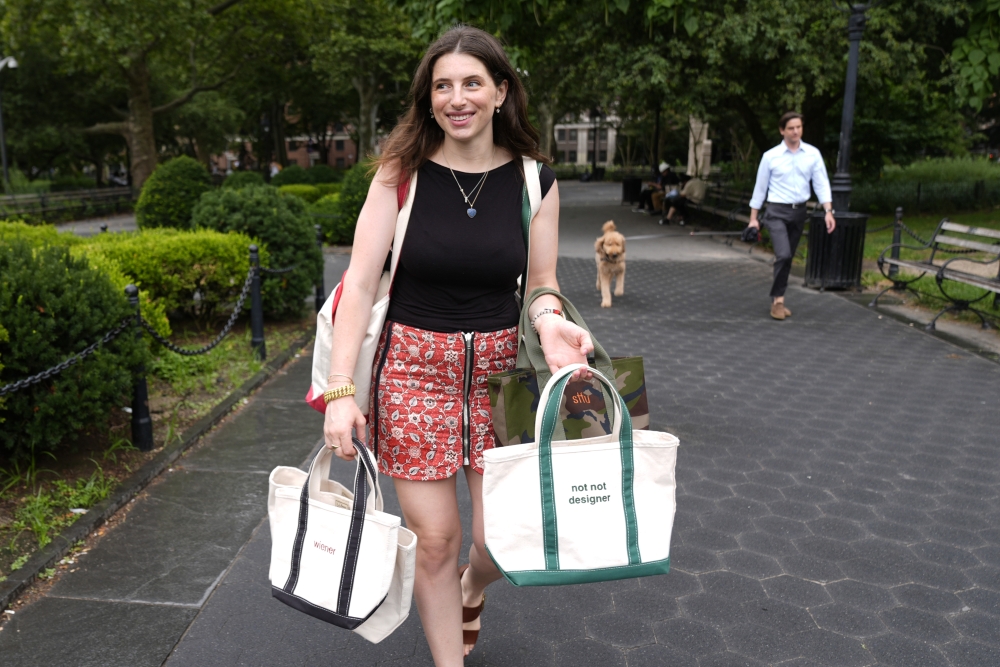
Believe it or not, the original purpose of L.L.Bean’s iconic canvas tote bag was to bring ice home for the freezer. But, 20 years after its first listing in the company’s catalog, it reappeared with a new name, look and function: carrying supplies for a day on or by the water. More recently, people have been using it as an everyday purse, taking the monogramming option to a new level with silly phrases and accessorizing the accessory with charms — including miniature versions of the same bag.
Orange hat
If Maine had an official state fashion color, it would be blaze orange. Since Maine is a rural state, being safe in the woods during hunting season is pretty important. Fishing bibs are often orange, partly so fishermen can be seen clearly if they end up in the water. But wearing blaze orange hats, jackets or vests is not only for safety, it’s for status. It says, “I understand what Maine is all about.” It also shows Mainers favor clothing that have both substance and style.

FOOD AND DRINK
Allen’s Coffee Brandy
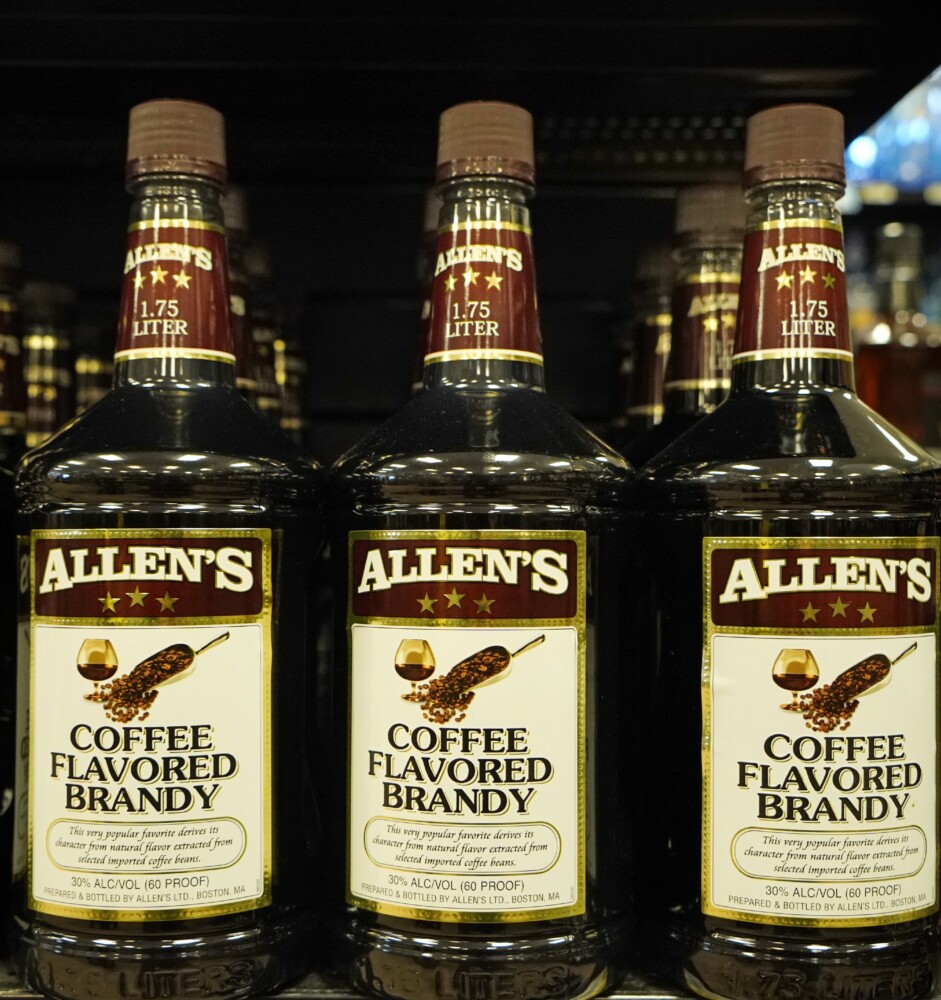
This coffee liqueur may be made in Massachusetts, but its popularity is more pronounced in Maine, where it was long the top-selling alcoholic beverage in the state, since surpassed by Tito’s and Fireball, at least in some benchmarks. It’s commonly served in equal parts with milk over ice, a cocktail known as a sombrero, as well other less family-friendly nicknames.
Baked beans

For nearly 100 years, beans baked in cast-iron pots in Maine were shipped around the world from the B&M Baked Beans factory in Portland. When it closed in 2021, Mainers either switched brands or stockpiled old Maine-made B&M cans left on store shelves. Baked beans are part of Maine’s cultural history, including Saturday night family dinners of beans and brown bread, bean suppers at the local church and the unique tradition of bean-hole beans, which are cooked in pits dug into the ground.

Blueberry pie
Maine is the world’s largest producer of wild, or low-bush, blueberries, a smaller, more delicate version of the fruit than the better-known high-bush variety. Although they smoosh easily, that’s not a problem when used as filling for pie — the state dessert and the cap on a truly complete Maine lobster dinner, ideally served with Gifford’s vanilla ice cream. And since the little berries are loaded with antioxidants, a slice a day is arguably part of a healthy diet.
Lobster roll
Maine summer on a bun. That’s how many people view Maine lobster rolls. It’s why a Wiscasset sidewalk stand that’s been in business for more than 80 years, Red’s Eats, has become a world-famous tourist destination. The lobster roll is deceptively simple but dependent on exacting standards. You need fresh Maine lobster meat, and a buttered and grilled split-top bun, not usually sold outside New England. It should just barely be dressed in mayo, not drowned.

Maine Italian

Long before Door Dash and drive-through windows, the Maine Italian was the state’s grab-and-go sandwich, and continues to be a corner-store staple. Italian baker Giovianni Amato started selling them on Portland’s waterfront more than 110 years ago, to Irish dockhands, using ingredients he had handy: soft bread, boiled ham, American cheese, tomatoes, pickles, olives. To people from away, the lack of Italian cold cuts or cheeses makes no sense. To Mainers, the sandwich is edible nostalgia, filled with memories of family parties, picnics and beach trips.
Moxie

Maine’s official “state soft drink” was invented by Dr. Augustin Thompson of Union, in 1885. Over its long history, it’s never been made in Maine, bottled first in Massachusetts and now New Hampshire. In the early 1980s, Lisbon Falls storekeeper and Moxie memorabilia collector Frank Anicetti decided his town should celebrate the soda. It’s an acquired taste and was never as popular as Coca-Cola or Pepsi, but Mainers love an underdog. Today, the annual Moxie Festival draws people from around the world. This year, it’s July 10-12.
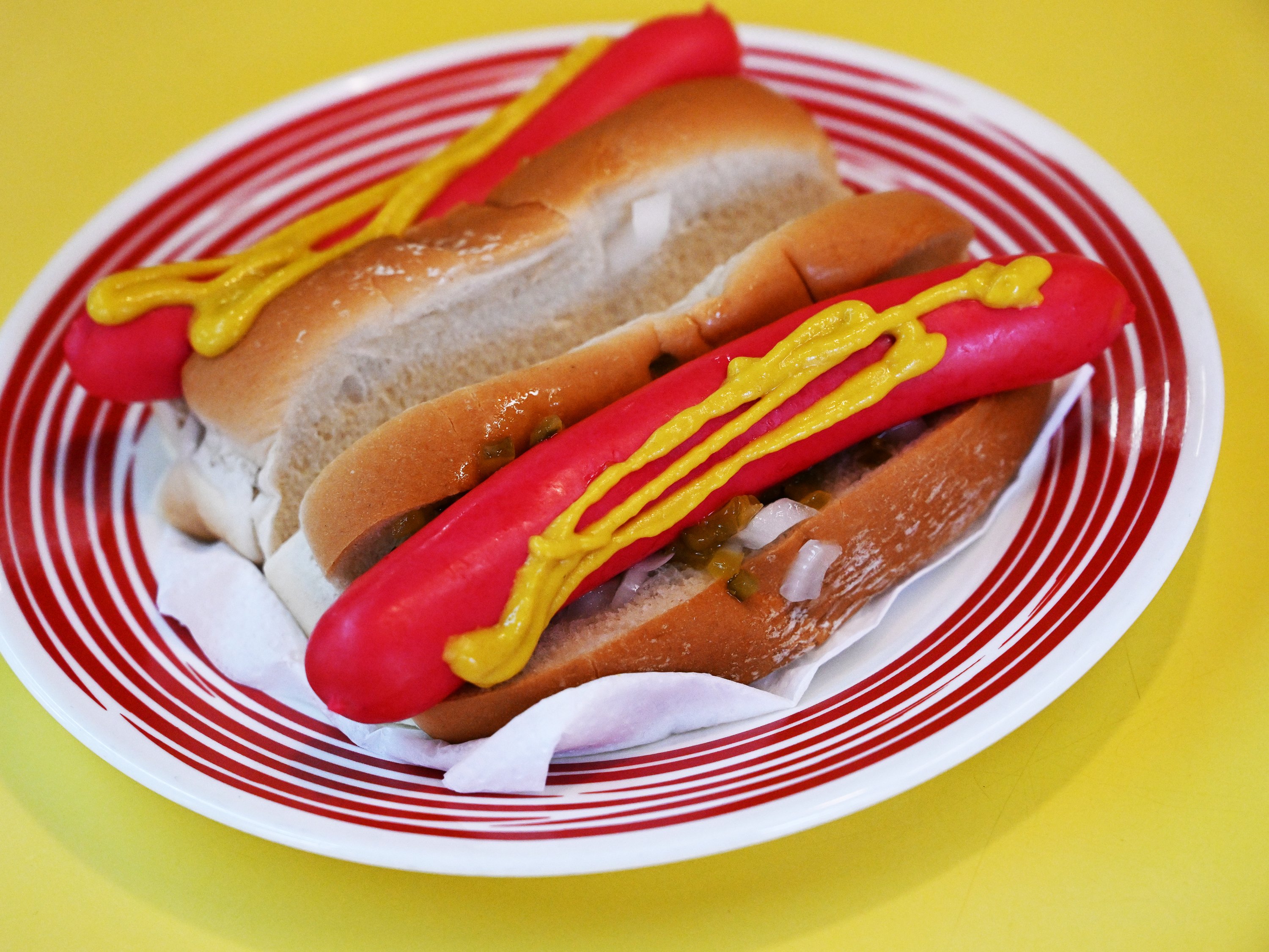
Red snapper
If you’re eating a hot dog in Maine, go red or go home. Even better, go to the town of Dexter where every August there’s a festival in honor of the beloved, bizarrely colored tubed meat that Mainers swear tastes better than the browner kind. While they should be served in a New England split-top bun, we’re not as concerned as they are in Chicago about what condiments you use, though a squiggle of yellow mustard really pops against the bright red backdrop, which Maine’s sole red snapper manufacturer, Bangor-based W.A. Bean & Sons, has had to re-create with natural dye since the ban on Red Dye No. 3.
Whoopie pie
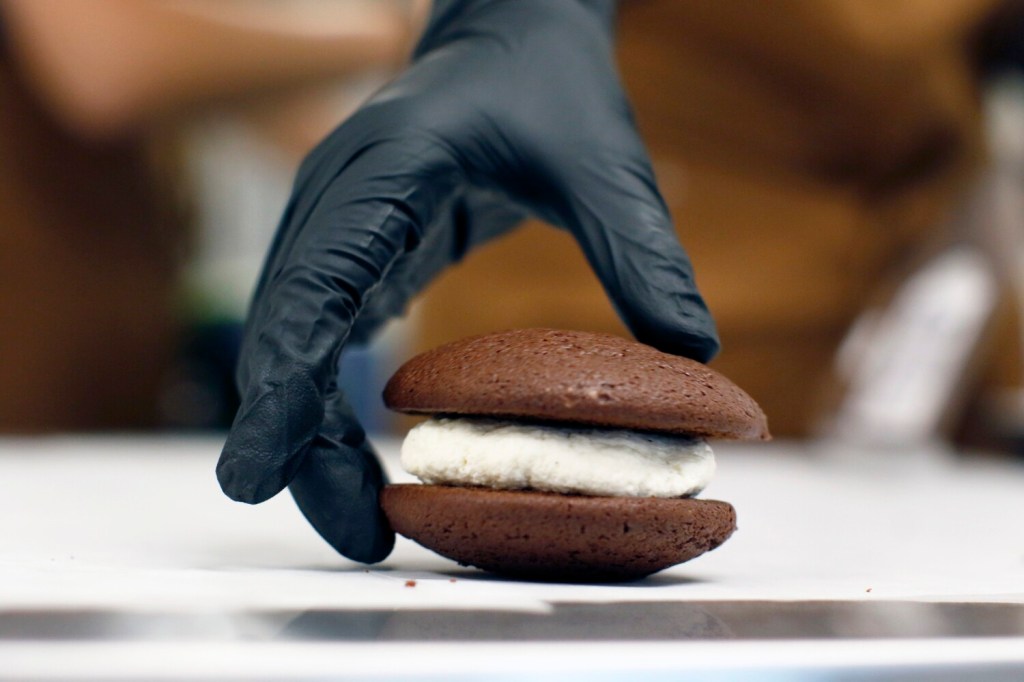
About 15 years ago, a story in the New York Times said Pennsylvania folks were claiming to have invented whoopie pies. Mainers, who claim the sweet treat as their own, were incensed. They pushed legislators to declare whoopie pies the official state dessert. But the equally strong blueberry pie faction in Maine pushed back. A compromise was reached, declaring whoopie pies the official state treat and blueberry pie (with Maine wild blueberries) the state dessert.
NATURE AND RECREATION

Black bear
Maine has one of the biggest black bear populations in the country, possibly the largest per square foot, making the likelihood of an encounter relatively high. Although attacks are extremely rare, it wouldn’t hurt to read up on what to do if you come across one. There’s a different set of guidelines if that bear happens to be University of Maine mascot Bananas, typically portrayed by an Alpha Delta fraternity brother.
Buoy
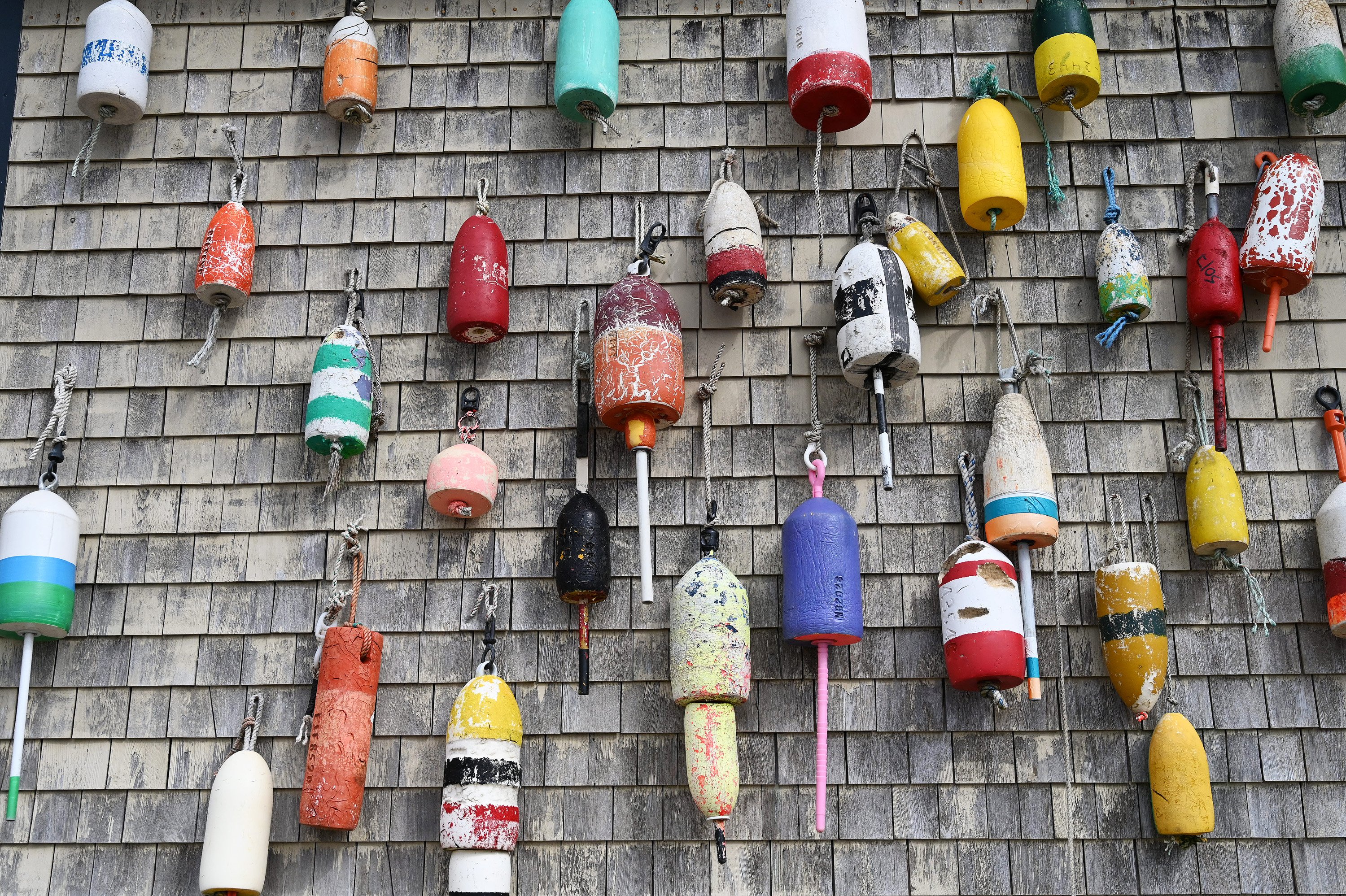
Buoys can serve different purposes, as navigational aids or markers for moorings, but it’s the kind used for lobster traps, with stripes of different colors in patterns unique to every lobsterman, that have become a Maine icon. You can find replicas in the form of earrings or keychains and see them used as beach-house decor. Collections of them hanging from walls in tourist towns have become favorite spots for photo ops.

Camp
Often preceded by “upta,” camp in Maine isn’t just a place but a concept: Somewhere you go to get away from it all, where outside work and worrying are not welcome. While the structures themselves can take many forms, from barebones hunting camps buried deep in the woods to lakeside cabins with washing machines, there are some things you’ll find at nearly every camp you come across, including random assortments of cutlery, expired condiments and reading material.
Chickadee
The chickadee became Maine’s state bird in 1927, but lawmakers didn’t specify a species. That’s led to debates about whether the more commonly seen black-capped chickadee or the boreal, which is found in fewer places outside of Maine, better represents the state. The black-capped chickadee, also Massachusetts’ state bird, was featured on our license plates for more than 25 years. Now that the plates have been replaced, it might be time to give the boreal its due.

Cribbage board

Cribbage is a card and board game that came from England, but Maine has made it a tradition of its own — a pastime that’s popular everywhere from pubs to social clubs to camp. While the standard version is a rectangular wooden slab, with tracks of holes for each player to peg as they score points, people have gotten creative with the design, making them in the shape of whales, Sasquatch and the state of Maine. You can often find well-loved cribbage boards at antique stores, and if you’re lucky, the pegs will still be stored on the underside.
Katahdin
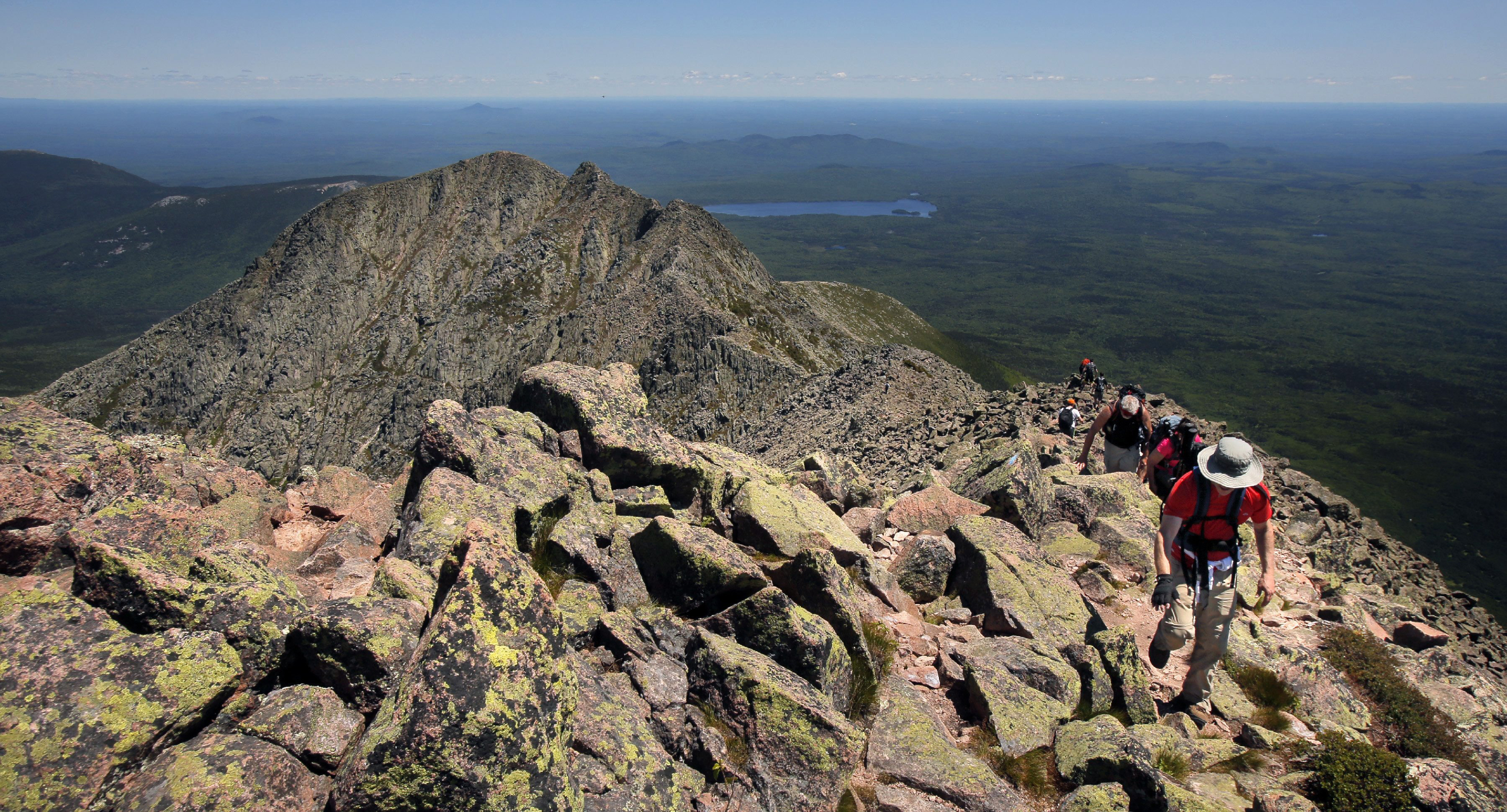
This is Maine’s tallest mountain, at more than 5,200 feet, and famous for being the northern end of the Appalachian Trail. It’s considered a sacred place to Indigenous people in Maine, and the name means “greatest mountain” in Penobscot. Part of the mountain’s mystique is that people often get lost on it and have to be rescued. One of the most famous cases was in 1939, when 12-year-old Donn Fendler survived nine days alone on the mountain. His story was captured in the book “Lost on a Mountain in Maine,” which has been taught in Maine schools for decades, both as a cautionary tale and for its inspirational value. It was made into a movie in 2024.
Lobster boat

Anybody who has bought a Maine calendar or postcard knows what a lobster boat looks like. These are modest vessels, usually 25-35 feet long with a small pilot house. They can be seen up and down the state’s coast, from Portland to Eastport, and moored at tiny harbors in between. They are workaday boats, a reminder of the rugged folks who make a living on Maine waters. They are also celebrated annually each summer with lobster boat races, including ones in Stonington, Rockland, Boothbay Harbor, Winter Harbor, Jonesport-Beals and Harpswell.

Moose
Choosing the moose as Maine’s official state animal was not arbitrary. With more than 40,000 moose, the state has the largest population of any state other than Alaska. The opportunity to see a moose in person brings people to Maine from all over the country. They are awesome-looking animals to encounter in the wild, standing up to seven feet tall and weighing maybe 1,000 pounds, with antlers that can span six feet in width. It’s become a symbol of Maine’s wild and majestic landscape, not to mention popular in Maine business names, like the Bull Moose music store chain and the Cool As a Moose gift shops.
Old Town canoe

Those classic forest green canoes that you’ve seen lined up by lakes at state parks and summer camps? Chances are good, they’re Old Town canoes, made in the central Maine town of the same name since the turn of the 20th Century. Inspired by the birchbark canoes used by the Penobscot Nation, the first Old Town models were composed of wood and canvas, since replaced by polyethylene. The company, which was acquired by Johnson Outdoors, now produces more kayaks than canoes.
Pine tree
The white pine might not be the most abundant tree in Maine, but it’s up there. That, coupled with its role in the state’s economy, including their use for ship masts for the British Royal Army, led to its prominence on the original state seal and to Maine’s nickname becoming the Pine Tree State. Designs inspired by Maine’s first official flag, featuring a pine tree and a star, have had a recent resurgence in popularity. The tree is also featured on our new license plates, though some say that one looks more like a spruce or fir.

Puffin

It’s not hard to figure why people find puffins so loveable; they look like stuffed animals come to life. The stout black-and-white birds with sad clown eyes sport bright orange bills during their breeding season, which correlates with our boating season, making excursions to puffin colonies on islands off the Maine coast a popular attraction. June and July are the best times to go see them in places like Eastern Egg Rock, a destination of boat tours.
Snowmobile
Mainers like their freedom. The popularity of the snowmobile here is all about going wherever you want, exploring the state, even when winter is at its coldest and snowiest. The snowmobile traces its roots in New England to the early 1900s, when people put skis on the front of their Ford Model Ts and other early cars. Snowmobiles have been mostly a recreational vehicle since the 1960s, and today, there are thousands of miles of trails all over Maine maintained by snowmobile clubs, municipalities, private landowners and the state.

Windjammer

This majestic sailing vessel perfectly sums up Maine’s history. Sailing ships of all kinds made Maine an important commercial hub in the 1800s, and schooners from Maine ports hauled cargo all over the world. But by the 1930s, trucks and trains were quicker modes of transport, and Maine’s schooners fell idle. In the mid-1930s, Frank Swift, who had worked on cargo ships, decided Maine’s schooners could be repurposed for tourists and day-trippers. He called his excursions “windjammer cruises,” using an old seafaring term that wasn’t specific to any one kind of vessel. Today, Maine has a thriving windjammer industry, especially on the Midcoast. There’s even an annual festival, Windjammer Days in Boothbay Harbor, usually held in June.


We invite you to add your comments. We encourage a thoughtful exchange of ideas and information on this website. By joining the conversation, you are agreeing to our commenting policy and terms of use. More information is found on our FAQs. You can update your screen name on the member's center.
Comments are managed by our staff during regular business hours Monday through Friday as well as limited hours on Saturday and Sunday. Comments held for moderation outside of those hours may take longer to approve.
Join the Conversation
Please sign into your Press Herald account to participate in conversations below. If you do not have an account, you can subscribe here. Questions? Please see our FAQs.