
Perhaps it reflects my snarkier side, but I just love the cheek with which British newspapers are written.
In a 2013 review of ethical and organic chocolate Easter eggs, The Guardian began its assessment of Sainsbury’s Freefrom (it’s free from eggs, dairy, gluten and wheat) Dark Chocolate Easter Egg with ” ‘It’s too short on the palate,’ said one taster who has spent too much time watching MasterChef.”
I chuckled first. And then sobered up with the thought that the average Brit (Sainsbury is one of the country’s main grocery chains) could parse his ethical chocolate Easter egg choices in such fastidious detail because he had so many to choose from. The most pressing question I was asking of chocolate eggs (or bunnies for that matter) was: solid or hollow? Last week, I went looking for an ethical chocolate egg in my local grocery stores. I found none, but with bars it was a different story: I had the choice of eight brands of bars that carried markings indicating they were made with the cacao beans grown, harvested or processed to the benefit (as opposed the detriment) of the people and environment in equatorial regions like South America and West Africa.
“Chocolate makes us smile. So it makes sense that it should bring joy to the human and animal communities in which it is grown and produced,” Kate Shaffer wrote in her 2011 memoir-cum-cookbook that serves up recipes and her life as a chocolatier on Isle au Haut in equal measure.
I couldn’t agree more. But knowing which chocolate to buy has gotten pretty complicated. On the eight bars I bought (for research purposes only, I assure you) labels variously certified them as USDA Organic (4), Fair Trade (4), For Life (2), gluten-free (2), carbon neutral (1), halal (1), non-GMO (1) and vegan (1). Several also had pictures and stories of the heirloom varieties grown, farmers who grow them, the processes by which they are fermented, dried, roasted and made into chocolate. How’s a lover to choose?
Shaffer, whose Black Dinah Chocolatiers is now located in a bigger facility in Westbrook, doesn’t buy chocolate that involves slave or child labor, environmental destruction, or unfair pay to farmers. Her confections have won national Good Food awards for being both exceptionally delicious and sourced to support sustainability and social good.
“You have to look deeper than the certification labels,” Schaffer said, because they don’t necessarily tell the whole story. Many cocoa-producing countries opt out of USDA Organic certification and Fair Trade certification as their own laws governing that commodity are actually stricter.
“I … look for single-source chocolate,” Shaffer said. “Not that blends are bad, but if I focus on purchasing chocolate made with beans from a single region, then I can research the production processes in that region and the laws that govern the commodity.” She also looks for chocolate produced in the region where the beans are grown (she mainly chooses chocolate from Venezuela and Peru) because she believes that communities should benefit from the commodity they produce.
Enna Grazier, an aspiring cocoa bean-to-chocolate bar maker based in Exeter, New Hampshire, has similar sourcing ideals, but adds one more: cacao genetic biodiversity. Cacao trees, like coffee trees, provide shade cover for a host of species – plant, insect and animal – in the very hot climes in which they grow. Having a diverse gene pool represented in cacao groves will help the population of trees and the species that depend upon them cope with changes in the overall environment. Grazier recommends Madecasse chocolate, which is available at Hannaford, Market Basket and Whole Foods; it is sourced from heirloom cacao beans grown in Madagascar, she said.
“The benefit of a vast cacao gene pool for chocolate lovers is that each type of bean offers a new and different flavor to the chocolate it gets made into,” Grazier said. A detail she feels is well worth noticing.
Christine Burns Rudalevige is a food writer, a recipe developer and tester, and a cooking teacher in Brunswick. Contact her at [email protected].
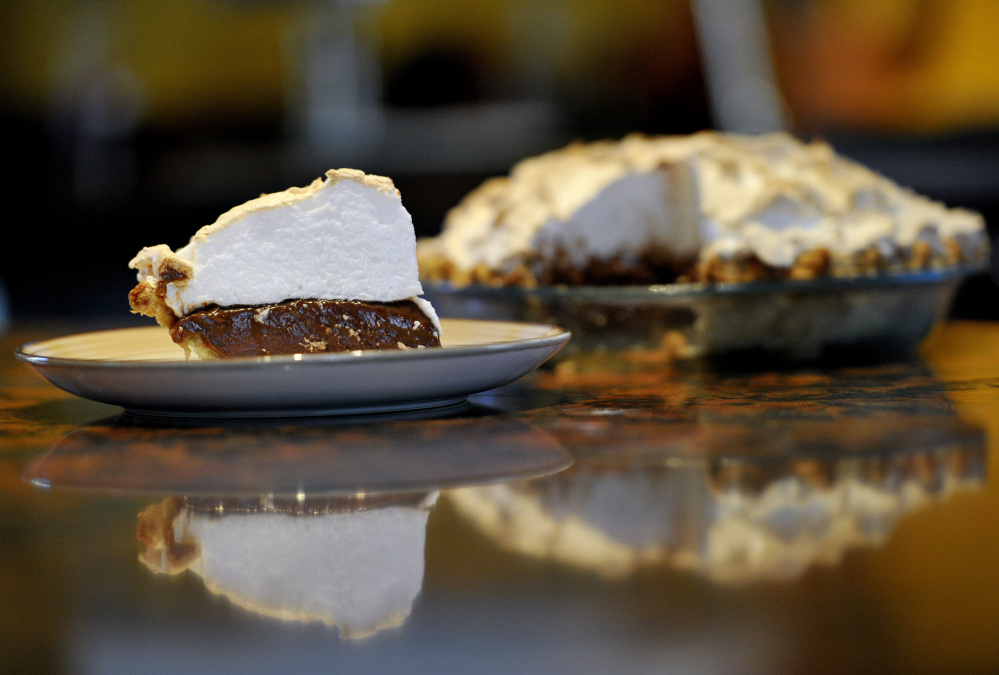
CHOCOLATE MERINGUE PIE
This recipe is slightly adapted from “Desserted: Recipes and Tales from an Island Chocolatier” by Kate Shaffer. As you can see from the photo, the six eggs called for in the meringue recipe produce a very tall pie. If you’d like to simply use the whites from the four eggs used to make the pudding, decrease the amount of sugar in the meringue to 1/2 cup and reduce the baking time to 15-20 minutes.
Makes one (9-inch) pie
1 pre-baked single pie shell
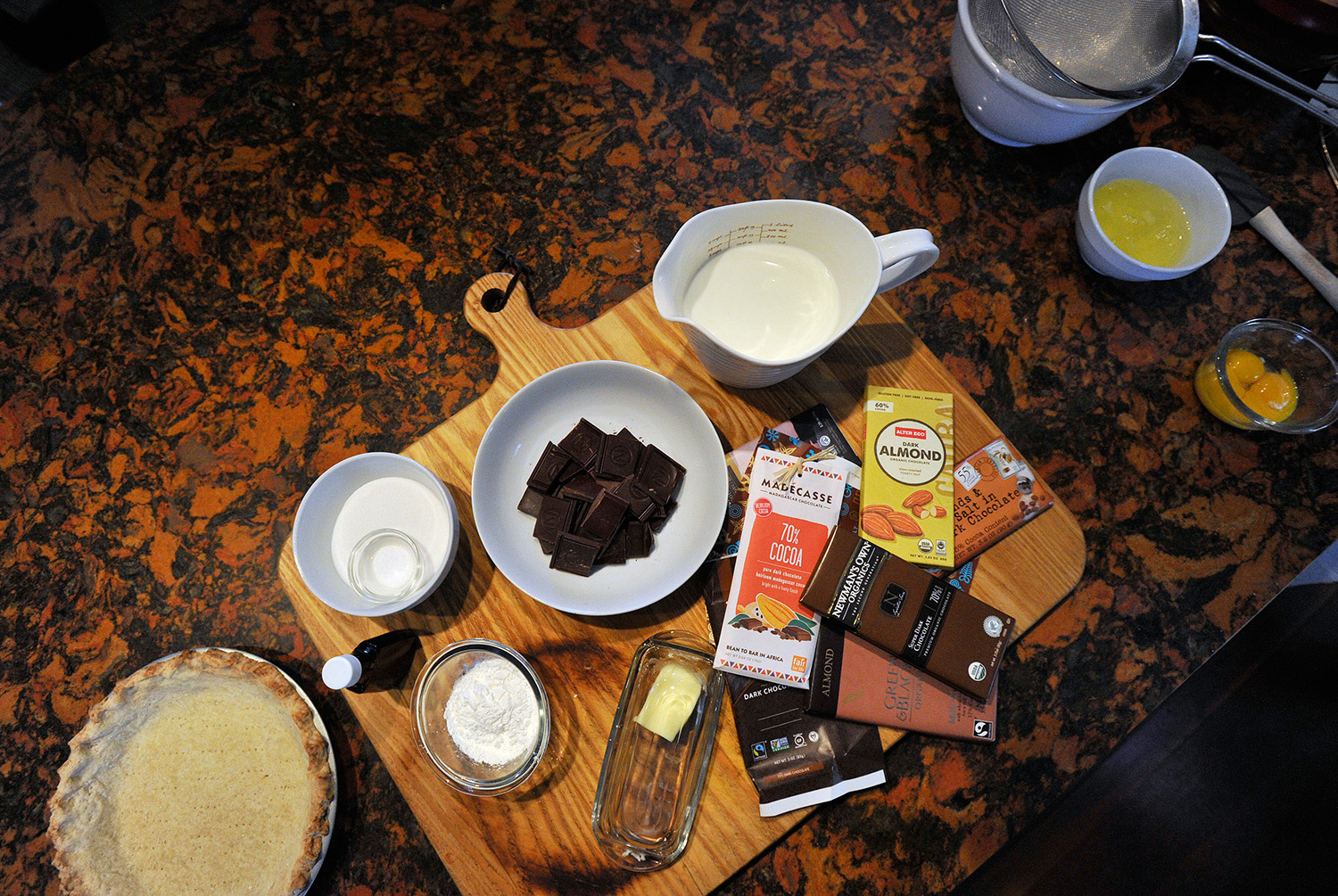
FOR THE PUDDING:
2/3 cup granulated sugar
1/4 cup cornstarch
1/2 teaspoon salt
4 egg yolks
3 cups milk
5 ounces bittersweet chocolate, chopped and melted
2 ounces unsweetened chocolate, chopped and melted
2 tablespoons unsalted butter
1 teaspoon vanilla extract
FOR THE MERINGUE:
6 room-temperature egg whites
2/3 cups granulated sugar
To make the pudding, whisk together the sugar, cornstarch, salt and egg yolks in a medium-size saucepan. Whisk in the milk and place the pan over medium heat and cook, stirring constantly, until the mixture comes to a boil. Simmer 1 minute, and remove from heat. Press the hot mixture through a fine-mesh sieve into a heat-proof bowl and stir in chocolates, butter and vanilla. Mix until the pudding is smooth.
Press a sheet of plastic wrap directly on the surface of the pudding and place in the refrigerator to chill completely.
To assemble the pie, preheat the oven to 300 degrees F.
Place the egg whites in the bowl of a stand mixer and beat with the whisk attachment until the whites hold soft peaks. While the mixer is going, pour in the sugar very slowly. Beat until the peaks are stiff and glossy, but not dry or grainy.
Remove the pudding from the refrigerator and scoop it into the prepared crust, leveling it off with an offset icing spatula. Spread the meringue over the entire surface of the pie, making sure that it makes contact with the crust along the entire edge. This will help prevent the meringue from shrinking during baking.
Place the pie on a sheet pan before putting into the oven to bake for 20 to 30 minutes, until the meringue is golden and cooked through. Remove the pie from the oven and cool. Chill the pie for 6 to 8 hours before serving.
We invite you to add your comments. We encourage a thoughtful exchange of ideas and information on this website. By joining the conversation, you are agreeing to our commenting policy and terms of use. More information is found on our FAQs. You can update your screen name on the member's center.
Comments are managed by our staff during regular business hours Monday through Friday as well as limited hours on Saturday and Sunday. Comments held for moderation outside of those hours may take longer to approve.
Join the Conversation
Please sign into your Press Herald account to participate in conversations below. If you do not have an account, you can subscribe here. Questions? Please see our FAQs.