
All residential development of more than 10 units could come to a sudden halt in Westbrook next month.
One side of the debate to establish a 180-day development moratorium, which will face the City Council Oct. 3, argues that the city needs to pause in the face of increased development that is burdening city services, especially schools. Others believe a six-month stop would send a negative message to the business community, and have unintended consequences.
At Monday’s meeting of the City Council’s Committee of the Whole, which also discussed implementing impact fees for schools and sewer impacts, a 4-1 vote sent the moratorium one step closer to reality.
A number of residents, most of whom belong to a recently established community group called Westbrook Forward, spoke in favor of a moratorium.
At the center of the development debate has been the Blue Spruce Farm project, which is building 189 units in Phase 1, and has planned a 110-unit Phase 2 expansion. Rocco Risbara, the developer of the project, said a moratorium would effectively kill the Phase 2 project.
Sandra Guay, an attorney working on behalf of the city, told officials Monday that any projects currently approved by the Planning Board would not be impacted by the moratorium. The board’s first look at Risbara’s Phase 2 sketch plan is not until its Oct. 18 meeting.
“We need to relook at our vision for the city,” said Councilor Victor Chau, who supported looking at both impact fees and a moratorium. “We need direction, a step back.”
The development discussion has produced an emotional response from residents over the last few months, especially as the conversation on school overcrowding and a $27.3 million school expansion project has moved ahead.
Members of Westbrook Forward have said the city could use a six-month moratorium to review its comprehensive plan. Bryan Bozsik, an unofficial leader for the group, said Monday that a majority of residents don’t like the development that the plan is producing in the city, including the tilted ratio of multi-family apartments compared to single-family homes. Some 400 residents have signed a petition in favor of the moratorium.
With an upcoming election, development is a political issue, as well.
All of the officials running for a seat this November appeared to support the moratorium Monday, including mayoral candidates Michael Shaughnessy, who spoke from the audience, and City Councilor Mike Sanphy, who voted to send the moratorium to a council vote. Former City Clerk Lynda Adams, who is running for the Ward 5 council seat, also spoke in favor of the moratorium.
Shaughnessy said he is in favor of taking a pause, adding that the city could potentially face “the same problems over and over.”
Councilor Michael Foley, who supplied the lone vote to deny the measure, said Westbrook has done a tremendous amount of work to change and develop its economy since the heydey of the S.D. Warren mill.
“This would put the brakes on,” he said, adding that rumors of a possible moratorium have already had a negative impact. “This is hindering private landowners from selling their property.”
City Planner Jennie Franceschi said Tuesday that under the moratorium, a proposed 13-unit subdivision in the northern section of Westbrook, for example, would be stopped.
“This would put a hold on that,” she said.
Franceschi said the city’s comprehensive plan was designed to put housing density like that of Blue Spruce Farm in areas of the city with the most services, within the heart of the city.
She said that while the city has seen an increase in new housing starts in the last few years, the long-term outlook is not as staggering.
“We’re sort of making up for years where we had little to nothing going on in Westbrook,” she said. “We are seeing an influx of growth, but it’s not out of control or unmanagable.”
Resident Mike Ross, who supports the moratorium, said Westbrook “does not have much open land left.”
Jessica Corriveau argued that a six-month moratorium “won’t change a lot. We need to pause to think about it. It’s only temporary.”
Bozsik and many of those in favor of a moratorium said the school impact is one of the key areas of concern from the public, and many who spoke during public comment Monday mentioned the city’s handling of its school facilites. He also pointed out irregularities in school enrollment studies that were commissioned in 2014 and again this year, which show higher numbers two years ago, prior to the Westbrook development boom.
“It’s creating a flood of concerns,” said Mayor Colleen Hilton on Monday, referring to calls and emails she’s received questioning what the moratorium means.
Many are also concerned that the moratorium could impact a proposed 38-unit senior housing project from Westbrook Housing. Chris LaRoche, the organization’s executive director, spoke at length Monday about how the decision could affect the project’s funding. He also argued that it could take away Westbrook jobs.
Risbara said Monday that developers are “rule followers,” arguing that the city’s comprehensive plan works.
“It hurts alot of people,” he said of the moratorium. “A lot of people would be out of work.”
Councilor Brendan Rielly recused himself from the moratorium vote Monday. The law firm Jensen Baird, his employer, represents Risbara Bros.
The committee also voted 5-1 in favor of forwarding impact fees for council discussion, which, if implemented, would impose a one-time fee on developers for school and sewer impacts directly related to the specific development.
James Damicis, a consultant for the city from Camoin & Associates, presented information on impact fees to the committee. In establishing impact fees, the city needs to look at the impact from future growth, he said. Impact fees cannot be used to address “existing deficiencies.”
In his memo to the committee, City Administrator Jerre Bryant said the administration recommends the city “immediately proceed” with the development of impact fee proposals for school facilities and sewers.
The City Council will take up both issues on Monday, Oct. 3, at 7 p.m. in Room 114 of Westbrook High School. Because a moratorium is considered an emergency ordinance, a unanimous vote would only require one reading. Any other vote in favor requires a second reading.
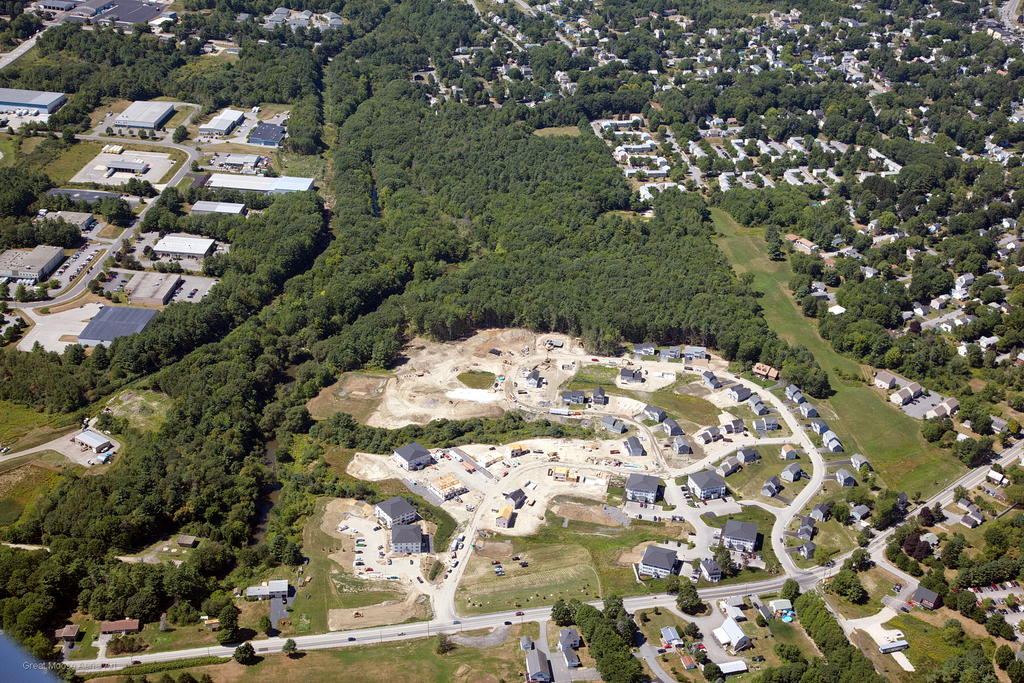
Blue Spruce Farm off Spring Street has been at the center of the development debate in Westbrook. The City Council’s Committee of the Whole forwarded a 180-day development moratorium for residential developments over 10 units to the City Council to consider on Oct. 3.
Comments are no longer available on this story