
A controversial moratorium that would halt all residential development of more than 10 units for six months was tabled by the Westbrook City Council this week because the proposal was missing important language.
However, city officials insist they intend to take up the issue again during the next City Council meeting this month.
The council voted 4-2 Monday to table the moratorium, and will hold a Committee of the Whole workshop on Monday, Oct. 17 to decide on the language. A City Council meeting will follow the next week.
Many residents who came to voice opinions on the moratorium Monday said the city appeared unprepared to make a choice on such an important measure.
“Our goal is still to get something so we can have a consideration of the moratorium during the Oct. 17 meeting,” said City Administrator Jerre Bryant on Wednesday.
A lot is riding on the council’s ability to draft language that would hold up in court. During discussion Monday, city attorney Sandra Guay said the ordinance needs to make a solid case for one of two reasons for a moratorium mandated in state statute: either harm created by an overburden on public facilities or a lack of local zoning or comprehensive plan.
“I had trouble doing that,” she said, which was the reason she left the language incomplete in the draft.
She told councilors she hoped they could make a stronger argument because they know the city.
“The council will have to do a good job saying exactly what the issue is and why a moratorium is necessary,” she said, adding that towns in Maine who have used a moratorium have often had no comprehensive plan.
Councilor Michael Foley, who has been an opponent of the moratorium, pressed Guay on the question of whether the ordinance would be legally defensible.
“Based on what I’ve seen in the ordinance, it would be difficult,” she said,
The Committee of the Whole met prior to the City Council meeting, but the missing language was never discussed.
The push for a moratorium in Westbrook has been gaining momentum since this summer, when a group of residents called Westbrook Forward pressured the council to look at such a measure. Many believe the pace and type of housing in Westbrook – highlighted by Blue Spruce Farm off Spring Street – will be harmful to city infrastructure, especially schools that are already at capacity, and that a moratorium would give the city a chance to re-examine zoning ordinances.
“It’s a shame that the City Council did not have a complete motion to be considered,” Flynn Ross, who has been an outspoken member of Westbrook Forward, said following the meeting.
She also said part of the argument against a moratorium could be solved by excluding senior housing from the ordinance language.
She also provided the council and city administration with language that she would use in the blank sections.
Westbrook Housing Executive Director Chris LaRoche has spoken about the organization’s concern that a moratorium could affect the funding for its planned 52-unit senior housing project, and councilors have said that an ordinance would have to clearly exclude senior housing.
Within the confusion of the night, roughly 50 people attended the meeting to speak on both sides of the argument, with many coming from the business community to speak against a moratorium.
Ted Flaherty, of the Flaherty Real Estate Group, said a moratorium, no matter how short, would affect jobs in the city.
Jim Garland argued that the school overcrowding was due to the closed Prides Corner Elementary School, not unchecked development.
“It’s our own fault,” he said, adding that it’s “unfair to put an article before you that’s incomplete. Hold a workshop to put together the language. You can’t put that together in one night.”
Mayoral candidate Michael Shaughnessy, who also spoke, said he is in favor of the moratorium.
“There is concern across the city,” he said.
Vincent Maietta, who developed the former Prides Corner school property into a condominium project, said there is a “pent-up demand for housing” in Greater Portland, and that a six-month moratorium would not stop development.
Speaking on behalf of Risbara Bros., Nancy St. Clair asked the council to consider a moratorium’s impact on livelihoods, including that of her own family business, St. Clair Associates.
“This will affect so many members of this community,” she said, add that it could open the city up to possible litagation.
Kate Bergeron told councilors that they also have a responsibility to the residents.
Bryan Bozsik of Westbrook Forward told the council that the group’s petition now has more than 450 signatures.
The council, however, did vote Monday to begin a process to develop impact fees for developments with impacts on schools and sewers.
The approval also set Oct. 3 as the effective date should the impact fee ordinance be approved, meaning any new development occuring after Monday will be subject to the impact fees for schools and sewers.
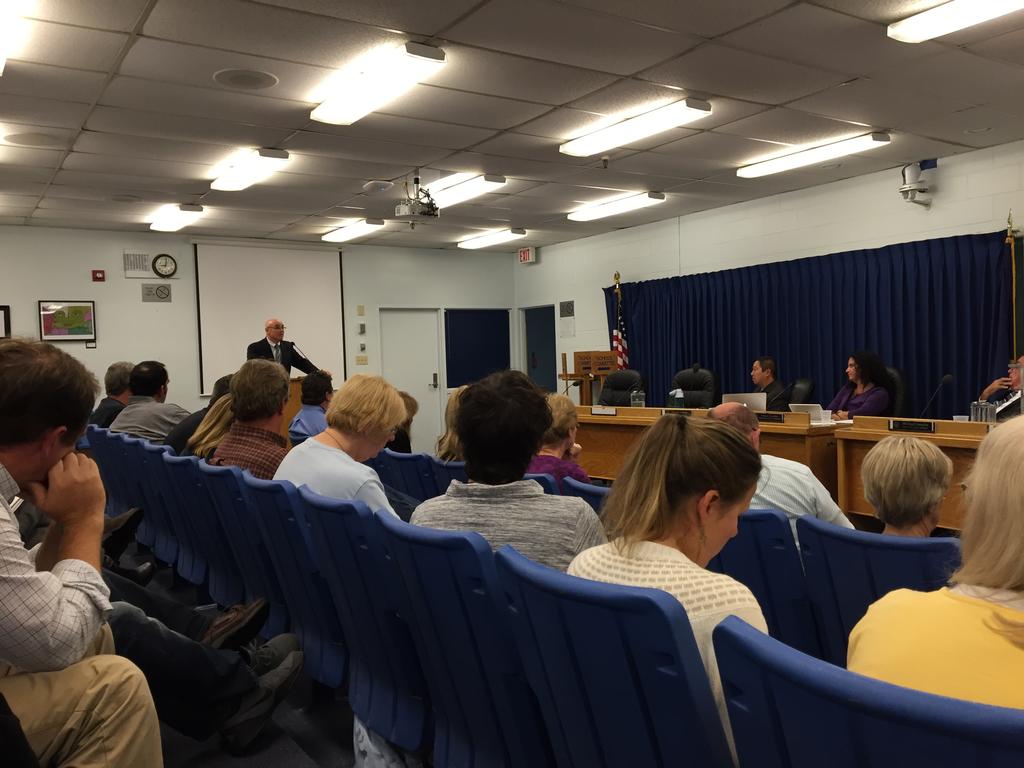
Chris LaRoche, executive director of Westbrook Housing, was one of about 30 people who spoke Monday about a potential development moratorium. He said he’s concerned that a moratorium could affect funding for a 52-unit senior housing project the organization is planning.
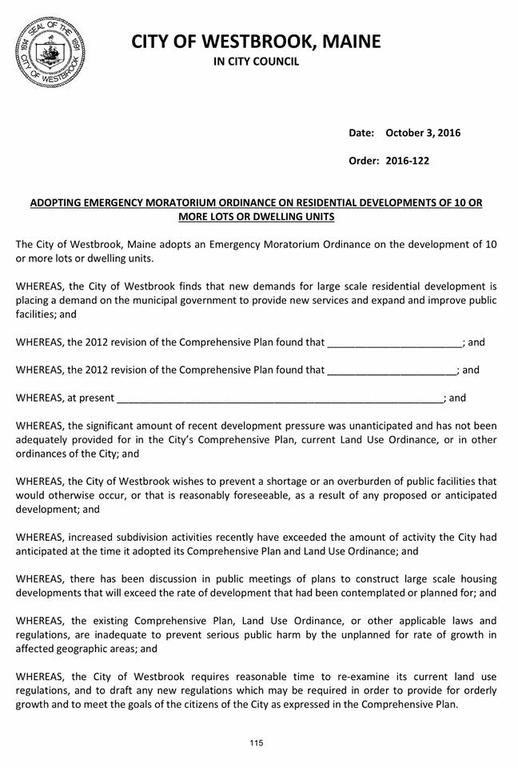
A draft moratorium ordinance provided to the City Council this week featured important sections that had been left blank. The council tabled a vote, and will now revisit the ordinance during a Committee of the Whole meeting.
Comments are no longer available on this story