
As I visit classrooms across the Regional School Unit 5 district, there is abundant evidence at all levels that students are engaged and excited about their learning. Fifth-grade students read a text, identify themes, and provide evidence to their peers about why they have chosen a certain theme; high-school students create robots to navigate through a maze; students in an English class identify how characters interact with one another from watching a video.
As we continue to implement a proficiency-based system pre-K-12, our teachers are more often becoming facilitators of learning rather than lecturers delivering content. In an age when anyone with access to technology can gain basic information on any given subject, what is most essential is for our students to learn how to be critical thinkers and discriminating consumers of the texts they read. In this election year with massive amounts of information coming at all of us, who can argue the need for all citizens to have this critical skill?
Statute LD 1422: An Act to Prepare Maine People for the Future Economy requires all districts to move to proficiency-based systems. Last March, the Legislature extended the timeline to the year 2025 to ensure districts have the capacity to carry out the work. Districts in Maine can select from the years 2018-2021 to begin to award proficiency-based diplomas. RSU 5 has chosen to begin with the Freeport High School class of 2021, our current eighth-graders.
By 2021, students must be able to demonstrate proficiency in English, math, social studies and science. The statute adds one additional proficiency area – visual performing arts, health and physical education, world languages, and career and education development – each year through 2025, at which time full implementation is expected. Our high school staff members have been working diligently for the past three years to identify the fundamental skills that all students will need to know in order to receive a proficiency-based diploma. This work is producing rich conversations among our teachers.
Throughout the district, the habits of work (homework completion, respect, engagement) are being separated from the skills/standards that students must acquire. While both are critical, we should be able to clearly articulate what the areas of strengths and weaknesses are for each of our students. The general goal of proficiency-based education is to ensure that students acquire the knowledge and skills that are deemed to be essential to be college or career ready. Even if the statute did not exist, our goal would be the same. Because when done well, staff, parents, students, and communities become partners in the shared goal of having our students graduate ready to pursue their passion, reach their potential, and be contributing members of our society.
Sheryl Sandberg said, “It is the ultimate luxury to combine passion and contribution. It’s also a very clear path to happiness.” This should be the goal for each and every one of us, and proficiency-based learning provides a path to that end.
Dr. Becky Foley is superintendent in RSU 5.
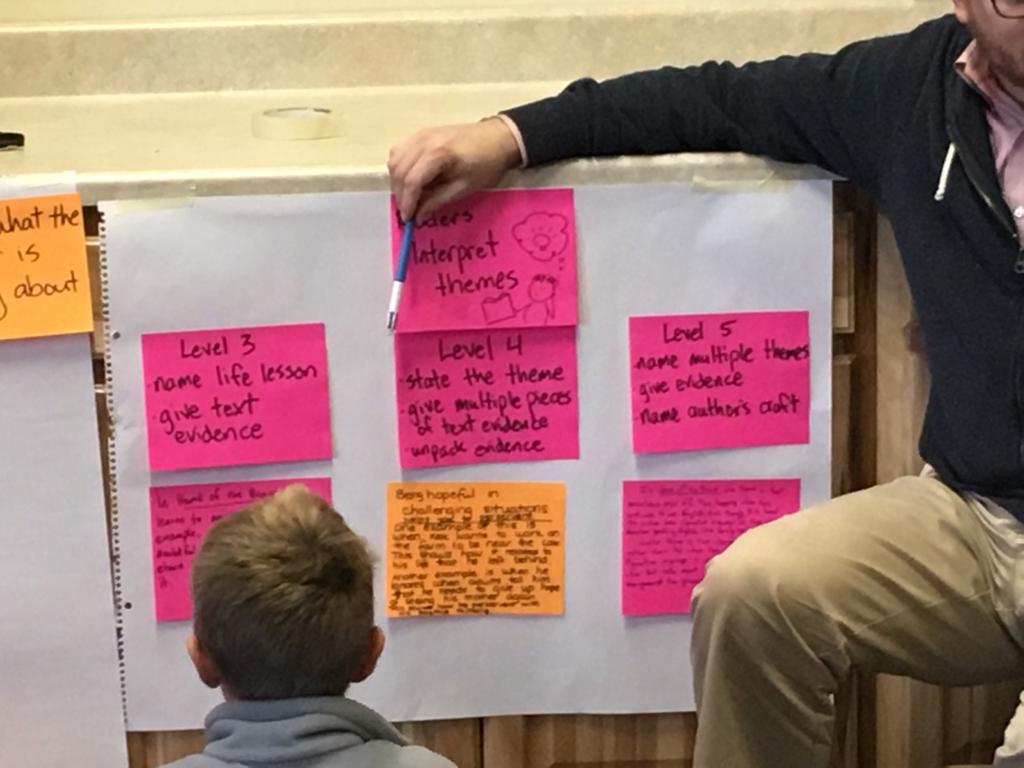
Fifth-graders at Pownal Elementary School learning how to identify themes in a text.
Comments are no longer available on this story