
Miles inland from the sea, Gorham held the remains of a North Atlantic whale for two months, and its story intrigued biologists, local students and callers from all over the country.
A 90,000-pound whale carcass from a nearly extinct species was composted in September at Benson Farm Earth Projects, and the bones were unearthed last week, drawing several onlookers. Ever since the giant whale’s carcass was trucked to Gorham, the farm’s telephone jangled from callers in several states and as far away as Hawaii.
“A steady flow,” is how Becki Benson described the telephone inquiries about the whale.
Eddie and Becki Benson, owners of the composting business, became involved after receiving a call from Marine Mammals of Maine, a non-profit that responds and cares for stranded marine animals.The dead whale was spotted floating 12 miles off Phippsburg and was towed by boats to Portland where Paul Smith, a Gorham general contractor, trucked the carcass to the farm. The tail of the giant whale hung out over Smith’s 43-foot trailer.
Once landed at the farm, a medical exam, called a necropsy, determined the dead whale to be an 11-year old female. It was a right whale, the kind of whale named during the whaling days as the right one to harvest for oil.
Blubber and bones were composted in seperate piles at Benson’s.
Last Friday, volunteers plucked the whale’s bones from a compost pile estimated to be 150 degrees. Vapor rose when front-end loaders took bites, extracting bones from the compost pile. A pungent odor escaped and some younger onlookers pinched their noses.
“It smells like perfume compared to the day we did it,” Eddie Benson said from the cab of a front-end loader to volunteers.
Lynda Doughty, biologist and executive director of Marine Mammals of Maine, said the bones would be cleaned and stored in Harpswell. Plans call for the bones to be someday reassembled and displayed for educational purposes. “That’s the goal,” she said.
Doughty’s brother, Curtis Doughty of Phippsburg, donated the cost of trucking the bones from Benson’s. Lynda Doughty estimated the cost of reassembling the skeleton would run about $10,000.
With a special permit from the federal government, Doughty said the non-profit agency now owns the bones. Remains of any endangered specie are protected. “We’d go to jail if they found a bone in our house,” Becki Benson said.
Mark King, environmental specialist at the Maine Department of Environmental Protection, said at the scene Friday that several museums are interested in acquiring the bones.
Bill Barthelman of South Portland, a Marine Mamals of Maine volunteer, provided some of the muscle in lifting and carrying the bones extracted from the compost pile. “People all over the world want the skeleton,” Barthelman said.
The bigger bones were recovered by volunteers while the blackened compost soil was screened to save smaller bones and fragments. “We’ve got to count all the bones,” King said.
Aaron Landry, Gorham High School biology teacher, and a few of his students observed the recovery. The whale and her story will be a classroom lesson. “We’ll talk about it,” Landry said.
The rare sight Friday attracted three of his students, all Gorham juniors. “I thought it would be cool,” Kate Gilbert said.
Clayton Bassingthwaite said, “It’s a site you usually don’t see.”
Keltan Tanguay, who lives near the farm, was also there Friday. “It’s definitely cool,” Tanguay said.
When the whale arrived at the farm, Mark Turner of Gorham, an employee at Benson’s, helped off-load it from the trailer. Turner said fishing rope was wrapped around its mouth.
The whale was one of only about 500 of its species left. “You hope its one of a lifetime,” Becki Benson said about death of any more right whales.
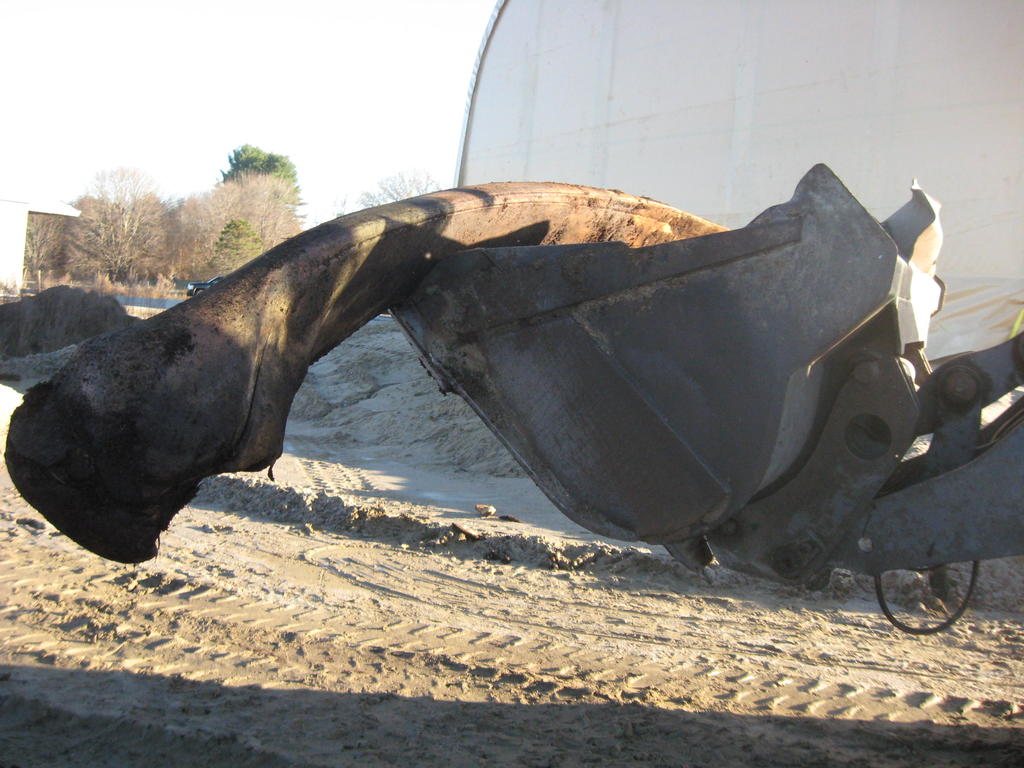
A giant jaw bone of a whale is plucked from a Gorham compost pile Friday.
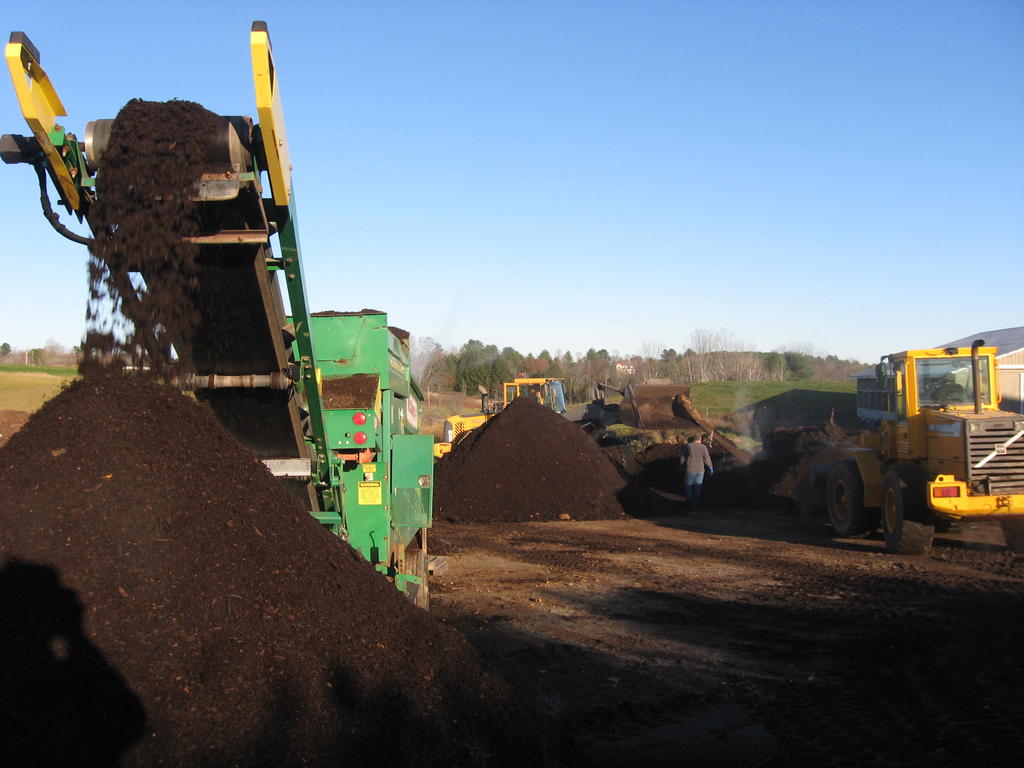
Sifting compost for whale bone pieces.
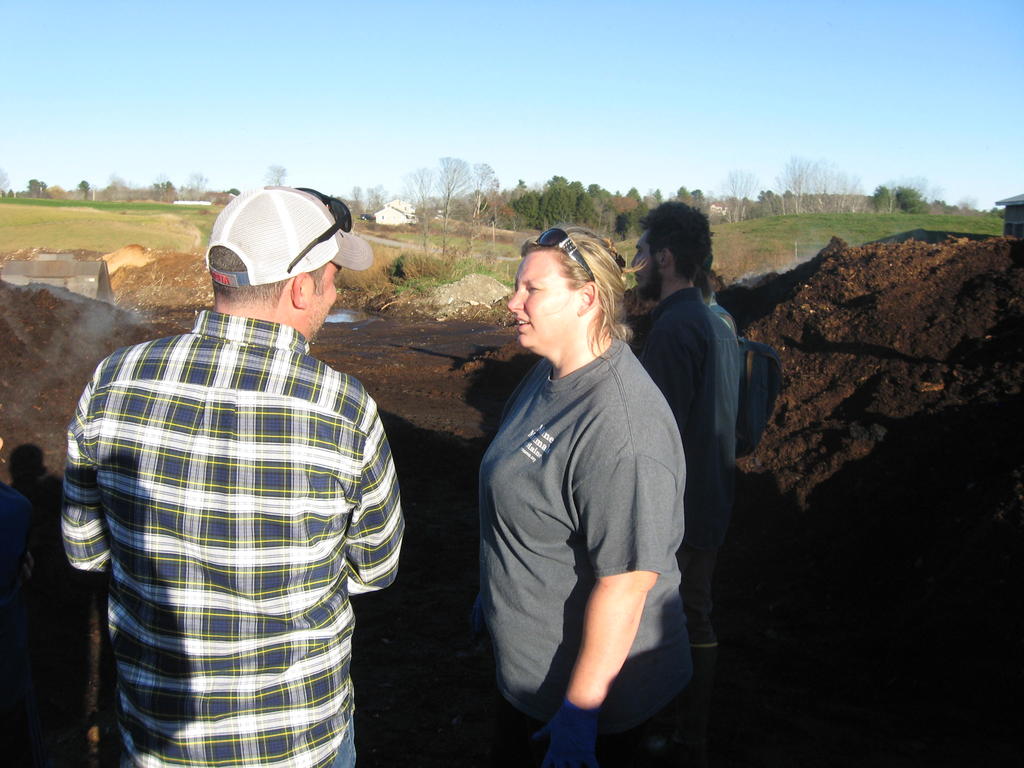
Gorham High School biology teacher Aaron Landry chats with Lynda Doughty, executive director of Marine Mammals of Maine, as bones of a 45-ton whale are exhumed from a compost pole at Benson Farm Earth Products in Gorham.
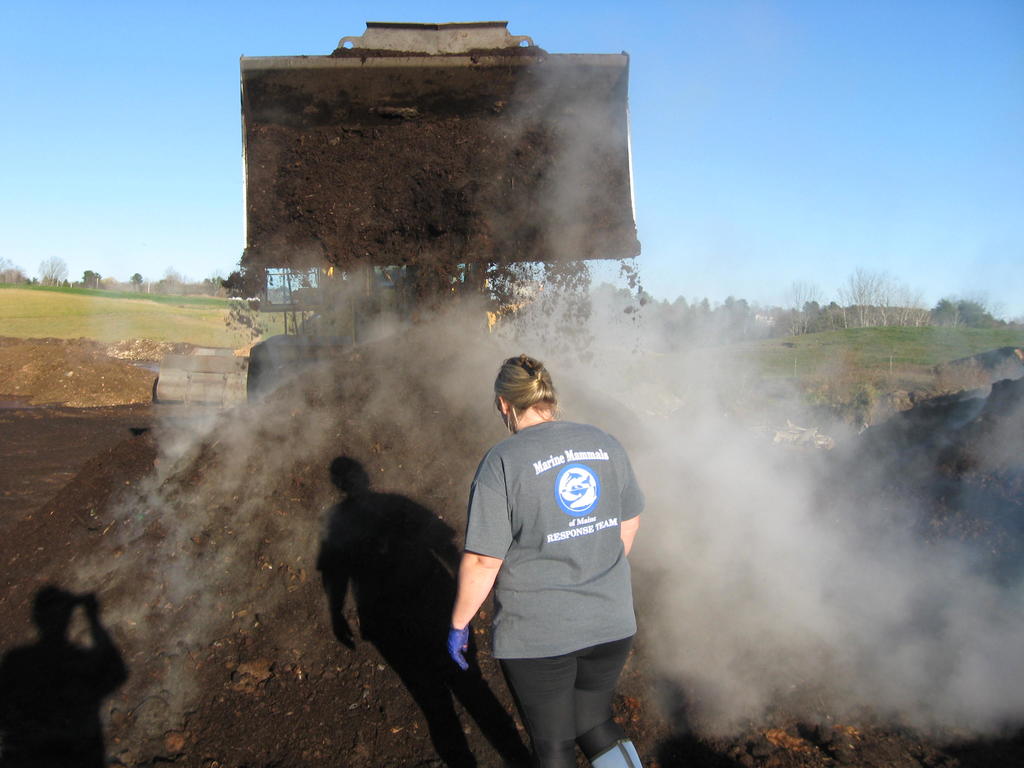
Vapor rises from a 150-degree compost pile that covered the skeletal remains of a giant whale buried in Gorham in September.
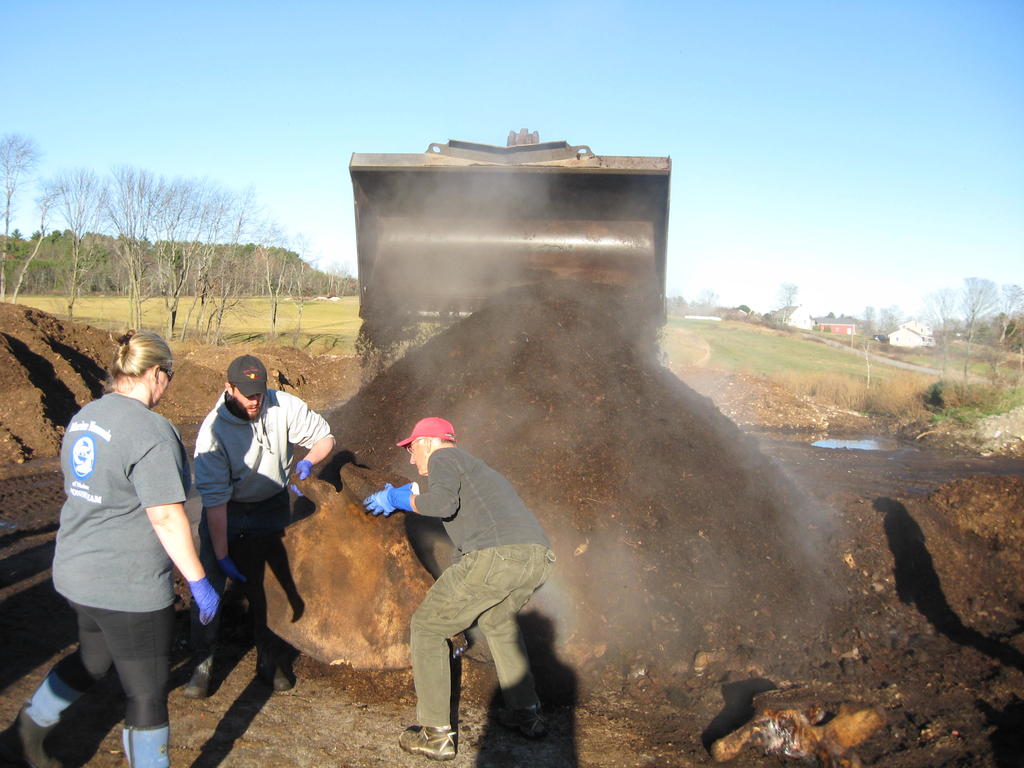
Volunteers Bill Barthelman of South Portland, right, and Cory McDonald of Stonington Friday help unearth skeletal remains of a 45-ton whale composted two months ago at Benson Farm Earth Products in Gorham while Lynda Doughty, biologist and executive director of the non-profit Marine Mammals of Maine, oversees the operation.
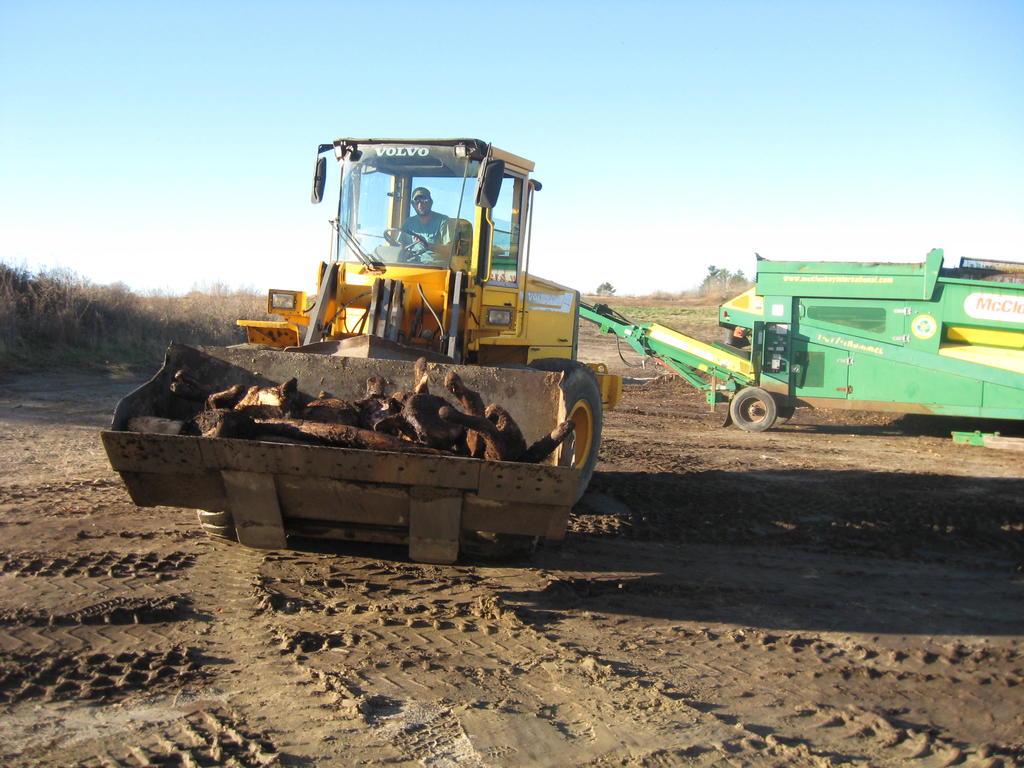
Mark Turner of Gorham Friday handles a front-end loader with a bucket of bones.
Comments are no longer available on this story