
Editor’s note: This story has been corrected (3/29/18). The facility offering the Virtual Dementia Tour is Avita of Stroudwater.
WESTBROOK – They say to truly understand someone you should walk a mile in their shoes, and with some cutting-edge technology a number of healthcare facilities in the area, including Avita of Stroudwater, are showing people it doesn’t take a mile to understand what people with dementia go through on a daily basis.
Using blackout goggles, specialized shoe inserts, bulky gloves and noise-canceling headphones, the Virtual Dementia Tour attempts to alter an individual’s physical and sensory skills while they are being asked to complete simple tasks such as setting a table, counting out coins, getting dressed or taking medication in a darkened room.
Although the disease manifests itself differently from one person to the next, it commonly causes individuals to struggle with reasoning, accomplishing tasks, as well as impairing vision and memory.
Avita of Stroudwater, a Northbridge Companies facility, is one of 20 organizations in the state that utilizes the Virtual Dementia Tour. The system was created in 2001 by P.K. Beville. More than two million people in 20 countries have experienced the tour and it is used at 1,000 healthcare facilities around the world, including Avita of Wells, Avita of Brunswick, Stroudwater Lodge in Westbrook and Sunny in Brunswick.
For the last five years, Avita of Stroudwater has partnered with Home Instead Senior Care in Gorham to use the system to train new staff members and as an educational tool for area health care providers. The next public session is set for Thursday, June 28 from 9:30 a.m. to 1:30 p.m.
Lea Rust is a certified dementia practitioner and Avita of Stroudwater’s director of sales and marketing. “It impacts family caregivers who take care of people at their homes and it impacts those of us who are doing this for a living,” Rust said. “It’s very, very eye-opening.”
“For me, it really puts you in the shoes of the person who has Alzheimer’s (Disease) or dementia,” said Kathleen Damon, a home care consultant with Home Instead Senior Care in Gorham. “You get a better sense of what it feels like.”
Prior to taking the virtual tour, individuals answer a series of questions about what they know about dementia and how it impacts people. The individuals answer the same questions after the tour, often with different results,
This week, three new staff members took part in a Virtual Dementia Tour as part of their training including Julietta Deforest and Kristen Burke who are certified residential medication aides and certified nursing assistants at Avita of Stroudwater; and Mia Shea, wellness coordinator at Stroudwater Lodge.
“You can see how this disease hides you as a person,” Deforest said after the virtual tour.
“I liked the experience but at the same time, I was getting so mad at myself and the surroundings,” Burke said.
Rust said the Virtual Dementia Tour reinforces “that a slow approach, a sensitive approach, an empathetic approach, a non-judgmental approach is necessary” in memory care.
Alexandria Velez, Avita of Stroudwater’s programming director told Shea, Deforest and Burke, the reason the facility uses the Virtual Dementia Tour in training is “to show to do this job you have to be empathetic … and to give you an understanding of why (our residents) are here and what we can do for them.”
Damon said Home Instead Senior Care of Gorham is happy to partner with Avita of Stroudwater to offer the Virtual Dementia training.
“Dementia care is a big focus for us,” she said. “Our goal is to help seniors stay engaged and help them keep an active life for as long as possible.”
Velez said the key to dementia and memory care is to make sure residents are engaged, and stimulated enough through activities and programming, such as painting, music, dancing, entertainment and exercise.
Rust said although her facility has been offering the Virtual Dementia Tour experience for five years, it is no less important today than it was when it was first offered.
“People are constantly being diagnosed (with dementia) and there will always be people that need this education so it is important to consistently offer it. Those who don’t need it today may need it tomorrow,” Rust said.
An estimated 5.7 million people are living with Alzheimer’s in the United States. That number is expected to jump to 7.1 million people, by 2025 and 16 million by 2050. Maine’s population over 65 years old with Alzheimer’s is expected to rise from 28,000 in 2018 to 35,000 in 2025. In 2015, there were 1,269 individuals in hospice care whose primary diagnosis was dementia.
While death from other diseases continue to decrease due to advances in medicine and treatment, the same cannot be said for Alzheimer’s. Deaths from the disease, the sixth-leading cause of death in America, have increased 123 percent between 2010 and 2015. Deaths from heart disease, the number one cause of death in America, declined by 11 percent in that time period.
According to the 2018 Alzheimer’s Disease Facts and Figures report, total payments to take care of individuals with Alzheimer’s Disease and other types of dementia is expected to increase to $277 billion, a $20 billion jump from last year. As the number of people with Alzheimer’s continuing to grow, the cost of care is projected to be more than $1.1 trillion. In Maine, the Alzheimer’s Association estimates the total MaineCare cost for patients with the disease will be $197 million in 2018.
According to the Maine Chapter of the Alzheimer’s Association, “given the long duration of this disease, the strain on Alzheimer’s caregivers can last several years and produce serious declines in caregiver physical, emotional and financial well-being. In 2017, 16 million Americans provided an estimated 18.4 billion hours of unpaid care in the form of physical, emotional and financial support – a contribution to the nation valued at $232.1 billion. The difficulties associated with providing this level of care are estimated to have resulted in $11.4 billion in additional health care costs for Alzheimer’s and other dementia caregivers in 2017.”
Michael Kelley can be reached at 781-3661 x 125 or [email protected].
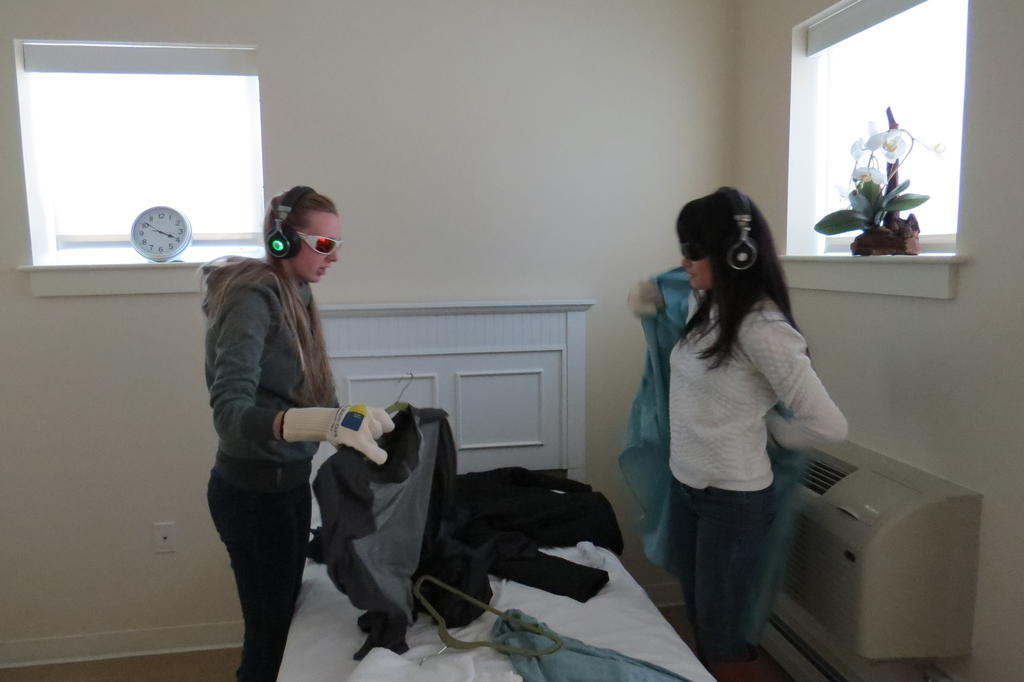
New Avita of Stroudwater employees Kristen Burke and Julietta Deforest take part in a Virtual Dementia Tour training session on Tuesday in which they had to accomplish several simple tasks, such as putting on a jacket, while their physical and sensory abilities were altered. (Staff photo by Michael Kelley)
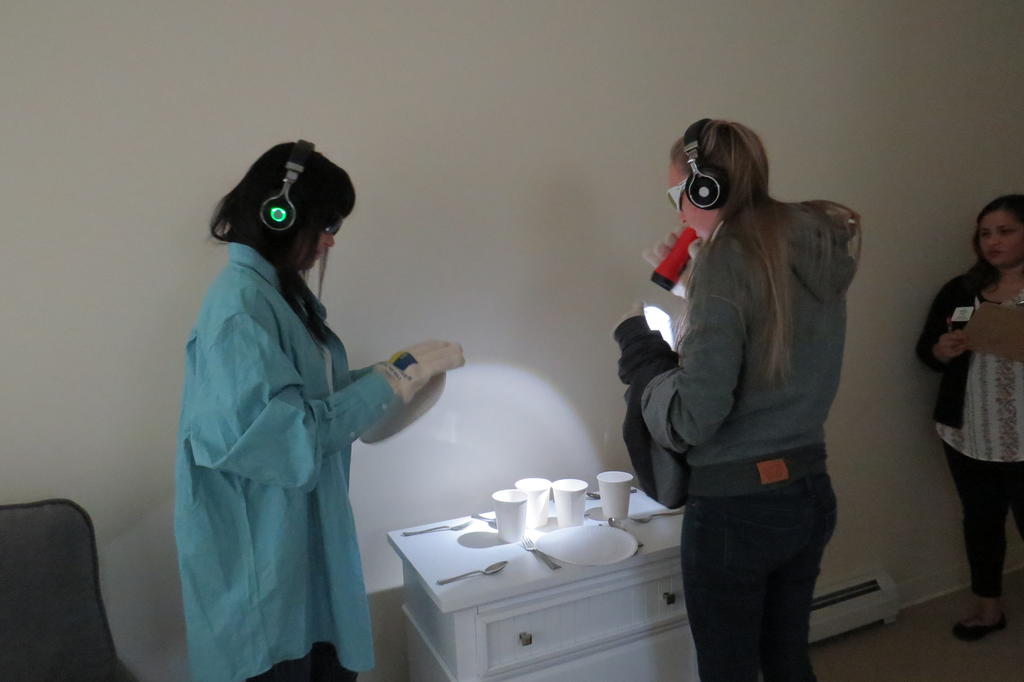
Julietta Deforest and Kristen Burke attempt to set a table for four during a Virtual Dementia Tour this week at Avita of Stroudwater as programming director Alexandria Velez takes notes. (Staff photo by Michael Kelley)
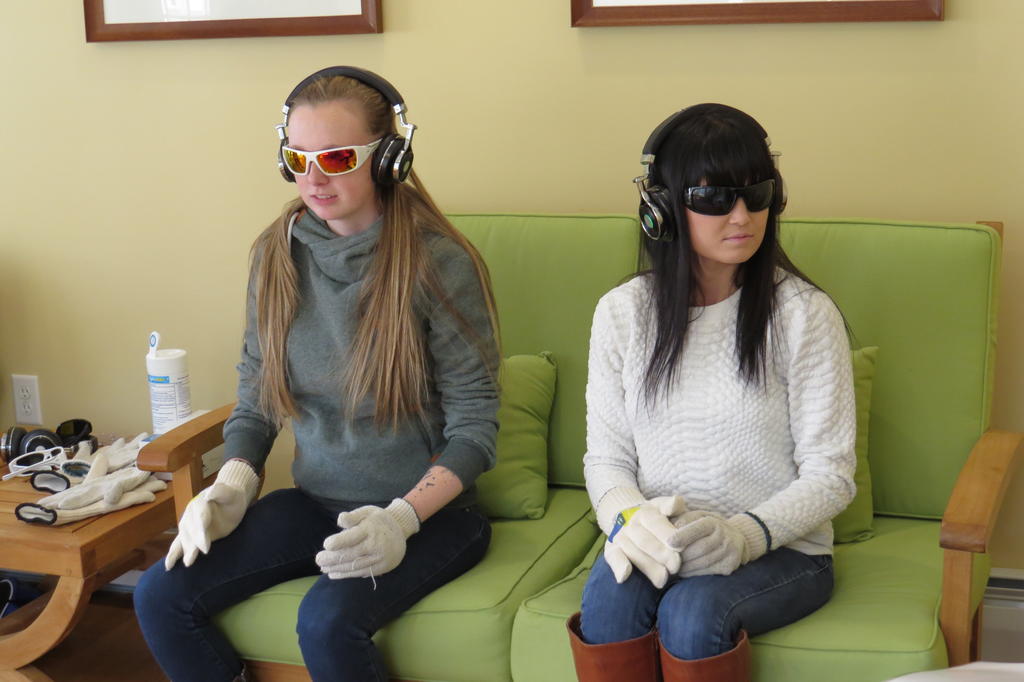
New Avita of Stroudwater employees Kristen Burke and Juliette Deforest put on blackout sunglasses, noise-canceling headphones, two sets of gloves and specialized shoe inserts before going on a Virtual Dementia Tour aimed at teaching health care employees and caregivers what those with dementia deal with on a daily basis. (Staff photo by Michael Kelley)
Comments are no longer available on this story