

An award-winning author based in Bath is unveiling her latest historical-fiction novel, with a romantic twist on maritime history.
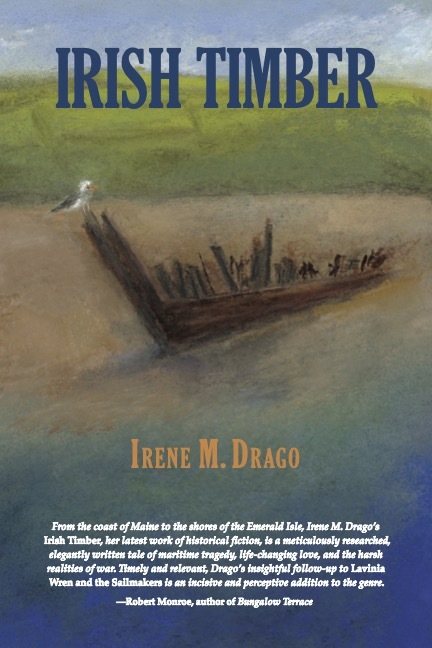
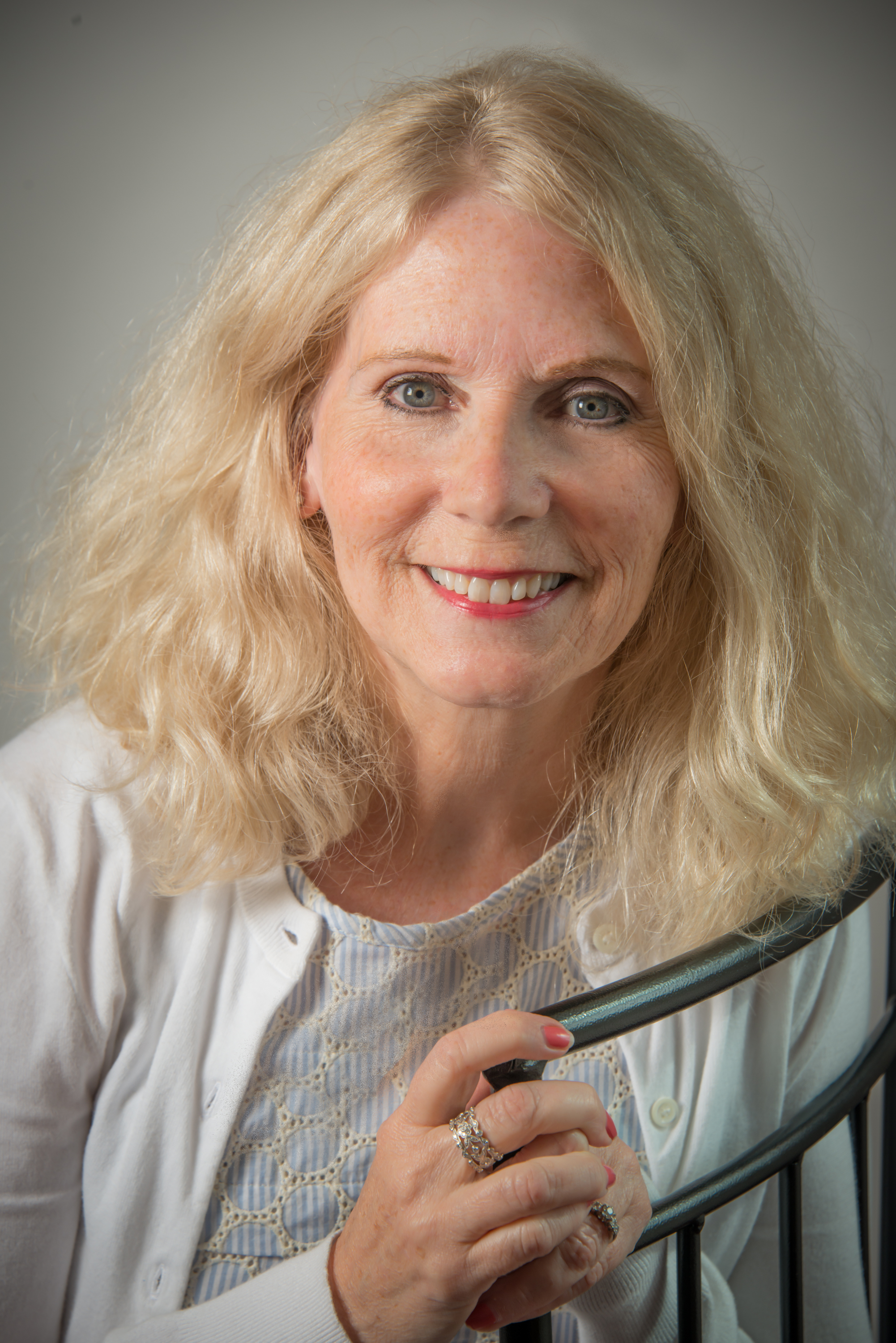
Irene Drago’s new novel, “Irish Timber,” is a follow-up to “Lavinia Wren and the Sailmakers,” published in 2023. It’s based on the true story of the 1888 sinking of the Alfred D. Snow during a return trip to America. Drago will share the ship’s history at 5:30 p.m. Friday, April 24, at Mockingbird Bookshop in Bath and describe what led her to write “Irish Timber.”
Drago’s first follow-up novel was “The Maine Point,” published in February 2020, loosely connected with “Daughters of Long Reach,” published in September 2017.
Before the launch, Drago sat down for an interview with The Times Record about “Irish Timber” and her career as an author.
This interview has been edited for brevity and clarity.
What is the summary of your new book, and why should people read it?
“Irish Timber” is a tale of maritime tragedy, unexpected love and the heartache of war. In the summer of 1931, Susie Rowley travels from the coast of Maine to the coast of Ireland with a band of Yankee scholars. When they reach Dunmore East, they’re moved to investigate the wreck of the Alfred D. Snow, a Thomaston-built ship lost in Waterford Harbor in 1888.
Susie falls for Hugh Larkin, a young medical student from County Wexford, and she returns to Dublin and takes a job at the national library working for Dr. Richard J. Hayes. Irish intelligence soon drafted the genius librarian to break German codes, and he pulls Susie into his unit because she’s a gifted linguist and mathematician.
Readers will find “Irish Timber” timely and relevant. I am known for writing historical fiction with a romantic twist, but my newest novel goes bigger and deeper than I have ever gone before. I weave a tapestry of multigenerational characters — some inspired by real people and others purely imagined — by connecting people and places with historic events and personal moments.
You will feel present at The Palace Bar, the quay at Passage East or the Walkers’ sailboat on Muscongus Bay. If you loved “Coming Home” by Rosamunde Pilcher, “Circle of Friends” by Maeve Binchy or were captivated by “Gone with the Wind” by Margaret Mitchell, you’re going to fall in love with “Irish Timber.”
What is different about this story from your previous stories?
The scope of “Irish Timber” is greater than any of my previous novels. The wreck of the Alfred D. Snow connects Maine’s maritime history with Ireland’s maritime history. Susie Rowley connects her Yankee family with Hugh Larkin’s Irish family. A cast of multifaceted characters strongly represents both sides of the pond, and every character’s story entwines in the Allied Forces’ victory over evil.
“Irish Timber” is a follow-up to “Lavinia Wren and the Sailmakers,” but it’s also a standalone novel. Unlike my other maritime novels, it’s steeped in Irish-Yankee lore, and it explores the Hook Peninsula and other parts of Ireland’s ancient southeast that are rarely visited by tourists from America.
How did your background in the Department of Defense inform your writing of “Irish Timber”?
Shortly after graduating from college, I worked for the DOD as a Russia analyst. As an analyst, I was required to take a class in cryptography, and I found it fascinating.
My time with the DOD taught me how important it is for branches of intelligence to cooperate when necessary. The term “intelligence community” is well coined.
What historical event is “Irish Timber” inspired by?
The wreck of the Alfred D. Snow and the loss of her crew in Waterford Harbor in 1888, including Capt. William Willey, inspired “Irish Timber.” I met the captain’s great-great-granddaughter. She shared photos, letters and many memories passed down from her grandmother, Eliza Willey Walker.
Dr. Richard J. Hayes, the Irish librarian, was the person who broke the Görtz cipher and other codes that helped the Allied Forces win the war against Nazi Germany.
Why have an international angle for this story?
Salt water knows no bounds. I come from a Navy family, and I believe salt water connects us all. When I write, I like to connect people and places. I have had the good fortune of studying and traveling abroad, and I love to create characters that embody the spirit of places I’ve been.
How many years have you been writing as an author?
I have always been a writer. If memory serves me, I submitted a short story to Jack and Jill magazine when I was a child. In 1998, I self-published a children’s bilingual textbook, “Amigos.”
I published my first novel in 2017, but prior to that, I published a blog called “Bath Time Society.” The short answer is I’ve been a published Maine author for nine years.
Where can readers pick up a copy of “Irish Timber”?
Readers can find my newest novel at Mockingbird Bookshop on Front Street in Bath and the Maine Maritime Museum gift shop on the south end of Washington Street. It is also available at the Gulf of Maine Books in Brunswick.
In the coming weeks, it will also be available at many indie bookstores from Portland to Rockland and Bangor. My publisher is Maine Authors Publishing in Thomaston, so readers can always contact them.

The Times Record Sustaining Sponsor
We believe a community must be informed to thrive. bowdoin.edu

Comments are not available on this story. Read more about why we allow commenting on some stories and not on others.
We believe it's important to offer commenting on certain stories as a benefit to our readers. At its best, our comments sections can be a productive platform for readers to engage with our journalism, offer thoughts on coverage and issues, and drive conversation in a respectful, solutions-based way. It's a form of open discourse that can be useful to our community, public officials, journalists and others.
We do not enable comments on everything — exceptions include most crime stories, and coverage involving personal tragedy or sensitive issues that invite personal attacks instead of thoughtful discussion.
You can read more here about our commenting policy and terms of use. More information is also found on our FAQs.
Show less