
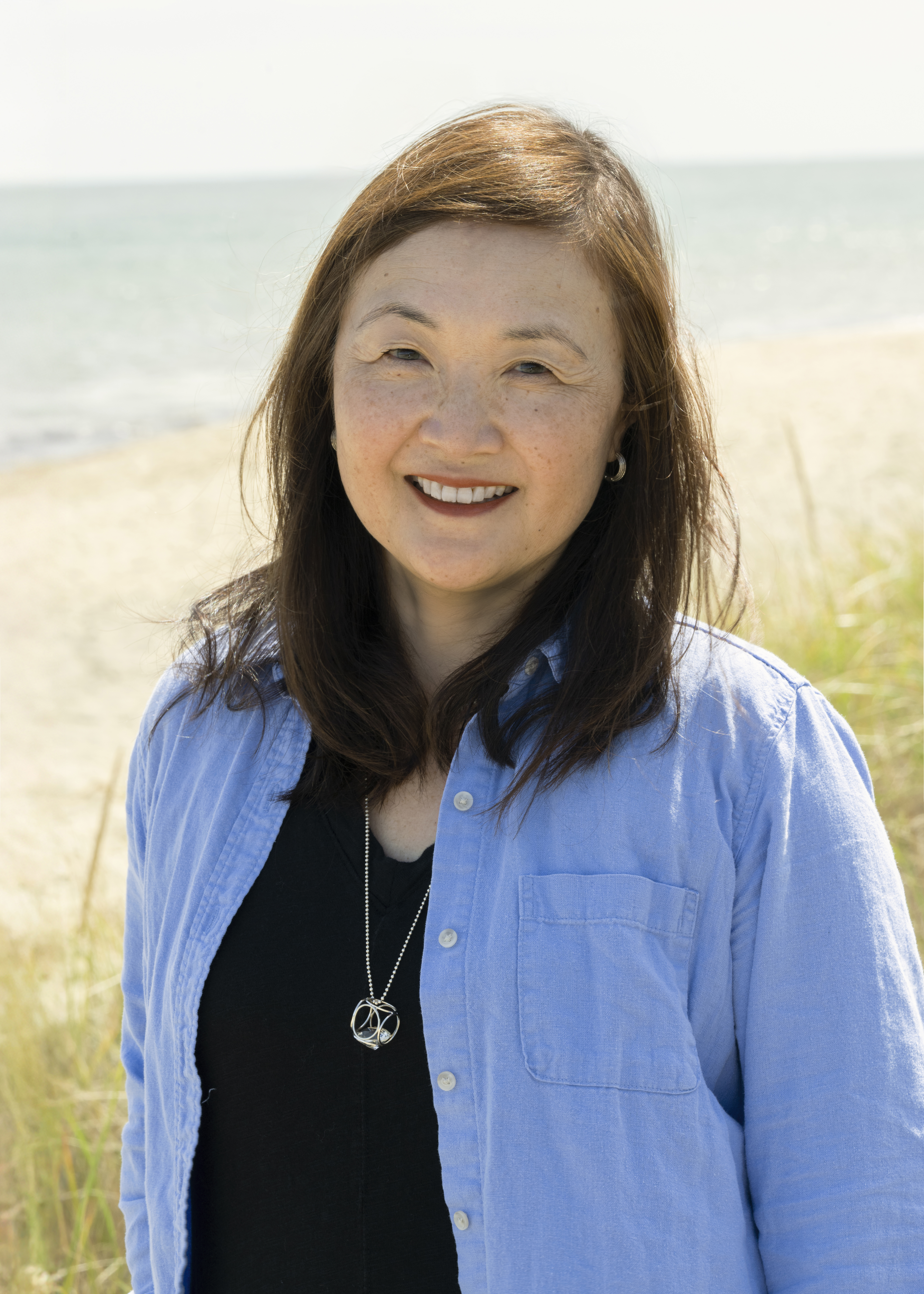
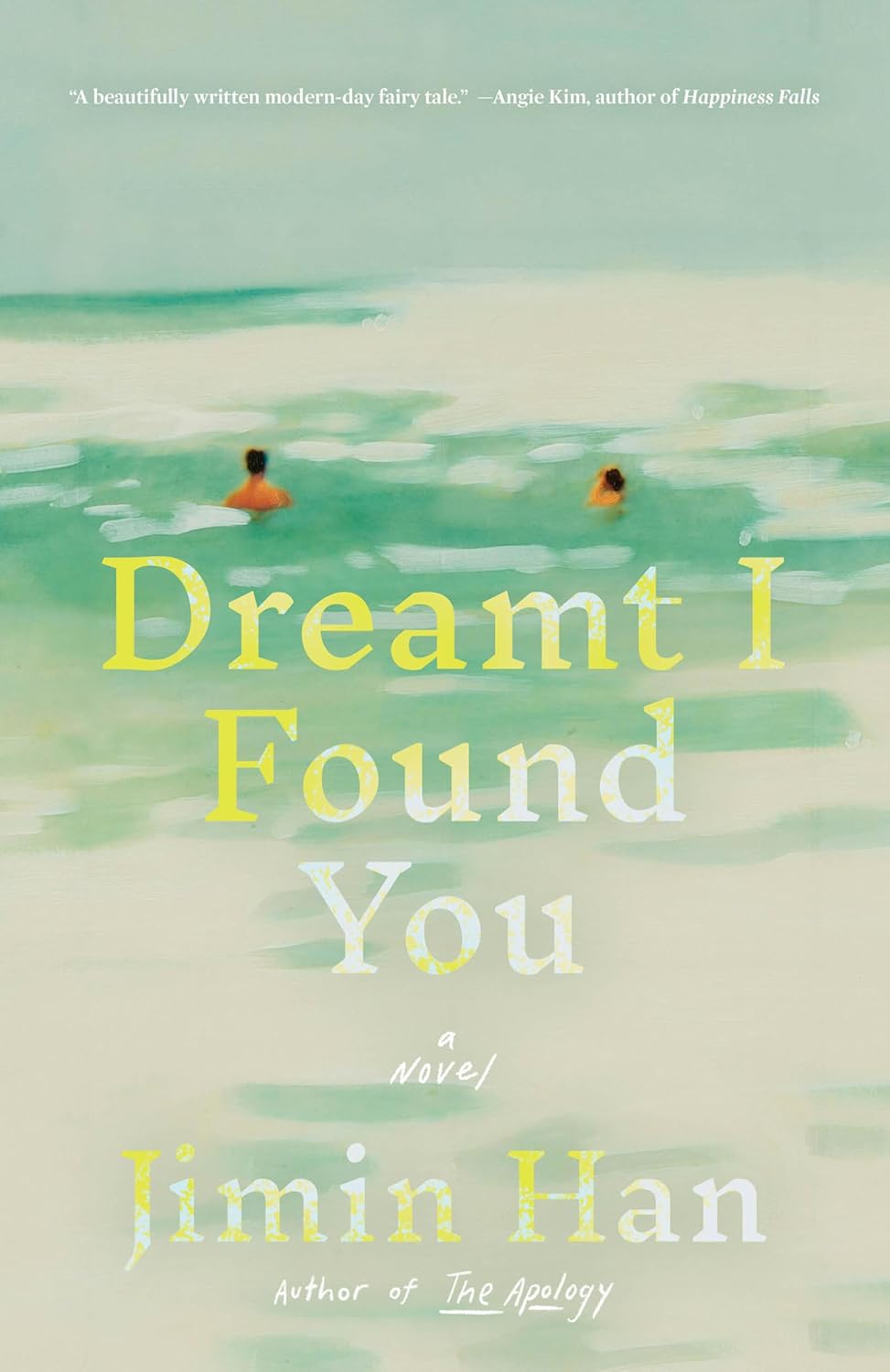
Jimin Han’s third novel, “Dreamt I Found You,” begins with a famous Korean love story, “The Song of Chungyang,” a tale of two lovers who aren’t allowed to be together. They come from different walks of life and what begins as a private problem becomes public when the magistrate banishes the woman to imprisonment.
The lore comes to life in Han’s mystic town, East End — a multi-generational coastal utopia for Korean immigrants. When Dahee returns to East End to help her cousin, Channing, everything isn’t as pleasant as it once seemed. Danger, love and grief lurk at every turn along the cousins’ whirlwind journey. How do the stories we grow up with guide us when we face trouble, the past or the public? “Dreamt I Found You” reckons with these questions with brilliant lyrical impulse the whole way through.
Was the seed for this book the famous Korean myth, ‘The Song of Chunhyang,’ or was that secondary as a way to frame your protagonist, Dahee, and her cousin, Channing?
For this book, it was the relationship between the cousins. All of my books are about how we’re responsible for each other — that has to do with family and being an immigrant — there’s just something about responsibility, what we owe each other and ways in which we’re connected. I wanted to write about two Korean American women who are really different — I made them physically different and they have different personalities, longings and passions.
I also feel like books have really informed what I think is possible. I’ve looked for myself in books, as a Korean American woman. Books have always been my map, so I wondered what it would be like for these two girls to hear this story early on and how they would interpret it differently.
Is ‘The Song of Chunyang’ a story that you’ve personally been attached to since growing up, or did you come to it later?
I came to it later, and I was shocked that I didn’t know it! I thought I knew a lot of Korean things, though I didn’t grow up in a Korean community. But even when I spoke to friends, they hadn’t heard of this either. In South Korea, it is as familiar as “Romeo and Juliet.” Since my mother died, I’ve been thinking a lot more about the things I don’t know about Korean culture, because she was my tie to it.
How does loss manifest for you in your writing process? And how did you decide where it would take our two main characters?
I’m certainly not speaking for all immigrants or Korean Americans. Both of my parents suffered heavy, heavy losses through the Korean War. I grew up with a sense of their loss always permeating our lives — my brothers’s and mine — and the sense that there could be catastrophe at any time. It’s hard to live in this time now, where a lot of those fears that they had are what we’re living with in terms of ICE and immediate danger. I think that’s why, in my writing, I’m always circling loss, powerlessness and ways in which we can work together to find a way forward.
In the novel, Channing’s mother passes away from cancer and also loved books. Stories are important to your main characters — how are stories healing?
They’re about connection. Stories tell you that others have been in this place before. Even in very different circumstances, they show you that you’re not alone. As a child, I didn’t have toys, but I could go to the library and take out as many books as I could carry. They were in English about characters who didn’t look like me, yet I identified with characters. They made me feel less alone. There’s great power in that.
In Korean culture, there’s the pansori, which is very similar to a bard in European culture where people gather, listen to stories, see themselves and are entertained. I think that’s the reason why novels are banned more than any other form.
The title of your book uses a poetic impulse, the second person, ‘Dreamt I Found You.’ Who do you imagine the addressee is, and does that shape shift for you?
I love the sound of it. Dreams are important. After my mother died, I had waking dreams that she was right there next to me, and we had a little conversation. When that title came to me, I was thinking a lot about finding people, losing people, how hard it is to find people who are like you and finding place, too, like this fictional town of East End.
Channing’s in trouble. There’s a man who is, at a minimum, stalking her. How did you arrive at these high stakes right away, amidst the longing and nostalgic passages about migration and the past?
I knew that one woman was going to go to help the other. What might be the condition that makes the other person have to go and help? She needs help, because it has to deal with a twisted, corrupted form of love. Ken Cho thinks he loves her but doesn’t know her. He imagines Channing to be someone that she’s not. In the Chunhyang story, I was interested in love versus marriage. Why, in the tale of Chunhyang, was it going to be okay for Chunhyang to give up love for herself in order to be comfortable in this domestic relationship with this man? I went for the simplest thing: she’s in trouble because the villain is there. He’s causing this.
How did gender start to grow as an argument for you throughout the book?
Being Korean, and growing up as a girl, sexism has always been very apparent to me, particularly because I have two brothers, an older one, and a younger one. It’s absolutely something that I’ve felt was unfair on multiple levels. Growing up, I wasn’t allowed to have a bicycle. We didn’t have toys, but my brothers got bicycles. I have two daughters. It sickens me that they have to deal with stuff that I and people before me have had to deal with. As women, we’re the majority, so all of that infuriates me. It’s about being able to tackle that head on in verse.
The other political element I’m curious about concerns Channing’s new love, Minjae. Minjae is Korean but in East End on a work visa. Minjae suddenly loses his work visa, which presents a panic about deportation. How did contemporary fears about immigration imprint on you when you were inventing this town — this always-threat?
In my life, that has been predominant. I wanted to approach that. I hope that there’s a little more understanding now. I had some friends who just three years ago thought these scenes with policing were unrealistic. I think now there’s been a change and people have a better understanding you can get that knock on your door.
Lisa Hiton is a writer living in Brooklyn, N.Y. She is the author of the poetry collection “Afterfeast,” and her work has been featured or is forthcoming in the Kenyon Review, The Slowdown, NPR, New South and elsewhere.
We invite you to add your comments. We encourage a thoughtful exchange of ideas and information on this website. By joining the conversation, you are agreeing to our commenting policy and terms of use. More information is found on our FAQs. You can update your screen name on the member's center.
Comments are managed by our staff during regular business hours Monday through Friday as well as limited hours on Saturday and Sunday. Comments held for moderation outside of those hours may take longer to approve.
Join the Conversation
Please sign into your Press Herald account to participate in conversations below. If you do not have an account, you can subscribe here. Questions? Please see our FAQs.