

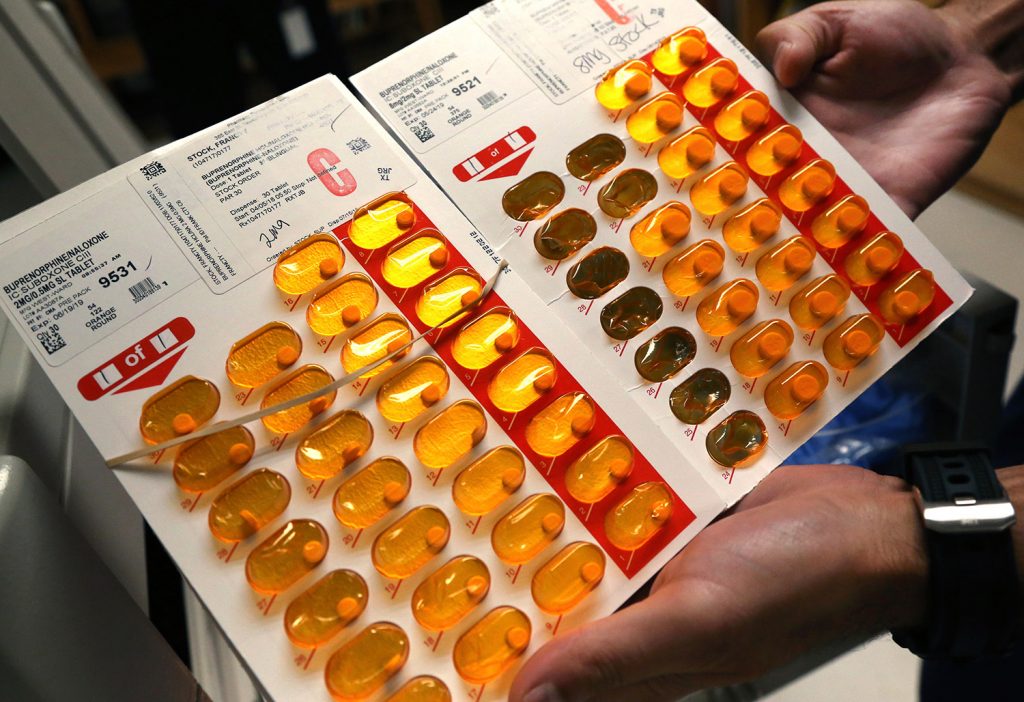
The Westbrook Fire Department will begin administering new medication in the field to treat opioid withdrawal symptoms. It is the only department in Maine that has received approval for a statewide pilot program addressing the opioid crisis.
“The current gap in EMS care is we can reverse the overdose, but we can’t treat the withdrawals,” Westbrook Fire Chief Steve Sloan said at a City Council meeting Monday to announce the program.
In addition to reversing overdoses with naloxone, paramedics will be able to provide buprenorphine, also known by the brand name Suboxone, a low-risk medication to decrease withdrawal symptoms and cravings and reduce repeat overdoses, Sloan said.
Withdrawal symptoms often cause patients to refuse care, because many would rather reuse opioids to relieve their intense discomfort than wait in an emergency room for care, Sloan said. Suboxone will provide relief from painful symptoms so patients can engage in conversations about long-term treatment options.
After administering Suboxone, fire department personnel will reach out to patients over the next few days to link them with follow-up treatment plans, as well as help them with long-term issues like food insecurity, housing problems and access to medical care.
The fire department will work with the Westbrook Police Department’s Behavioral Health Unit and MaineHealth Comprehensive Addiction Medicine to provide treatment solutions and address root causes.
Administering Suboxone in the field can cut the risk of death in half, Sloan said.
There were 59 overdoses in Westbrook in 2025, Sloan said, and 35 of those patients refused care. Only 17 received naloxone, and they did not get any further care afterward.
“Our high rate of refusal highlights a misstated treatment opportunity,” Sloan said.
From January to March 2026, there were 83 confirmed and suspected fatal overdoses and 1,636 nonfatal overdoses in Maine. In 2024, Maine was the state with the sixth highest drug overdose mortality rate with 35.2 deaths per 100,000 people, according to the U.S. Centers for Disease Control and Prevention.
According to the National Survey on Drug Use and Health, about 8.64% of Mainers have a substance use disorder.
In the next three years, without additional intervention efforts, data suggests Westbrook could have six to 10 overdose-related deaths, Sloan said.
“We know there’s a strong local and community need,” Sloan said. “We know that it’s the right thing to do for our patients.”
The department plans to start administering Suboxone July 1 after members complete a training program. A few other agencies will later be able to enroll in the program after receiving approval from the Medical Direction and Practice Board and Maine Emergency Medical Services. The pilot program will last three years, and the goal is to expand it statewide.
The program comes with personnel costs that are already budgeted for, and the medication will cost about $1,000 a year, Sloan said.
“If we can save one person, then it’s been a success,” Councilor Amy Faulkingham said. “But my guess is that we’re going to see a lot more than that.”

We invite you to add your comments. We encourage a thoughtful exchange of ideas and information on this website. By joining the conversation, you are agreeing to our commenting policy and terms of use. More information is found on our FAQs. You can update your screen name on the member's center.
Comments are managed by our staff during regular business hours Monday through Friday as well as limited hours on Saturday and Sunday. Comments held for moderation outside of those hours may take longer to approve.
Join the Conversation
Please sign into your Press Herald account to participate in conversations below. If you do not have an account, you can subscribe here. Questions? Please see our FAQs.