


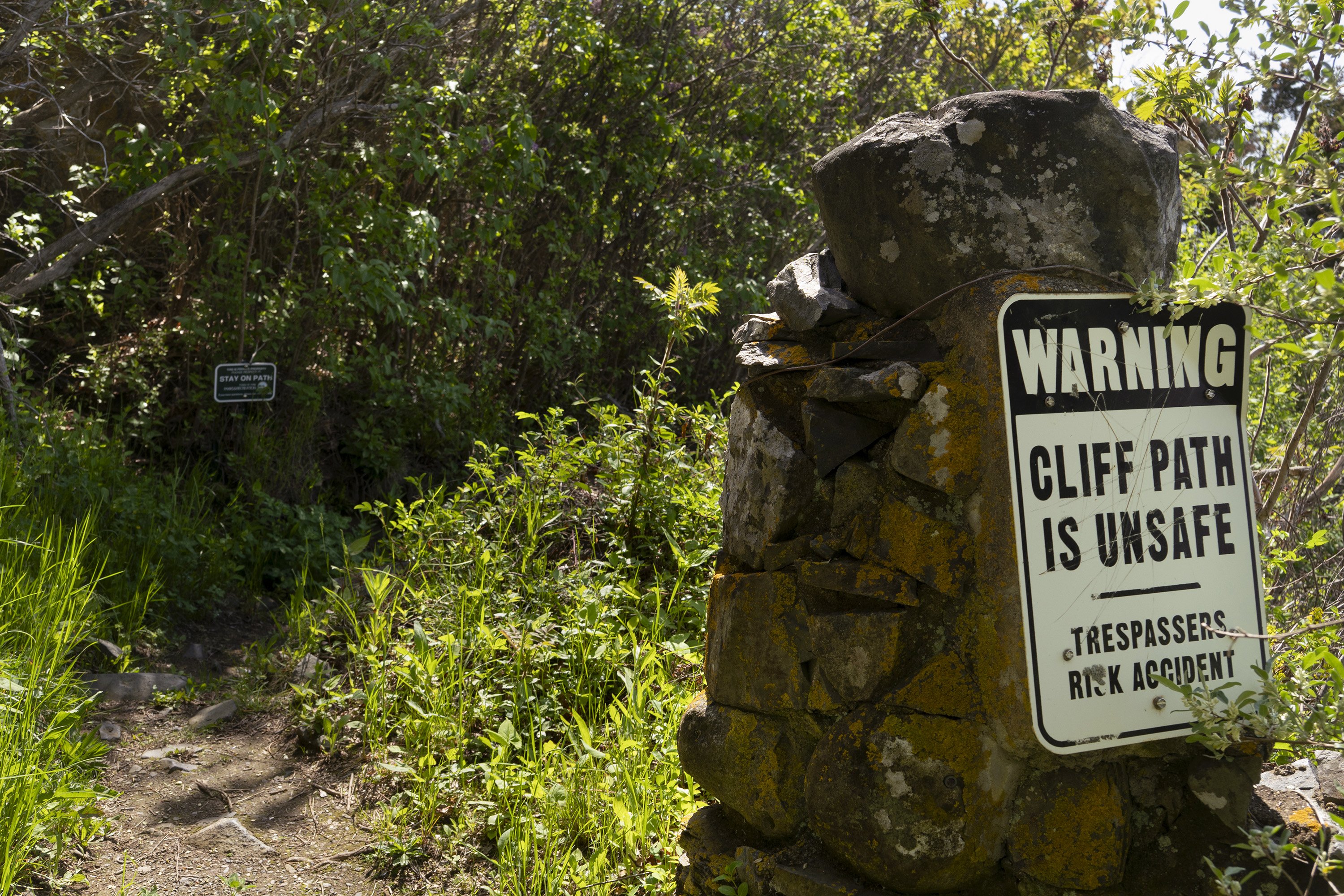
York Harbor Beach’s half-mile Cliff Walk begins with a friendly welcome sign. It asks visitors to stay on the path, keep animals and litter off, and enjoy their visit.
The scenic oceanside trail has been a pillar of York’s summers for decades. But the popular attraction has been closed since storms decimated it in January 2024.
Now, with new funding approved by residents this month, the town is moving closer to finally beginning restorations.
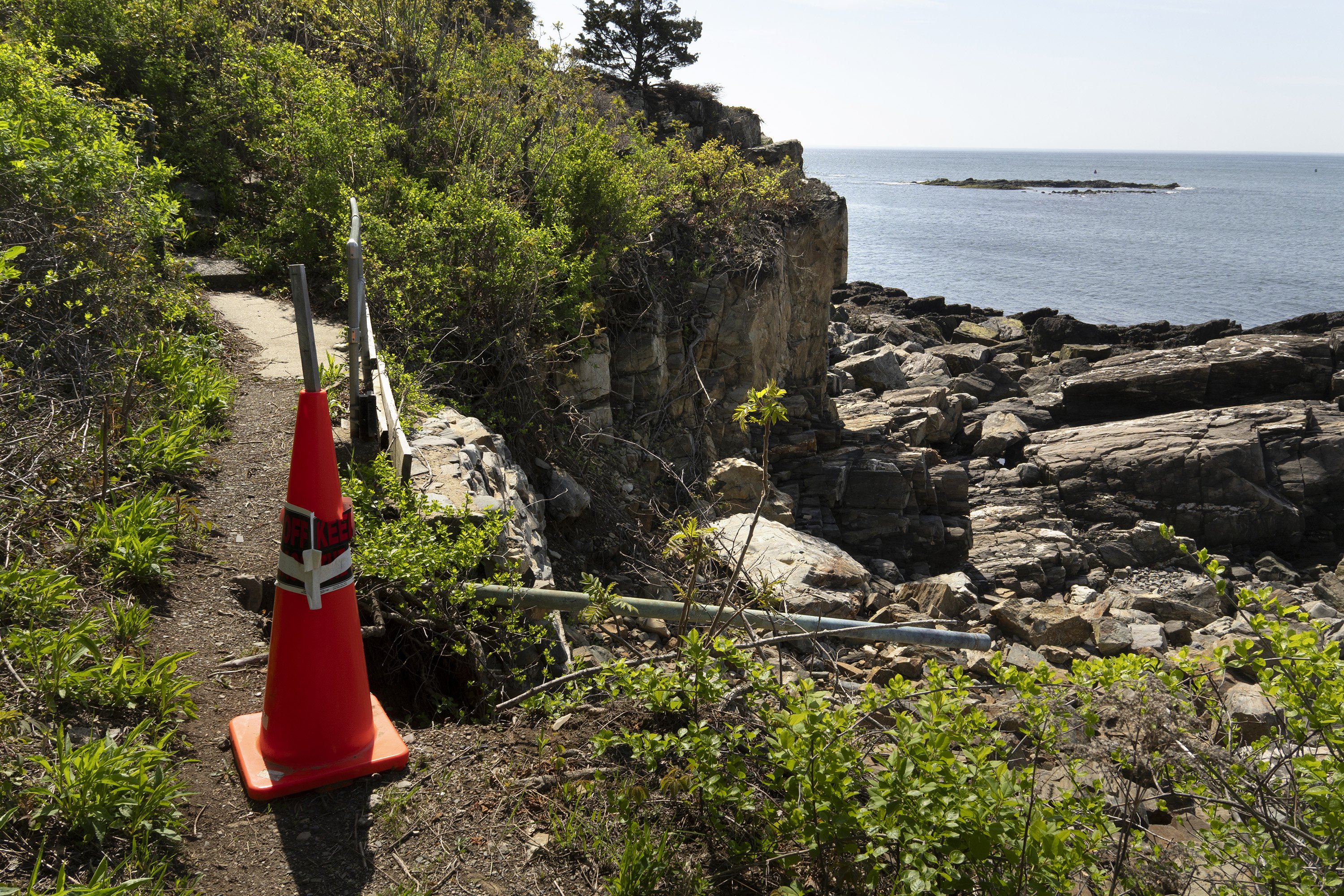
Only about 100 feet of the walk is open before a metal gate cuts through the concrete structure, notifying visitors of the extensive damage in bold black letters.
Last year, the town included a public opinion question in its annual referendum, asking voters whether restoration is worth it.
“There was a public policy debate that was kind of going around,” Town Manager Peter Joseph said. “Are we gonna spend hundreds of thousands or millions of dollars to do waterfront marine construction on something that, let’s be honest, is in the impact zone?”
The town voted overwhelmingly in favor of restoration.
The total project cost is estimated to be around $1 million, which will cover extensive information gathering and reconstruction. So far, voters have approved $50,000 for a stability assessment and on May 16 supported $180,000 for the first third of the cliff walk’s repairs.
York Emergency Management Director Nicole Pestana said about 20% of the half-mile walk is damaged considerably and will require significant repairs.
“Everything is possible to be repaired, and to be repaired in a way that can withstand future storms,” she said. “It’s just a matter of how much we’re able to secure for funding — and how much support there is on how far we go.”
FUNDING AND ACCESSIBILITY CHALLENGES
Much of the project’s difficulty comes from uncertainties about how to rebuild for long-term durability. Pestana presented the stability assessment — funded by last year’s vote and conducted by a science and engineering firm contracted by the town — to the York Selectboard on Monday.
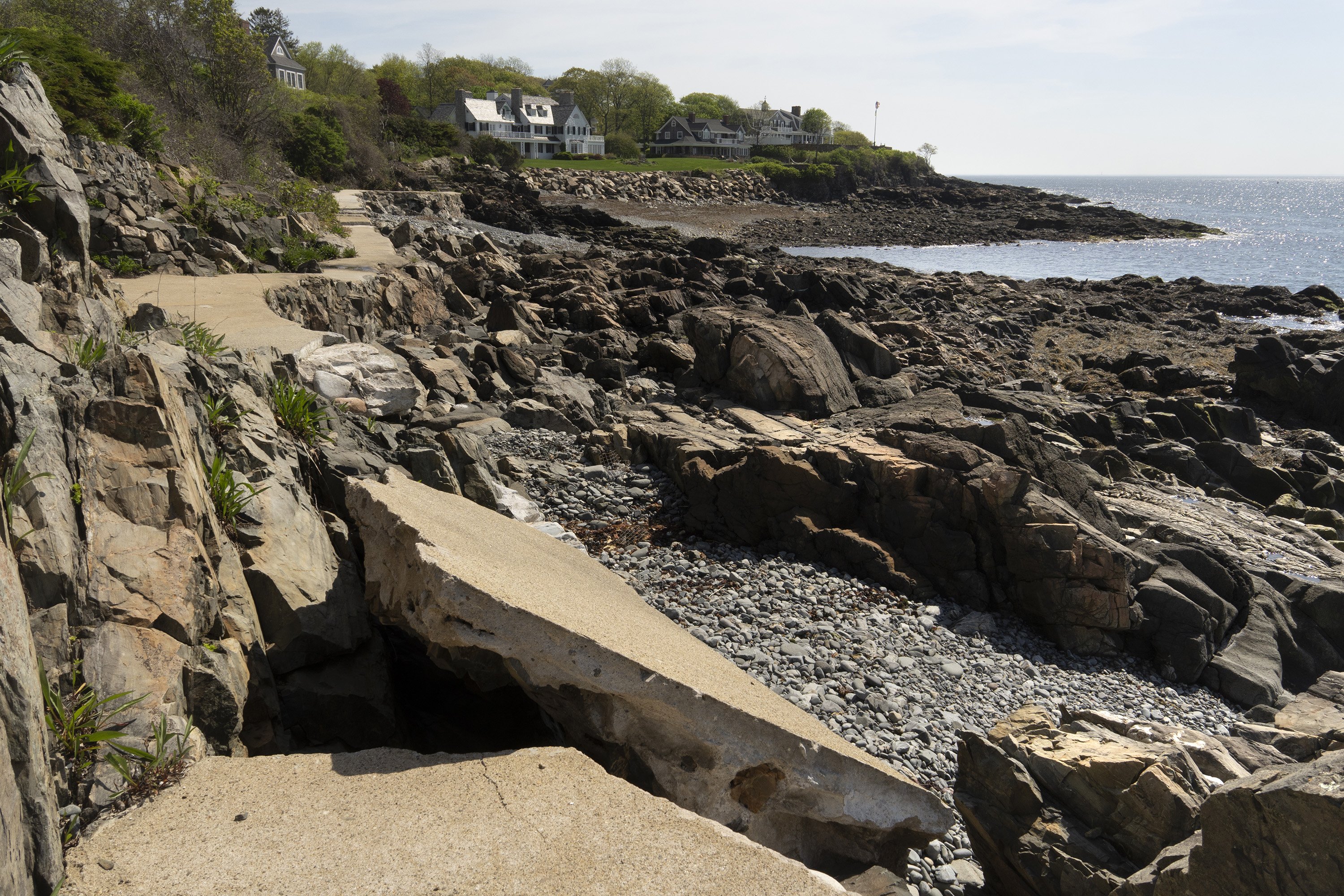
The report documents areas of the retaining wall that are completely missing, multiple voids spanning several feet under the existing concrete walkway, extensive erosion and a number of other issues that make the walk unsafe.
“The way that wall was built, when it was built, is the retaining walls and the pathways are more like a landscaping retaining wall in someone’s backyard,” Pestana said.
The cliff walk has been reconstructed after washouts with the same method in past years, leaving soil to uphold the integrity of the trail. Water can easily get through the stones and knock them loose, washing everything away, Pestana said.
Rebuilding is a matter of making everything stronger, especially as weather events become more intense because of climate change. That means using rebar and other materials to attach the walk to existing bedrock in the area, plus a mixture of concrete and mortar to anchor it.
The site of the repairs is in a difficult location, with much of it directly over the water and unstable sandy beach. That makes it harder for officials to determine how to repair the walk.
“Getting to that location and getting the heavy equipment there is difficult just because of the nature of what that landscape is,” Pestana said. The town will likely have to use a barge, driving up the cost.
The project’s funding comes from a disaster relief fund established by the selectboard in the town’s budget. But because the Federal Emergency Management Agency determined the damage was part of a disaster, the town will eventually be reimbursed by the federal disaster relief fund.
Pestana reported the Cliff Walk’s damage to FEMA just after the January 2024 storms, and federal officials assessed the site that spring.
Some projects receive funding from the federal government as restoration happens, but others are reimbursed after completion. FEMA has a distinct classification to determine reimbursements: the Large Project Threshold.
Projects that are estimated to be under the threshold — which sits at just over $1 million — have a better chance of receiving funding before they are completed in full. Projects over that threshold have to wait.
“We will have to provide (FEMA) what our scope of work is, what our method of repair is going to be, and then they can produce a cost estimate,” Pestana said. If the town has design plans from a contractor, then the contractor can also provide estimates to FEMA.
York officials are still estimating the exact costs of the project, but Pestana predicts that it will remain close to the original $1 million estimate. The damage is much greater than the funds the town has appropriated so far, and there’s not a clear idea of how much FEMA will need to be involved in the project.
“The most logical option is going to be getting an engineer’s design and cost estimate,” Pestana said.
NEXT STEPS INCLUDE COLLABORATION
The stability assessment includes recommendations for next steps, including holding public hearings, drafting preliminary design plans and obtaining temporary construction easements.
Most of the Cliff Walk is on private property. The walk is included in some deeds but not others, Selectboard Chair Todd Frederick said. Property owners have collaborated in the past by providing private foot traffic data recorded in their deeds.
Pestana said she updates property owners whenever there is new information to share. The town has not yet approached anyone whose property abuts the walk about construction easements, but that is a possibility, she said.
“Obviously it’s private property, so it’s up to them if they want to be making those agreements to be able to access their property,” she said.
Town officials plan to discuss the project further at future selectboard meetings to determine exactly how to move forward.
There is no predicted timeline for the project, Pestana and Frederick said. The selectboard meets twice a month and will likely have a clearer idea of where the project is headed closer to the end of August, Frederick said.
Officials acknowledged that finding the best way to restore the Cliff Walk is critical
“It’s near and dear to many folks in town and visitors alike,” Frederick said. “It’s part of the fabric of York.”

We invite you to add your comments. We encourage a thoughtful exchange of ideas and information on this website. By joining the conversation, you are agreeing to our commenting policy and terms of use. More information is found on our FAQs. You can update your screen name on the member's center.
Comments are managed by our staff during regular business hours Monday through Friday as well as limited hours on Saturday and Sunday. Comments held for moderation outside of those hours may take longer to approve.
Join the Conversation
Please sign into your Press Herald account to participate in conversations below. If you do not have an account, you can subscribe here. Questions? Please see our FAQs.