




Have you been getting sick a lot this winter?
Additional Photos



You’re not the only one.
I rarely get sick, and when I do it’s usually just a cold during winter. This year, I went through a string of three nasty colds that lasted from early November well into the New Year.
Occasionally I’d start feeling better, but it didn’t last long, thanks to crowded airplanes crawling with viruses at the holidays and the fact that newsrooms are, by their very nature, as germy as daycare centers.
These colds made me feel like I was channeling Michael Corleone: Just when I thought I was out they pulled me back in.
After a while, I forgot what it felt like to be well. I tried taking Nyquil at night, but started having weird dreams about James Taylor. Eventually I got so desperate for relief that I stopped changing the channel when those disgusting commercials with the green mucous men came on.
A Facebook friend suggested I eat some oysters because they contain a lot of cold-fighting zinc. Normally I love oysters, so my first reaction was “Yum!” But then, as I actually thought about slurping the slick bivalves down my throat, my gag reflex kicked in like I was watching Paula Abdul’s new dance show.
All of this got me to thinking about food’s role in fighting wintertime colds and flu. So I went in search of the best foods to add to your diet to boost your immune system and ward off the sniffles – without making you gag.
Here’s a sampling of other cold and flu fighters I found:
GINGER – I am a huge fan of fresh ginger, mostly because it tastes good. I use it mostly in homemade chai, but have also been known to steep a chunk of it in other kinds of tea. And I use ginger liberally when cooking. Ginger is great ammunition against colds and sore throats because it contains more than a dozen anti-viral compounds. It also eases nausea if you’re already sick.
GARLIC – Garlic contains allicin, a compound that’s believed to have a wide range of health benefits. A 2001 study found that participants who took a garlic supplement every day for 12 weeks developed fewer colds and recovered faster than participants who were given a placebo.
Crush it and use it in salads and salad dressings. Add it to pasta sauces, or smear a crushed clove on bread or toast. Or add it to some
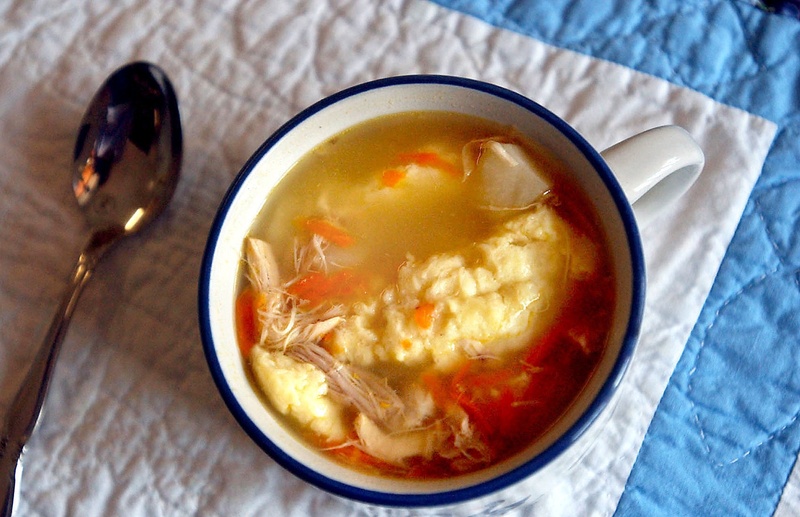
CHICKEN SOUP – Yes, your grandma’s remedy really does work. A study at the University of Nebraska Medical Center about 10 years ago found that the ingredients typically used in chicken soup have anti-inflammatory properties that make you feel better when you’re sick. Chicken soup really does soothe your throat, clears your airways and, of course, provides nourishment in a form you feel like taking.
But what if you don’t eat meat? The study showed that the chicken provided anti-inflammatory properties, but so did the other ingredients in the soup. Meg Wolff of Cape Elizabeth, author of “A Life in Balance: Delicious Plant-Based Recipes for Optimal Health” (Down East $19.95), offered to share her vegetarian version, “Hold-the-Chicken Chicken Soup.” You can find it elsewhere on this page.
And if that doesn’t appeal to you, Wolff also recommends
MISO SOUP – A cup a day when you’re sick. Miso soup contains beta glucans, which some researchers think may improve cholesterol and boost the immune system.
Barley and oatmeal are other sources of beta glucans.
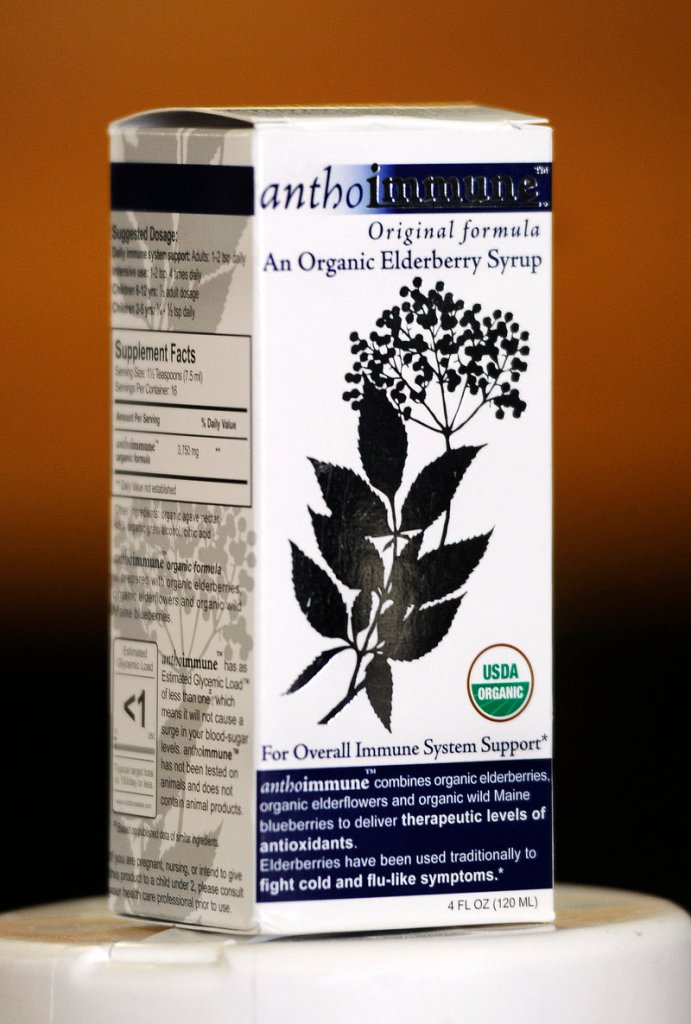
ELDERBERRIES – Edie Johnston, president of Maine Medicinals in Dresden, is not allowed to make a direct claim that her locally grown organic elderberry syrup, sold under the name Anthoimmune, can fight colds and flu.
But she can say that she gets calls and e-mails almost every week from people who claim that since they started taking her antioxidant-rich product, they haven’t been sick.
“Traditionally, elderberries have been used to fight colds and flu, and the research is really identifying some very specific flavonoids, or a specific kind of antioxidants that bind to viruses such as flu viruses and prevent those viruses from entering the host cells,” Johnston said.
Johnston and her company are focused on identifying and evaluating varieties of elderberries that have the highest levels of antioxidants. They hope eventually to find the therapeutic levels of antioxidants that will strengthen the immune system so that people are less susceptible to getting sick.
The syrup, taken a teaspoon or so at a time, tastes sweet and earthy. At Whole Foods it costs $17.99 for a 4-ounce bottle and $27.99 for an 8-ounce bottle, although it is on sale through Jan. 25 for $15.49 and $23.99.
The syrup can also be found at Royal River Natural Foods in Yarmouth, Neighborhood Health and Herbs in Saco, Lois’ Natural Marketplace in Scarborough and Apothecary Design in Portland.
GREEN TEA – Like elderberry, green tea is full of antioxidants that boost immune function. One study in the Journal of the American College of Nutrition showed that people who took green tea in capsule form experienced 23 percent fewer colds and flu, and took 36 percent fewer sick days.
Meg Wolff swears by a green tea and pickled plum concoction called ume-sho-bancha. When her daughter was young, she drank it to relieve her sore throats.
“Boncha tea is a green tea that doesn’t have any caffeine in it,” Wolff said, “or just a minute amount.”
An ume plum is a Japanese pickled plum.
“I would make a cup of tea, put a half of a plum in it, then put a half a teaspoon of good quality soy sauce to get the good probiotics,” Wolff said.
NO REFINED SUGARS – Too much refined sugar is believed to lower immune response. So when you’re feeling bad, cut out the Ding Dongs and eat your fruit instead of drinking it in juice form so you don’t get too much added sugar.
VITAMIN C – Instead of taking a pill, get your vitamin C through whole foods. Broccoli is a great source. So are sweet red peppers, strawberries, oranges, cabbage, collard greens and brussels sprouts.
“A lot of people aren’t aware of how much vitamin C you actually get from vegetables,” Wolff said. “We always hear that we get it from fruit, but vegetables are full of it as well, like cauliflower. When you eat that, you’re also getting the fiber, which is going to flush the toxins out.”
Staff Writer Meredith Goad can be contacted at 791-6332 or at: mgoad@pressherald.com
Follow her on Twitter at: twitter.com/MeredithGoad
Copy the Story Link
Send questions/comments to the editors.

Success. Please wait for the page to reload. If the page does not reload within 5 seconds, please refresh the page.
Enter your email and password to access comments.
Hi, to comment on stories you must . This profile is in addition to your subscription and website login.
Already have a commenting profile? .
Invalid username/password.
Please check your email to confirm and complete your registration.
Only subscribers are eligible to post comments. Please subscribe or login first for digital access. Here’s why.
Use the form below to reset your password. When you've submitted your account email, we will send an email with a reset code.