




The number of children removed from abusive homes in Maine has declined by more than 50 percent in the past decade, as the Department of Health and Human Services has pursued a policy of keeping children with parents unless they face physical abuse or serious neglect.
The numbers mirror a national trend, supported by findings that children can suffer severe emotional trauma when separated from their families and placed in foster care.
Additional Photos
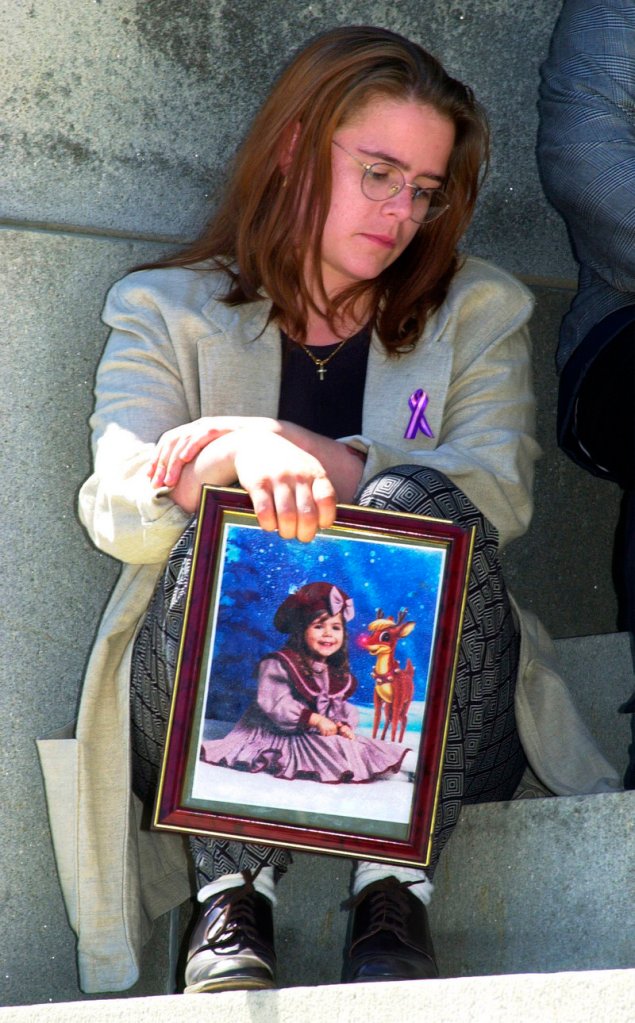
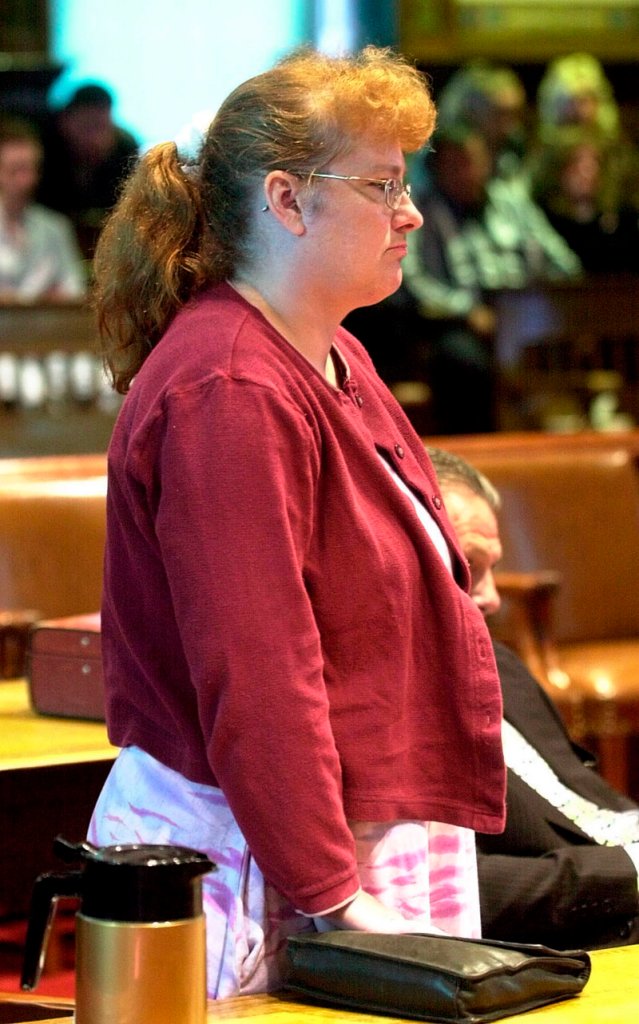
But the Maine Sunday Telegram has found that the trend also raises concerns about whether child welfare workers are acting quickly enough in cases where children are suffering or at risk of abuse.
Those concerns came into focus last week after the death of Ethan Henderson, a 10-week-old boy whose father allegedly squeezed his head and threw the baby into a chair at the family’s home in Arundel.
Gov. Paul LePage — a victim of abuse as a child himself — noted that the DHHS has come under criticism in the past for removing too many children from their homes.
But the agency’s policies have now swung in the opposite direction, and officials may be too slow to take children out of homes where they are in danger, the governor said.
A day care worker had contacted the DHHS about signs of potential abuse of Ethan, his twin brother and 3-year-old half sister, but the agency won’t release information on when it received the report or how it responded.
The state removed about 3,200 children from their parents’ homes about 10 years ago, and last year, that number was down by more than half, to about 1,500, said Therese Cahill-Lowe, director of the Department of Health and Human Services’ Office of Child and Family Services.
Cahill-Lowe, who has led the office for about a year, said she also thinks her agency might be erring too often on the side of leaving children in the home.
“I share the governor’s concern,” she said. “I do think that we seem to be not reacting in the same way we were with initial referrals (of suspicions of abuse). If in doubt, we need to react … and safety is the paramount concern.”
Cahill-Lowe said she is reviewing the department’s policies on removing children from homes as part of a DHHS restructuring effort.
Many child-care advocates applaud the trend toward keeping more children out of what they say is a flawed and sometimes damaging foster care system. The overreliance on foster care and that system’s problems came to the forefront in 2001, when 5-year-old Logan Marr died while in foster care.
The child was asphyxiated when her foster mother duct-taped her to a highchair, leading to investigations of foster care in Maine and launching reforms that began to trend toward removing fewer children from their families.
The majority of children whose cases are investigated by the DHHS are left with their parents, because most child abuse cases could more accurately be called cases of neglect or a lack of parenting skills, Cahill-Lowe said. DHHS workers come up with family plans to address concerns, although cases where they find actual physical abuse or instances where the neglect is so severe that a child is endangered require that children be removed from the home.
In cases where the child is left in the home, the DHHS tries to “get services into the home and get natural support in place, such as grandparents and friends,” Cahill-Lowe said.
Child-care advocates said Maine should put even more effort into reunification of families or kinship care — placing a child with a relative — to further reduce the use of foster care.
Cahill-Lowe said that removing a child from a home, even one in which he or she has been abused or neglected, is extremely traumatic.
She said that the state is increasingly likely now to ask relatives to care for a child who has been taken from a home where physical abuse is suspected, resulting in a dramatic decrease in the number of children placed in foster homes.
Maine began using kinship care about seven years ago. Now, about a third of children removed from a home go to live with a relative, rather than be placed with a foster parent, who is paid by the state to care for a child. The pay for foster parents starts at nearly $500 a month per child and increases, depending on the amount of special care a child needs.
Maine is moving toward kinship care at a faster rate than the nation as a whole, said Richard Wexler, who heads the National Coalition for Child Protection Reform. His group has been monitoring changes in Maine’s child welfare system for more than a decade, dating to the Logan Marr case.
Wexler, who warns against making major changes in the system in the wake of a tragedy, said the state has made “a careful, moderate progression” in child welfare over the last 10 years, led by the greater use of kinship care.
He criticized LePage’s remarks, saying that using the death of Ethan Henderson of Arundel as the rationale for a major shift in policy would be a mistake.
“Maine is one of the few child welfare success stories, and the governor ought not mess with it,” he said.
Cahill-Lowe said Maine adopted kinship care because many people felt that the parents of abusive parents were, too often, abusers themselves.
“The philosophy was that the apple doesn’t fall too far from the tree,” she said, but studies have found that relatives are likely to care well for a child who has been taken from an abusive home, and often welcome the involvement of the DHHS.
Actual physical abuse occurs in a minority of child welfare cases, Wexler said. Most cases could more accurately be termed neglect, often due to poverty.
Cahill-Lowe said she’d like to see more borderline cases handled by community groups than by the department’s social workers, who are having to deal with a heavy caseload without increases in staffing due to budget constraints. In 2010, the last year for which numbers are available, the state fielded nearly 18,000 reports of suspected child abuse, down about 1,000 from five years before. But the number of substantiated cases was 6,348, up slightly from five years earlier.
Shifting oversight of those cases that haven’t evolved to actual abuse or severe neglect would free up the department’s workers to focus on more serious cases, said Cahill-Lowe, who said her office is working on a review of its policies as part of a department-wide restructuring.
Child care providers, schools and agencies such as Head Start and Healthy Maine Families could help identify cases where children aren’t clean or well-clothed, aren’t being fed regularly or show other signs of parental neglect, she said.
The problem, child welfare advocates said, is that those organizations where the state would like to shift some of the cases are suffering due to budget cuts.
“They’re cutting all these programs,” said Lucky Hollander, who was head of legislative relations for the DHHS for six years and before that was executive director of the Cumberland County Child Abuse and Neglect Council.
“The story is told in the budget,” she said. “You can’t disconnect the governor’s budget with how people deal with these things.”
Dean Crocker, who works as a mediator of sorts between parents and the DHHS as ombudsman of the Maine Children’s Alliance, said the approach calling for more early intervention is a good one, although he said the state’s budget cuts don’t support that.
He said children placed in foster homes are repeatedly moved from one to another, are unlikely to graduate from high school and more likely to be on psychiatric medications than children who remain in the home or are in kinship care.
Placing children with a relative when a parent can’t or won’t care for them is how society has traditionally dealt with the problem, he said, and needs to be supported with more programs to help care for children in their extended family.
“Most of us believe that the child welfare system is important, but it’s more important to keep kids out of the child welfare system,” he said. “Most experts would say the state makes a lousy parent.”
Staff Writer Edward D. Murphy can be contacted at 791-6465 or at:
emurphy@pressherald.com
Copy the Story LinkSend questions/comments to the editors.

Success. Please wait for the page to reload. If the page does not reload within 5 seconds, please refresh the page.
Enter your email and password to access comments.
Hi, to comment on stories you must . This profile is in addition to your subscription and website login.
Already have a commenting profile? .
Invalid username/password.
Please check your email to confirm and complete your registration.
Only subscribers are eligible to post comments. Please subscribe or login first for digital access. Here’s why.
Use the form below to reset your password. When you've submitted your account email, we will send an email with a reset code.