



MAMMOTH HOT SPRINGS, Wyo. — The giant snowplows that wake Yellowstone from its winter slumber every March are idled, waiting for the sun to make up for federal budget cuts that are forcing the park to open late for peak season.
Mandatory cuts kicked in three days before the plows were to clear snow and ice from 300 roads at altitudes that reach 11,000 feet. Faced with an order from Washington to slice $1.8 million from his budget, park Superintendent Dan Wenk had weighed his options.
Additional Photos
He could slash the ranks of the 430 seasonal rangers, guides and other employees who help keep Yellowstone running every summer. But it would mean fewer visitor centers, walking tours and a risk to public safety.
He could halt the bison management program – but the program is required under a court settlement. He could close the park for two weeks before the fiscal year ends Sept. 30, but that would mean shutting out 267,000 visitors.
Or he could keep the seasonals, just fewer of them, and bring them on two weeks later, saving $450,000. He could freeze all permanent hires ($1 million), delay the snowplows ($250,000) and open most entrances two weeks late. About 50,000 visitors would be lost, and hundreds of fishing and hiking guides, rangers and concession workers would lose their livelihoods.
But it seemed the best bad alternative. The sun would melt and soften the snow, saving $30,000 a day.
“We didn’t say we’re going to shut the park down” for the season, Wenk said. “But it will have real impacts.”
CAN’T PLEASE EVERYONE
At parks, military bases and federal agencies across the country, managers such as Wenk are weighing choices being forced by the budget reductions known as sequestration.
“Everybody says, ‘We want you to run the park like a private business,’ ” he said, referring to the 5.1 percent cut he must make over seven months, which will feel a lot bigger. “Well, here it is. The impact is 9 percent.”
Early last Monday, he sat in regulation khakis in his office, five miles inside the park, 2,174 miles from Washington. He looked over a long list of calls and meetings on his schedule to make it official that plowing would not start on time.
He dialed Steve Bullock, Montana’s Democratic governor.
“There’s a lot of misinformation out there that we are just doing this to make a statement about the effects of sequestration,” he told Bullock, walking him through his decision.
Bullock thanked him for the briefing. Then things got messy.
By midday, a news release had gone out, and the while-you-were-out slips were piling up. Tour guide Rusty Cole’s was at the top. “He’s mad as hell,” read the message.
“Rusty should call his congressman,” Wenk said.
And Cole did. U.S. Sen. John Barrasso, R-Wyo., returned his call that night.
“He said the delayed opening is not a done deal,” recounted Cole, who is furious that park officials are slashing two weeks from his 20-week season.
“They spend millions of dollars to operate Air Force One, and they can’t come up with some money to blow open the roads in Yellowstone?” Cole said.
But the sequestration law slices money across the government, including $136 million from the 398 national parks.
In 1872, the federal government saw to it that the spectacular landscape of 2.2 million acres, which is ringed by the Rocky Mountains in Wyoming, Montana and Idaho, was protected as America’s first national park. Today, Yellowstone Country is a deeply conservative place, where government is regarded with great suspicion.
Just ask Wyoming’s lone House member, Republican U.S. Rep. Cynthia Lummis, who applauded the $85 billion carved across the board in a Feb. 26 letter to constituents.
“Federal agencies will be forced to consider which positions are crucial and make their decision based on necessity rather than luxury,” she wrote.
In an interview, Lummis suggested that Wenk petition House and Senate appropriators for permission to take money from his capital budget to cover the cuts, an idea he said was illegal and would never get through Congress in time.
CONSERVATIVES DISTRUST CUTS
The late opening has further inflamed the area’s anti-government sentiment as small, rural communities that serve park visitors absorb the reality of the cuts. In the large scheme of 3.4 million annual visits, losing 50,000 seems small.
But the ripple effect on jobs and tourism could mean millions of dollars in lost income. The plowing delay also means snow won’t be cleared until mid-June from the scenic Beartooth Highway, which straddles Montana and Wyoming outside the park. The National Park Service plows about half the road.
“We have 90 days to make a living,” said Sam Bolinger, 56, who leads whitewater rafting tours along the Yellowstone River from Gardiner, Mont., in the summer and grooms park trails in the winter. “If people get the impression they can’t get into the park, they just won’t come.”
There was the hostile reaction from the mayor of Jackson, Wyo., 60 miles from the park’s south entrance, who told Wenk that anyone knows how to cut 5.1 percent from a budget without inflicting this much pain.
“This is, with all due respect, an asinine decision,” Mark Barron said in a conference call with business and community leaders. Jackson has cut its budget by 22 percent, he said, “and we didn’t cut any services.”
It was the day’s one moment when Wenk, 60, a self-possessed and respected civil servant, got mad.
He managed to contain his temper, though, telling Barron that Yellowstone’s $33 million budget is $3.7 million smaller than it was three years ago.
He asked Barron whether the park should continue to stay open in the winter, when each visitor costs $55 vs. $10 in the summer.
When the call was over, Wenk and his deputy, Steve Iobst, wondered how one could slash 22 percent just like that.
As sequestration hit, the park was preparing for high season, closing the hotels and restaurants that serve its fewer than 100,000 winter tourists.
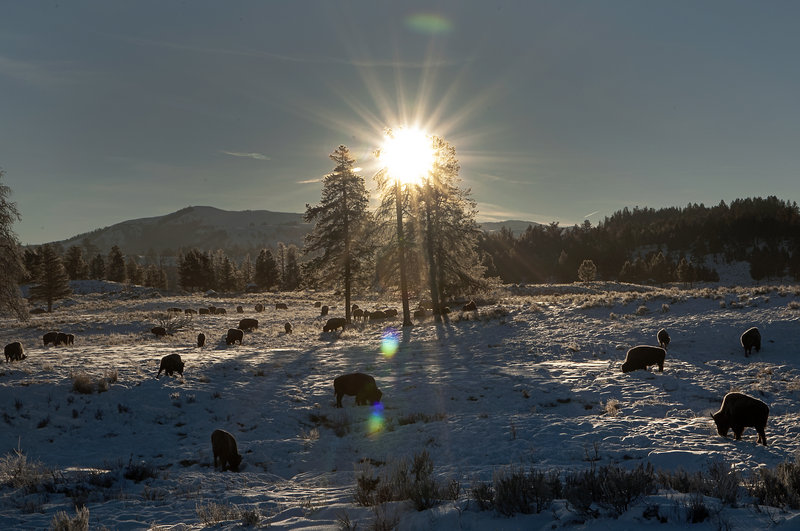
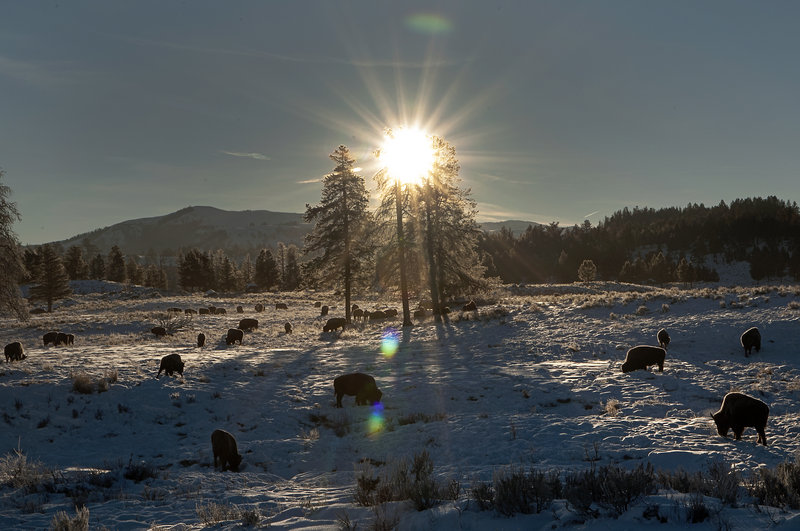
Yellowstone in winter is a landscape of white. Clouds of steam from the park’s many geysers billow into the cold, while herds of bison forage. The only way around is by snowmobile, and that’s the tourist draw.
“We just saw a fox for the second time today,” marveled Tina Don, visiting from Cedarhurst, N.Y. “The same fox!”
Her husband, Scott Dere, pulled out his iPhone and scrolled through his photos. A bison, an elk, a bald eagle.
By late May, the place will be humming with cars and RVs, campfires and hikers.
At the Old Faithful visitor center, Rich Jehle said half of his six supervisor jobs are vacant and won’t be filled, which will mean fewer guided walks around the geyser and other attractions.
“We’ll be spread thin, but we’ll adapt,” said Jehle.
THE GOVERNOR’S DECISION
Last Wednesday, Wenk was meeting with his managers to decide which seasonal staffers wouldn’t be called back and how the park would adjust to permanent vacancies, when the Wyoming governor’s office called.
Republican Gov. Matt Mead was getting complaints about the opening delay.
He organized an emergency conference call for Wednesday to figure out whether Wenk could reverse his decision or whether there was any other way to open the park on time. About 20 mayors, tourism and business leaders, and state transportation officials dialed in. Mead was asked whether the state would plow the roads in Yellowstone.
It was an uncomfortable spot. A state bailout of the federal government to help his constituents? Wyoming has just sliced 6.5 percent from state spending while raising the fuel tax – a combination of new revenue and cuts that Washington can’t seem agree to.
“It’s a bad message for Wyoming to say, ‘Yellowstone is not open, call back later,’” Mead said in an interview. “But do I ask that state resources step in to cure a large federal screw-up?”
His answer late Friday: No.
Local leaders said they are trying to raise the money to pay for plowing. But every day causes more delays.
Copy the Story LinkSend questions/comments to the editors.

Success. Please wait for the page to reload. If the page does not reload within 5 seconds, please refresh the page.
Enter your email and password to access comments.
Hi, to comment on stories you must . This profile is in addition to your subscription and website login.
Already have a commenting profile? .
Invalid username/password.
Please check your email to confirm and complete your registration.
Only subscribers are eligible to post comments. Please subscribe or login first for digital access. Here’s why.
Use the form below to reset your password. When you've submitted your account email, we will send an email with a reset code.