




Neil Begin had been drinking heavily and using a hunting rifle to threaten family members, who called Maine State Police. Begin was alone when police went to his mobile home in Cyr Plantation in 2010, intending to arrest him for criminal threatening with a dangerous weapon.
When he refused to come out, a state police trooper and two U.S. Border Patrol agents forced the door and went in. And when Begin allegedly pointed a rifle at them, the state trooper and one of the agents both fired their weapons, killing him.
Additional Photos
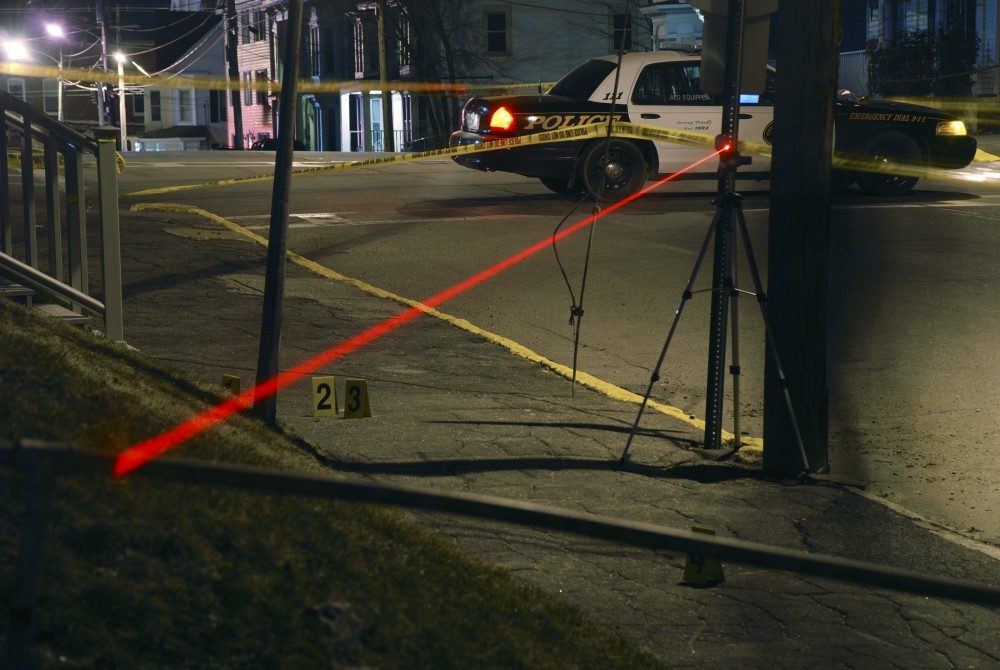
Begin clearly provoked a police response, but the officers made basic mistakes in how they handled the incident, according to an internal review. A written report of that review is publicly available, and addresses a central issue in the use of deadly force: whether better training can help police deal with unstable and potentially dangerous people without shooting them.
But very few Maine officers will have the opportunity to learn from the incident, because they aren’t being made aware of the report’s existence.
Moreover, the legislators who were involved in creating a special review process that generates these reports weren’t interested in making them more available. They also apparently couldn’t take the time to read the reviews they ordered.
That attitude may change, as Democrats take over control of the committee from Republicans in the upcoming legislative session.
Police in Maine have used deadly force 20 times since the new reporting requirement went into effect two years ago. In 12 of the cases, the suspect was killed. State police were involved in seven of the incidents and five deaths. Ten of the reports have been completed.
Early this year, the board of trustees of the Maine Criminal Justice Academy sent a status update on the new review team process to the Criminal Justice and Public Safety Committee, which oversees police matters in the Legislature. A few weeks later, the Portland Press Herald sent emails to all 13 members of the panel.
The newspaper asked committee members if they had any reaction to the update, whether they had read any of the team reports or thought the reports should be posted online, so other police might benefit from these experiences and recommendations.
No lawmaker replied.
In follow-up phone interviews, the co-chairman of the committee, Rep. Gary Plummer, R-Windham, said he hadn’t thought to read the team reviews, but would belatedly do so with an eye toward the issue of mentally ill and impaired suspects. The committee’s minority leader, Rep. Anne Haskell, D-Portland, also said she hadn’t read the reviews, but that the number of shootings over the past two years made her wonder if training is adequate.
“I looked at (the update) and thought, ‘Wouldn’t it be nice if we could go a year without any deaths,’ ” Haskell said at the time.
Six shootings have taken place in 2012, three of them involving mental illness or alcohol. And Haskell, who may serve on the committee next year with Democrats again in control, said last month that she now thinks the reports should be required reading.
Haskell said she’d explore whether the state’s reporting requirements should be changed, so that the committee receives copies of each review-team finding.
HOW THE REVIEW PROCESS WORKS
The new reporting requirement was ordered by the Legislature as a compromise. It was set up in place of a proposal to create independent, seven-member citizen review panels that would include a lawyer, clergy person and mental health professional. That idea was opposed by law enforcement and failed to win support.
Here’s how the compromise works:
Review teams are appointed by a department chief and must include at least one state police officer and one member of the public. The team reports supplement, but don’t replace, mandatory investigations by the state Attorney General’s Office that focus on legal justification.
The review team reports provide a second layer of scrutiny by assessing six points. These include whether department policy was clear and understandable, whether changes in procedures or practices are needed, and whether training and equipment are adequate.
Each law enforcement agency in Maine must have a written policy on using physical force. They must meet minimum provisions adopted by the Maine Criminal Justice Academy board of trustees and reflect a model policy supported by the Maine Chiefs of Police Association.
The Press Herald obtained copies of the team reports that have been completed and are publicly available. Although the process is new and evolving, it gives some insight into how police seek to resolve these volatile situations.
SAMPLE OF CONFRONTATION POLICY
Among the clearest examples is the Use of Control policy guidelines developed by the York County Sheriff’s Office. The process is laid out in a review-team report released last July after the fatal shooting of Andrew Landry, 22, in Lyman.
Police responded to a call from family members after Landry showed dangerous and psychotic behavior and refused all attempts to get him help. Two sergeants arrived after dark at a mobile home and went inside.
Landry charged at one of them with kitchen knives. When his partner’s Taser failed to stop the advance, the other deputy fired four shots from his handgun and killed the disturbed man.
The department’s policy calls for using “the minimum control reasonably necessary,” but says police can resort to more severe methods of control to overcome increasing resistance or an increasingly dangerous threat to public safety. To escalate force, officers should follow this sequence:
Presence. Verbal commands. Compliance techniques. Disabling pepper agents. Impact weapons. Electronic devices. Deadly force.
The review team noted in the Landry case that police had established presence by wearing uniforms and driving marked cruisers. They had given him verbal commands. The team concluded, however, that the speed of events and close quarters didn’t allow for compliance techniques, pepper spray and impact weapons. It then noted that the electronic device (Taser) was ineffective, which made deadly force justified.
FLAWED HANDLING OF FATAL SHOOTING
In the Begin shooting, where police entered his trailer, Maine’s attorney general found the police action was legally justified. But the review team, made up of three lieutenants from the state police, the chief of the Brewer Police Department and a public member from Vassalboro, reviewed the incident under different standards. The team looked at seven state police policy guidelines and determined that they were followed.
However, the Begin team also flagged two notable shortcomings – in planning and risk assessment – and recommended corrective actions.
In its first finding, the team concluded that “There did not appear to be any tactical planning established between Trooper Flynn and the two Border Patrol agents. At the very least, there should have been some discussion between officers to plan an approach and define each other’s responsibilities.”
The team recommended that “At the very least, further discussion is recommended for some training application in the proper usage of tactical planning prior to approaching a suspect or residence under the circumstances of this incident (prior knowledge of a weapon involved, alcohol usage, etc.)”
The team said supervisors should take action: “The firearms instructors will remind all troopers about the need to establish a tactical plan during the next range.”
In its second finding, the team concluded that “There did not appear to be a consideration for a risk assessment by Trooper Flynn in this incident. With the provided information from three witnesses, a basic risk assessment would have provided Trooper Flynn with the tools to notify his immediate supervisor and to possibly request additional resources prior to arriving at the residence.”
The team recommended that “A risk assessment form or visor card should be implemented within the agency to provide troopers with the decision-making process currently afforded troopers for requesting the Tactical Team.” (This card would use numbers that correspond to varying levels of response, and recommend when a supervisor should be notified.)
The team recommended that supervisors should take action: “This issue will be addressed at the next Command Officer’s meeting.”
EFFECTIVENESS OF REPORTS UNCLEAR
Brian MacMaster, the longtime chief investigator at the Attorney General’s Office, prepared the status report on the review team process for the legislative committee. He noted the limited mandate of the legislative resolve: Provide an update, the number of teams convened and the number of reports generated. He also noted that the reports are available to the public, upon request to the respective law enforcement agency.
MacMaster, who also chairs the trustees board of the Maine Criminal Justice Academy, was asked if board members read the reports, or if he thought there would be value in posting them on the academy’s website.
MacMaster didn’t directly answer those questions. He responded that the status report, like any requested by the Legislature, only contains the information required by law or resolve. He added that some agencies will do a more complete job than others, and that the only way to determine the value of the process is to get copies of the reports and read them.
“This process is still quite new,” MacMaster said. “Personally, I think it’s working, if for no other reason than it compels an agency to do a self review/analysis and brings in others outside the agency into the process, particularly citizens.”
REVIEW MAY HOLD USEFUL LESSONS
A team review is set to be released soon on a shooting incident that may hold lessons for Maine police, to the extent that they become aware of the findings.
In November 2011, state police Trooper Jon Brown shot and killed Michael Curtis during a confrontation in Dover-Foxcroft. It was a confusing scene when law enforcement personnel tracked down Curtis, who was drunk and had just shot a man at a nearby nursing home.
When Brown arrived, he was unaware that the local sheriff had been negotiating with Curtis, a firefighter who had a portable radio, and that Curtis was asking for help. The sheriff then walked toward Curtis, and when the sheriff ignored Brown’s warnings to get away, the trooper shot Curtis, who was holding a handgun.
In July, the Attorney General’s Office found the shooting legally justified, because Brown had reason to believe that the sheriff was being threatened with deadly force.
Shortly after, Curtis’ widow filed a notice of claim for wrongful death. It charges that Curtis was actually unarmed, was not fleeing and didn’t pose a risk to Brown or anyone else.
It also charged: “Trooper Brown was not properly trained or supervised in a manner to prevent the unlawful use of deadly force.”
DO POLICE NEED BETTER TRAINING?
Brown’s training clearly was an issue, according to information gathered by the newspaper.
Many details of how the state police handled Brown’s case are confidential, but a “final agency action” letter from Col. Robert Williams, chief of the state police, and Brown, provides an outline.
The one-page letter notes that Brown violated department policies. These policies involve use of force, establishing command and control, and information gathering.
Brown was put on unpaid leave for 30 days last summer. He also was reassigned to the force’s commercial vehicle division. He then was required to complete “remedial training” in areas including use of force and “responding to a barricaded subject,” according to the letter from Williams.
The state police policy manual contains wording regarding the use of deadly force. It states, in part: “An officer is to use only that degree of physical force that the officer reasonably and actually believes is necessary to effectively bring a situation under control while protecting the officer and/or any other person.”
It remains to be seen if the Curtis review – which provides details on the highly publicized shooting – will generate more interest than previous reports.
Copy the Story LinkSend questions/comments to the editors.

Success. Please wait for the page to reload. If the page does not reload within 5 seconds, please refresh the page.
Enter your email and password to access comments.
Hi, to comment on stories you must . This profile is in addition to your subscription and website login.
Already have a commenting profile? .
Invalid username/password.
Please check your email to confirm and complete your registration.
Only subscribers are eligible to post comments. Please subscribe or login first for digital access. Here’s why.
Use the form below to reset your password. When you've submitted your account email, we will send an email with a reset code.