



The story of medicine’s progress against disease is told in two parallel tracks, one dealing with curing illnesses and the other with preventing them. Any public health professional will without hesitation say it is far better to prevent people from getting sick in the first place than to try to cure them afterward.
That’s true no matter how well-established the treatment is for any illness or disease, even if medicine can always produce a cure. It is always more expensive, troubling and potentially painful to cure people than to keep them healthy to begin with.
Additional Photos
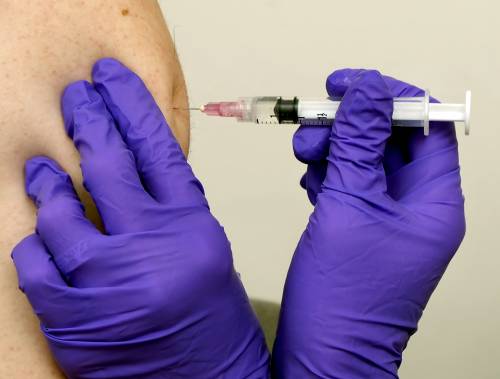
That’s why it’s so disturbing to health professionals to confront proposals like the two laws presented at a public hearing earlier this week that would work against people receiving immunizations against a variety of deadly diseases.
One of the bills, LD 694, would mandate that everyone receiving a vaccination or immunization be provided with a list of that drug’s ingredients.
The other, LD 941, would make it impossible for schools and other institutions to require that those they serve (with some limited exceptions for medical or philosophical reasons) be immunized against any disease.
It seems apparent that the spur for these measures is a belief that vaccinations can cause long-term harm.
It has been alleged that the measles, mumps and rubella (MMR) vaccine, for example, causes autism. However, the doctor making that claim had his license revoked in Great Britain last year after a leading medical journal reported that he falsified his research. Thimerosal, a preservative used in some vaccines until 2001, also has been alleged to be harmful, but the federal Centers for Disease Control says those claims are unfounded.
Still, the damage has been done, and vaccination rates have fallen — from 90 percent to 80 percent here in Maine. This leaves many children open to diseases that are easily preventable.
In societies where vaccination is widespread, something called the “herd effect” offers protection even for the few left unimmunized because diseases can’t get established.
But with 20 percent or more left vulnerable, we can’t count on that form of protection. Leaving religious objections aside, it’s bad enough that many parents are choosing to leave their children unprotected due to a baseless fear. That their children may suffer needlessly is even worse.
Copy the Story LinkSend questions/comments to the editors.

Success. Please wait for the page to reload. If the page does not reload within 5 seconds, please refresh the page.
Enter your email and password to access comments.
Hi, to comment on stories you must . This profile is in addition to your subscription and website login.
Already have a commenting profile? .
Invalid username/password.
Please check your email to confirm and complete your registration.
Only subscribers are eligible to post comments. Please subscribe or login first for digital access. Here’s why.
Use the form below to reset your password. When you've submitted your account email, we will send an email with a reset code.