



LEWISTON — “The Maine Drawing Project” comprises a couple of dozen exhibitions throughout the state at various institutions.
However, the show that provides the clearest insights into philosophical questions about drawing isn’t part of the “Drawing Project,” but rather is a charming exhibition at Bates College Museum of Art of works by Jamie and Andrew Wyeth. The pieces are owned by Victoria Browning Wyeth, their niece and granddaughter, respectively, who graduated from Bates 10 years ago.
Additional Photos
Victoria’s collection is the product of genuine intimacy among family from the moment she was baptized, which is marked by a commemorative drawing by Uncle Jamie of a thunderously animated, theatrical and celebratory sow. And then there are the witty illustrations on gifts, books, cards and letters. These personal objects are entrancing. Obviously, their honest sweetness wasn’t intended to make the Wyeths look good, but it certainly does.
Save some time for this show, because while it doesn’t take up much space, it features 50 fascinating works — and you won’t be satisfied until you’ve read all the notes. My personal favorite is a note from Jamie to his niece begging her to come see his new emu. His drawing shows four Monhegan dogs staring at the strange bird and wondering what to think.
Besides drawing as commentary, comic relief and a personalizing mark, there are also plenty of sketchbooks, stand-alone drawings and studies for paintings. There are several excellent pencil studies by Andrew in which he is working out, for example, a braid in Helga’s hair or, best of all, the gesture of a foot for the painting “Nightnurse.”
One sheet is covered with pencil drawings of a hurrying woman and progressively detailed drawings of her back foot. Should the heel be down or up? If up, then how to manage the gesture of the big toe seen from the side? Andrew’s great talent is shown to be matched by his observational skill and working process. The other study shows that the foot is just a tiny detail of a figure that makes up merely a fraction of the image.
The show’s topper is Andrew’s 1965 “Master Bedroom,” which depicts a white dog sleeping very comfortably in late afternoon light on a tall bed adorned with a handsome bedspread.
The poster prints of this painting are vastly popular for good reason. Sure, it’s one of the best American watercolors, with its composition, subject, luminosity and range of wash and drybrush techniques. But in this show, it also makes the case that a painting is very different from a watercolor sketch.
As usual, Bates is also showing a fine collection of Marsden Hartleys, but its relative reliance on style over observation feels a bit awkward next to a long wall of Andrew’s drawings.
The main show at Bates, “Dis/Order,” features drawings by Amy Stacey Curtis, Alison Hildreth and Andrea Sulzer. This is a handsome, interesting and sophisticated exhibition that makes Bates’ fine gallery look better than ever.
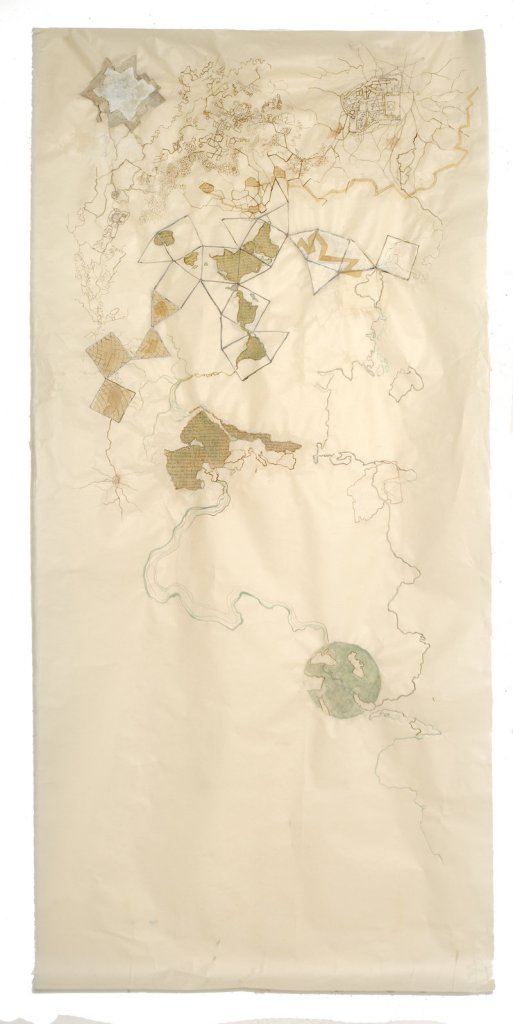
Hildreth’s new drawings take her historic topographical map forms further than ever. Now they show more clearly how ideas and cultural change make a difference in how we see the world.
The inclusion of a Dymaxion map dredges up not only Buckminster Fuller (who invented that projection) and his ideas, but also the issues of two-dimensional information in a three-dimensional world. Walls and battlements changed the world, but so did maps, mathematics and even Sigmund Freud. All this and much more appear in Hildreth’s ancient-looking “maps.”
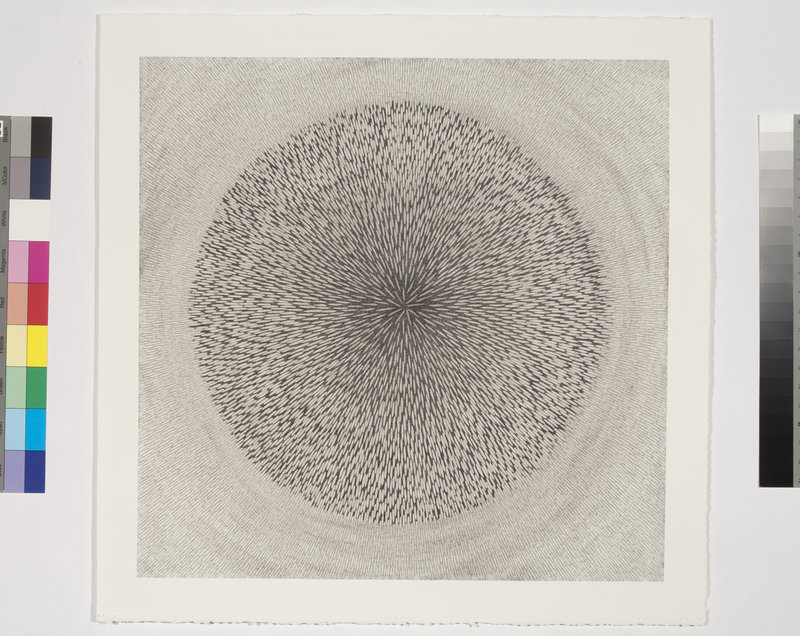
Curtis’ series of 27 drawings that took one hour to complete — then two, then three, etc. — is surprisingly rich in its consequences. The obvious thing is to see drawing as process, but Curtis is also delivering ideas such as viral mathematics, proliferation, ritual and environmental impact.
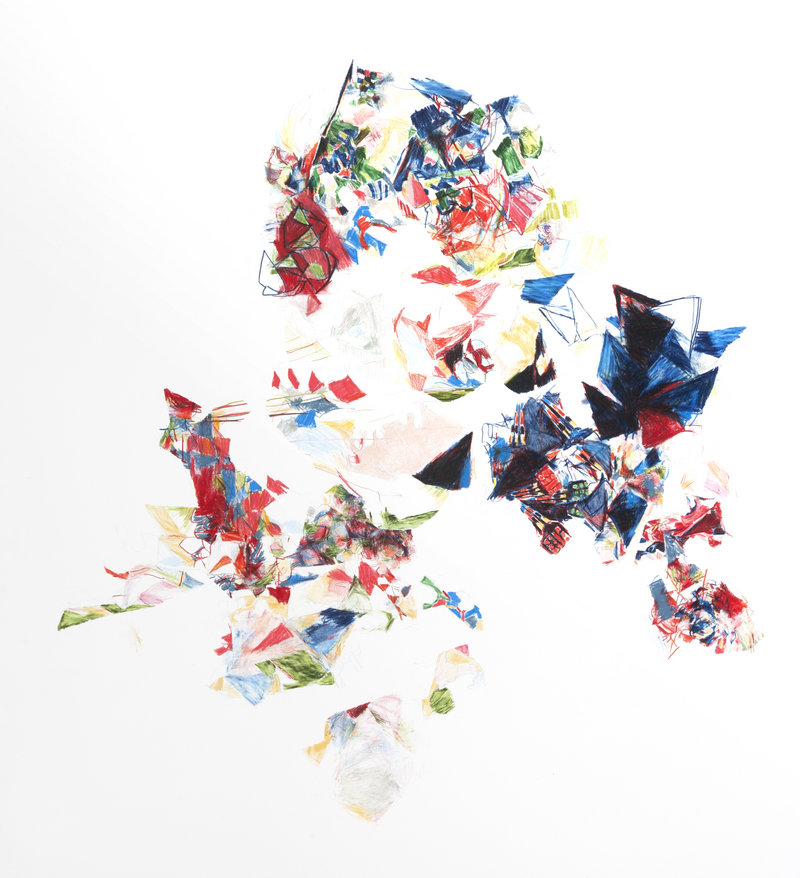
Sulzer’s newest work blew me away. I like her more obvious landscapes, but the newer work feels more about traces of memory that have disintegrated just past legibility. These are large drawings on white paper using colored pencil.
The imagery is crumpled and fleeting, despite the fact that it practically hums with over-saturated hues. Some look like the wrapping paper scraps on a Christmas morning floor, especially since the colorful detritus creates an actual landscape imbued with moments, memories and distorted traces, whose job it was to hide their initial contents.
Sulzer’s works pulse with sophisticated rhythms, but they are unflinchingly mute. Although they are ultimately derived from pre-existing images, they are insistently — and satisfyingly — enigmatic.
If the Bates drawing shows seem to agree on any one thing, it’s that drawing is an informational tool of virtually unlimited possibility. We use drawings to solve problems and convey ideas to others, not just data but love and humor as well.
Between the Maine greats such as the Wyeths and Hartley and three of the most important contemporary women artists working in Maine today, there is much to see at Bates.
Freelance writer Daniel Kany is an art historian who lives in Cumberland. He can be contacted at:
dankany@gmail.com
Copy the Story LinkSend questions/comments to the editors.

Success. Please wait for the page to reload. If the page does not reload within 5 seconds, please refresh the page.
Enter your email and password to access comments.
Hi, to comment on stories you must . This profile is in addition to your subscription and website login.
Already have a commenting profile? .
Invalid username/password.
Please check your email to confirm and complete your registration.
Only subscribers are eligible to post comments. Please subscribe or login first for digital access. Here’s why.
Use the form below to reset your password. When you've submitted your account email, we will send an email with a reset code.