




Slugs. Ugh.
If you’ve noticed an unusual number of the squishy, slimy creatures this year, it’s not your imagination.
Additional Photos
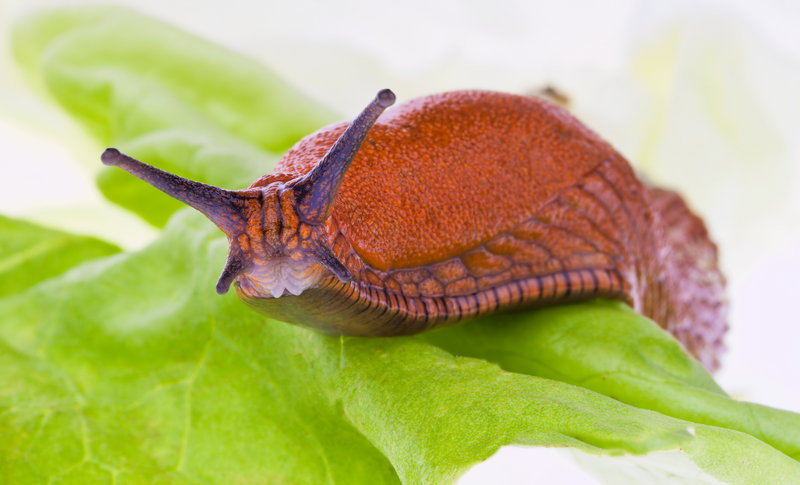

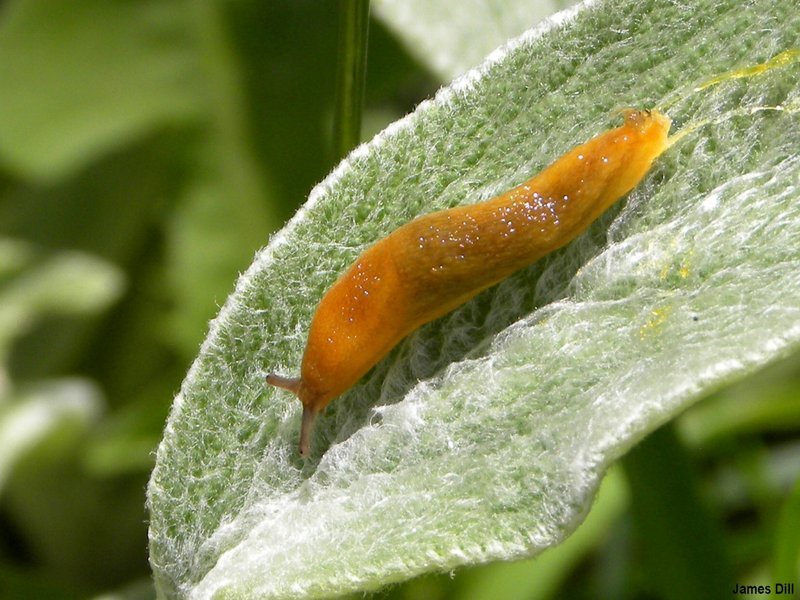
Depending on where you live and how much consistent rainfall your gardens have received this year, chances are you’ve found yourself stepping over lots of slime trails and counting the number of bites the hungry boneless pests have taken out of your hosta and cabbage.
“It’s been a record year for slugs and snails in the garden, no question about it,” said Mike Skillin of Skillins Greenhouses in Falmouth. “It’s gotten a little dry at times a few weeks back, and we certainly noticed a decrease then. But the population seems to have picked up again. And it’s amazing what they can eat.”
Slugs use their rasping mouth parts to chew their way through plants. Sometimes the damage is just cosmetic — if they’re not attacking your vegetable garden — but even cosmetic damage that goes on long enough can seriously injure the health of a plant.
And with food crops, there’s the risk that a secondary fungus or bacteria will move in to attack the damaged plant after the slug has moved on to tastier territory.
“They’re active when it’s dark or overcast,” said James Dill, a pest management specialist at the University of Maine Cooperative Extension Service. “They like the moisture, and they like to have a lot of debris around. So some folks that have gardens that are really big on straw mulch to help keep the weeds down, those are the great gardens to have slug problems too, because you’ve got that mulch for the slugs to hide where it’s nice and damp and cool, and they can spend the day there.”
Slugs also love hosta plants. With their broad, long leaves and love of wet, shady areas, hostas are the slugs’ version of potato chips.
They can’t eat just one. And the more they eat, the more they multiply.
Skillin knows a gardening couple who were determined last year to capture every last slug on their property.
They collected 3,000 slugs out of their yard.
So when should you think about trying to control them? Well, most people would probably agree that the thought of 3,000 slugs gives them the creeps. Dill said it all depends on individual tolerance.
“Most people certainly don’t want them in their food crops at all,” he said.
If you’ve decided even one slug is too many, here are some tips on how to get rid of them:
• Salt. This classic slug remedy conjures images of 12-year-old boys gleefully running around with the shaker pouring salt on slugs so they can watch them shrivel up and die. The thing is, unless you spread salt all over your yard, it’s going to take a long time to control the population. And it will be bad for your plants in the process.
So, Dill said, unless you have “that sadistic streak” and are “very mad” at the slugs in your yard, you might want to consider something with a little less shock and awe.
• Like beer. Yes, beer. They’re attracted to the yeast. The best way, Dill said, is to take an old cat food or tuna fish can and bury it until it’s flush with the ground. Fill it with beer. Put three or four rocks around it and set a board over it (because slugs like the cover and it helps keep dogs from lapping up the beer), but keep the wood slightly elevated so the slugs can still get into the can.
You’ll find several slugs in the can the next morning.
“What happens is, they climb up over the edge and get down into the liquid and get deslimed in the liquid, and they can’t crawl out,” Dill said.
• The beer trap works well, but it’s not for everyone. “To me, that’s a horrendous waste of beer,” joked Skillin.
Seriously, if you don’t want to blow your beer budget on something that doesn’t have a backbone, you can use yeast and water in place of beer. It’s the same principle.
Or take Skillin’s advice and try one of the iron phosphate-based products like Slug Magic and Sluggo.
He says he’s sold more Slug Magic this year than ever before.
“The iron phosphate, it looks and even tastes like dried, dull pasta,” Skillin said. “It comes in a granule form, and you sprinkle it down. The slugs are attracted to it, and they will eat it. They cannot digest or pass it through, so they crawl away and don’t live through that.”
• Watch your “sanitation,” as Dill delicately puts it.
What he means is, don’t leave old boards lying around — or bails of hay or straw mulch, for that matter. Even old railroad ties used as borders around gardens can look awfully attractive to a slug.
• Try copper screens around your garden, or wind copper strips or copper wire around your potted plants.
“The other thing that works fairly well is copper,” Dill said, “because what happens is, when slugs and their slime touch copper, it gives them a little electrical jolt.”
Remember this, though, as you crack open that 15th beer trying to drown as many slugs as you can: In the grand ecological scheme of things, slugs aren’t all bad. There are predators who love them.
“There certainly are lots of things that feed on them,” Dill said. “Toads and frogs will eat them.
“And then you have this little snake in Maine that’s called a redbelly snake. Full grown, it’s maybe 10 or 11 inches. It’s about as big around as a pencil. It almost exclusively eats slugs. It will eat other things, too, but its preferred diet is slugs.”
Ugh.
Staff Writer Meredith Goad can be contacted at 791-6332 or at:
mgoad@pressherald.com
Twitter: MeredithGoad
Copy the Story Link
Send questions/comments to the editors.

Success. Please wait for the page to reload. If the page does not reload within 5 seconds, please refresh the page.
Enter your email and password to access comments.
Hi, to comment on stories you must . This profile is in addition to your subscription and website login.
Already have a commenting profile? .
Invalid username/password.
Please check your email to confirm and complete your registration.
Only subscribers are eligible to post comments. Please subscribe or login first for digital access. Here’s why.
Use the form below to reset your password. When you've submitted your account email, we will send an email with a reset code.