



PORTLAND — A University of Southern Maine professor and a crew of students are embarking on an expedition to learn how the massive oil spill in the Gulf of Mexico is affecting the health of whales.
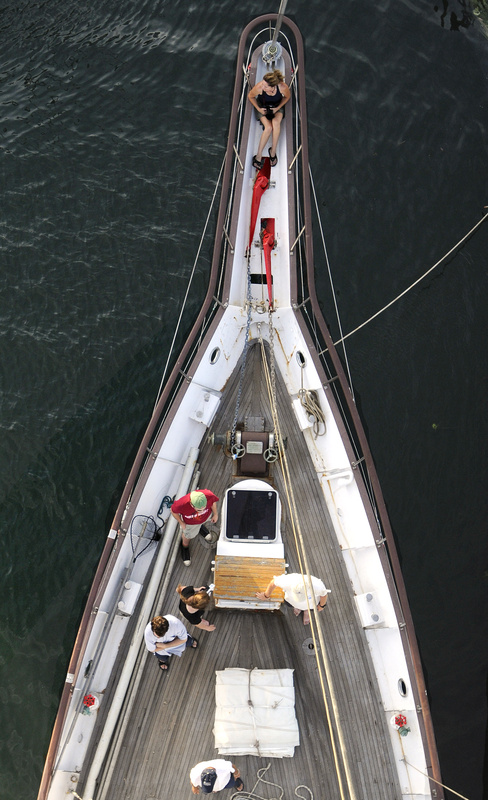
The research vessel, Odyssey, a 93-foot, two-masted sailboat packed with laboratory equipment, is now berthed at DiMillo’s Marina. The vessel is scheduled to depart Portland next Friday.
Additional Photos
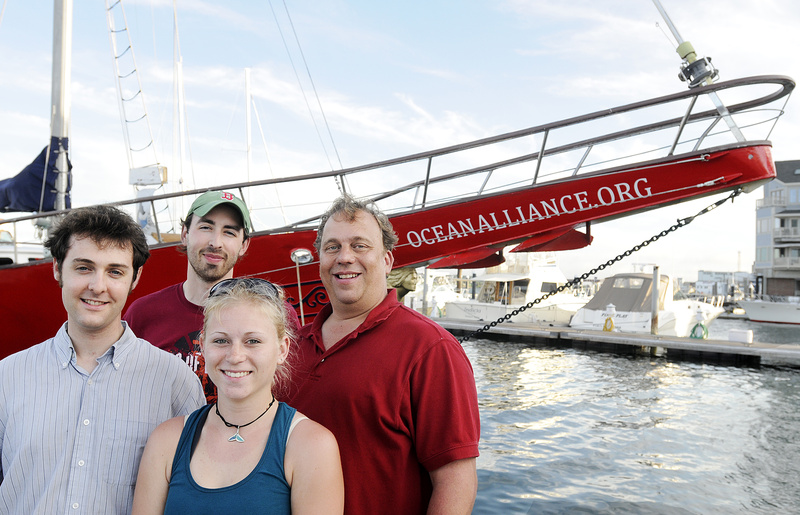
John Wise, a professor of toxicology and molecular epidemiology at the University of Southern Maine, is the lead scientist. At least 10 USM students will be on board for some portion of the three-month expedition.
The vessel is carrying Wise’s cellular molecular laboratory – the only laboratory of its kind at sea, according to Iain Kerr, chief executive officer of Ocean Alliance, the Massachusetts nonprofit that owns the $1.5 million ketch.
Wise and the crew will be hunting for cell samples of sperm, humpback and Bryde’s whales. Wise will study DNA extracted from the cells to examine the effects of pollution.
He will use his lab to grow additional cells, which in effect become a permanent living sample for further study.
The creation of new cell lines from wild marine animals is difficult if not impossible to do because the cells degrade within hours, Wise said. That’s why it’s important to have a floating laboratory.
The expedition costs $50,000 a month. Funding for the first three months is being provided by the Ocean Alliance and USM. Because final approval from USM is pending, Wise was reluctant to provide more details about USM’s share of the project’s costs.
Kerr and Wise plan to raise additional funds from private foundations for the second three-month portion of the expedition.
Wise will mainly be studying sperm whales. He said a group of sperm whales lived year-round near the Deepwater Horizon oil rig, which on April 20 exploded and caused the largest offshore oil spill in United States history.
The sperm whale is the world’s largest toothed whale. The fictional Moby Dick was a sperm whale.
Indeed, there are some elements of the expedition that would be familiar to Herman Melville, the author of “Moby Dick.” Like Nantucket whalers, the crew on the Odyssey will keep a lookout for whales from the vessel’s crow’s-nest, perched 78 feet above the ocean.
The crew will obtain tissue samples by using a dart fired with a crossbow.
Kerr said it’s easier to get within range of a whale if a vessel moves parallel to the whale. The shooter is positioned on a 30-foot-long plank off the side of the bow. The shot is made while the whale is 60 to 70 feet from the shooter.
Wise said the dart is too small to bother the whale.
Wise plans to ask the U.S. Coast Guard if the crew over the next few days can practice shooting the dart in Casco Bay. The target would be an air-filled trash bag.
The crew will also be taking water samples during the journey to the Gulf of Mexico and back. Wise said the testing will establish a baseline of ocean conditions before oil from the spill reaches the Atlantic Seaboard, which he said is inevitable.
One of the crew members, Ryan Duffy, 25, of Falmouth, a USM senior studying biotechnology, said the expedition is a great educational opportunity.
“It’s an amazing experience to do something this major out in the field, to see what it’s like on site during a disaster,” he said.
Staff Writer Tom Bell can be contacted at 791-6369 or at:
tbell@pressherald.com
Copy the Story LinkSend questions/comments to the editors.

Success. Please wait for the page to reload. If the page does not reload within 5 seconds, please refresh the page.
Enter your email and password to access comments.
Hi, to comment on stories you must . This profile is in addition to your subscription and website login.
Already have a commenting profile? .
Invalid username/password.
Please check your email to confirm and complete your registration.
Only subscribers are eligible to post comments. Please subscribe or login first for digital access. Here’s why.
Use the form below to reset your password. When you've submitted your account email, we will send an email with a reset code.