



PORTLAND – It’s a weekday morning, and the cavernous refrigerated hall of the Portland Fish Exchange — the country’s oldest wholesale fresh-fish auction — is at a 10th of capacity.
A dozen vessels — most of them small boats — have discharged their catch. There are 100 ice-filled plastic totes of pollock at the back of the hall, and smaller numbers holding cod, hake, sole and other bottom-dwelling “groundfish.” Eight swordfish — silver torpedoes weighing nearly 200 pounds apiece — have come in on the Safe Haven, a 40-foot boat out of Harpswell.
Additional Photos
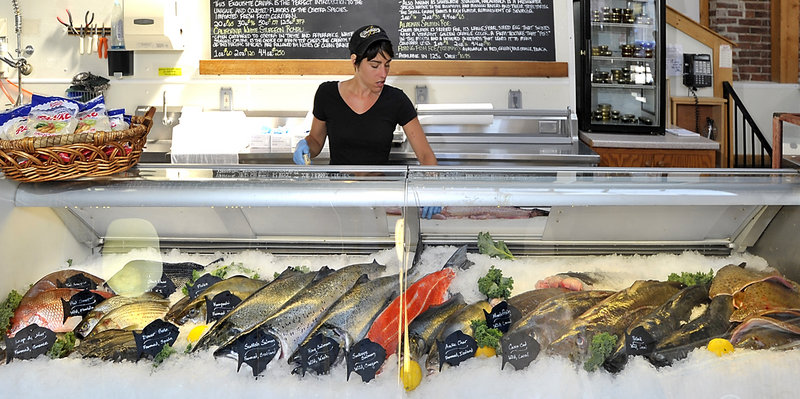
It’s not a bad day, given the state of the Gulf of Maine’s fisheries, but all told there are just 25,000 pounds of product on the floor. Bert Jongerden, the exchange’s general manager, estimates that the publicly owned facility is on target for 5 million to 6 million pounds in 2012, ahead of the record low of 3.8 million pounds in 2010, but a fraction of the 20 million pounds it took in annually in the 1990s.
“We’re limping along, but you can’t plan adequately because the science is so speculative,” Jongerden said, alluding to the federal fisheries service’s recent radical downward revisions of the health of New England’s cod populations. “No one has any faith in the science anymore.”
“Everyone’s trying hard to stay in business,” he said of the fishermen who still land their fish in Maine. “They’ve got so much capital investment in this they can’t just bail on it, so they hope the government can get the science straightened out.”
Last month, the National Oceanic and Atmospheric Administration’s Fisheries Service released its annual report on the status of the nation’s fisheries.
The report, released May 15, indicated that management is working and that fish stocks are, in fact, improving.
According to the report, six once-threatened fish populations had been rehabilitated to healthy levels over the previous year, from Bering Sea snow crab to summer flounder on the mid-Atlantic coast.
Over the past 11 years, 27 damaged stocks have been declared rebuilt, leaving just 45 to be restored out of the 219 that the agency tracks.
Unfortunately, 13 of them are in New England, including many of those that once supported Maine’s fishing communities.
The Gulf of Maine cod population remains at 58 percent of what managers consider a healthy level. Georges Bank cod is at 12 percent, and the region’s Atlantic halibut is at just 3 percent.
When the next report comes out, Gulf of Maine cod and haddock will be added to the list of damaged stocks.
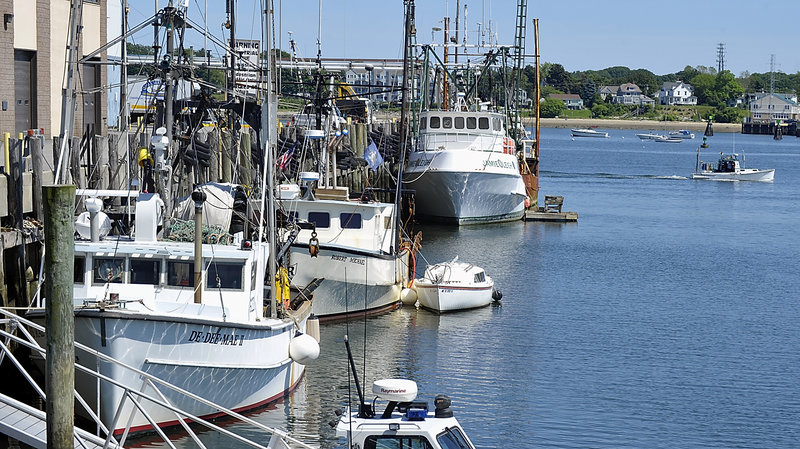
Maine’s fishing fleet has dwindled to a shadow of its former self, with lobster boats replacing trawlers, gillnetters and other vessels in many ports. Many groundfishing vessels have moved from Portland to Massachusetts ports to save on fuel and earn extra income landing lobsters that wind up in their nets — such bycatch may not be sold in Maine.
“The U.S. has among the strongest fishery management regimes in the world, and I very much feel that it’s working,” said John Sackton, publisher of Seafood.com in Lexington, Mass. “New England is the one area that’s problematic. We’re the problem child.”
One reason is that many of New England’s important commercial fish stocks have been exploited for a very long time and were more severely damaged.
“In the Pacific Northwest and Alaska, you have these huge-volume fisheries,” said Maggie Mooney-Seus, a Gloucester, Mass.-based spokeswoman for NOAA Fisheries. “We had these things here in New England, too, but it was 300 years ago.”
“In New England, we are probably dealing with a marine environment that has been highly disturbed from a fishing standpoint for centuries in regards to groundfish,” said Peter Shelley, senior counsel of the Conservation Law Foundation, an organization whose 1991 lawsuit forced the federal government to take measures to stop overfishing and rebuild depleted stocks.
“Cod, haddock and many flounders were hammered close to oblivion, so the starting point for those fish is lower than others.”
Robin Alden, a former Maine marine resources commissioner who’s now executive director of the Stonington-based Penobscot East Resource Center, said, “The groundfish species … got to such a low level it’s unrealistic to think that because you put catch limits into place, you’re going to have a recovery in a couple of years.”
Further complicating matters, depleted New England populations such as cod and flounder live among healthy ones like pollock.
“Most of these species coexist with each other and interact with one another, which makes it hard to assess them and maintain the right fishing mortality targets” for all of them, said Bill Gerencer, a seafood buyer for Massachusetts-based M.F. Foley Co.
Then there’s the likelihood that the climate is changing, possibly altering assumptions about the population levels the Gulf of Maine can support.
“The impact of global warming is basically to take your historic data and throw it out the window,” said Sackton, of Seafood.com. “In New England, we’re at the southern range of some very important species like cod. In my opinion, we no longer know where to set our targets.”
There may be grounds for optimism. Alden expects that the removal of dams on the Penobscot River — and the possible opening of fish passages on the St. Croix — will increase alewives and other forage fish that cod and other species eat.
“This is the start of changes that are happening in the Gulf of Maine that will result in some of the fish coming back,” she said. “We have to learn how to take care of them when they do.”
Staff Writer Colin Woodard can be contacted at 791-6317 or at:
cwoodard@mainetoday.com
Copy the Story Link
Send questions/comments to the editors.

Success. Please wait for the page to reload. If the page does not reload within 5 seconds, please refresh the page.
Enter your email and password to access comments.
Hi, to comment on stories you must . This profile is in addition to your subscription and website login.
Already have a commenting profile? .
Invalid username/password.
Please check your email to confirm and complete your registration.
Only subscribers are eligible to post comments. Please subscribe or login first for digital access. Here’s why.
Use the form below to reset your password. When you've submitted your account email, we will send an email with a reset code.