




Is household garbage a renewable resource?
Should Mainers pay extra on their electric bills to recognize the value of burning trash for power?
Additional Photos

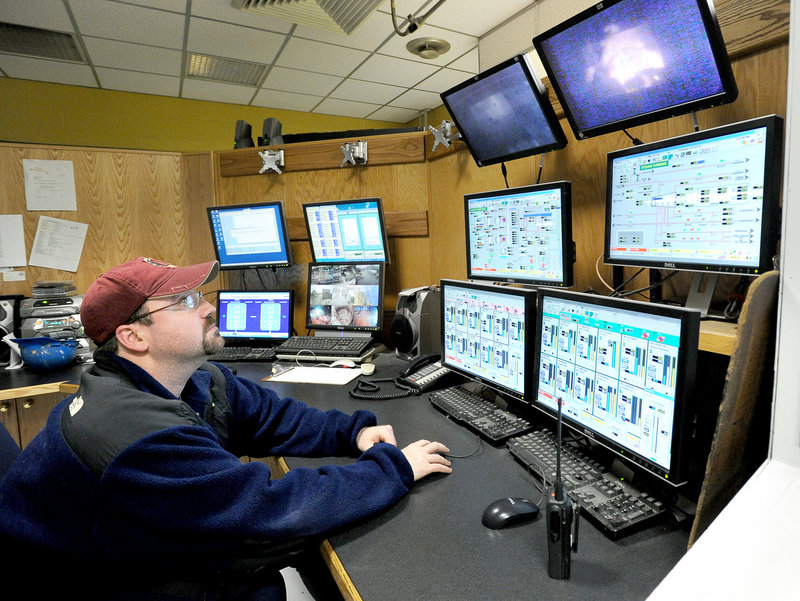
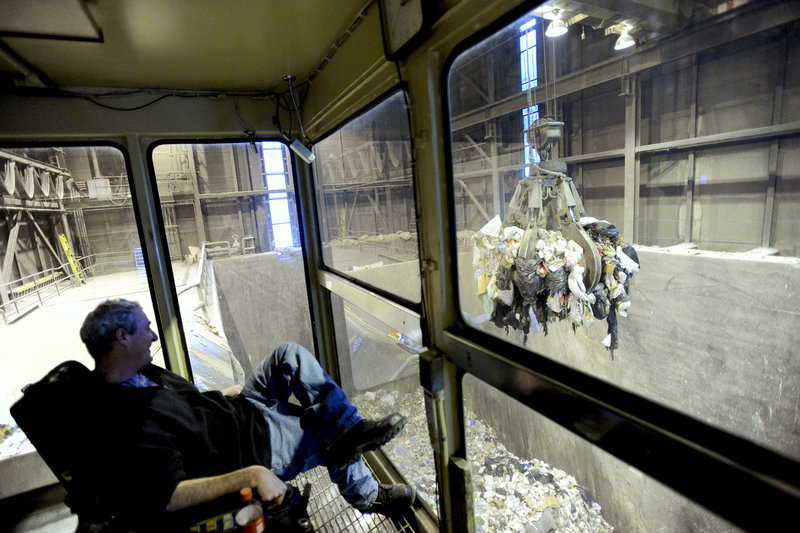
These questions are being considered now by state lawmakers and the administration of Gov. Paul LePage, as part of an examination of financial incentives for the state’s four waste-to-energy plants. These plants handle three-quarters of Maine’s municipal solid waste. They also generate electricity, selling the power at market rates into the regional grid. Together they have a capacity of 71 megawatts and sold 389,400 megawatt-hours last year.
Plant owners could earn more money, however, if the state classified their power as a renewable resource. That’s what a bill that received a public hearing recently before a legislative committee would do.
This proposal has plenty of opposition.
Central Maine Power Co. says it would force customers to buy expensive electricity from the plants, a burden that first sprung from government policies in the 1980s. Environmental groups, meanwhile, don’t want to encourage trash burning to the detriment of recycling.
But this proposed law is about more than electric rates. Although not mentioned in the bill, it’s also about property taxes. That’s because the money that trash plants earn from power sales helps offset the tipping fees that towns — and their residents — pay for disposal.
“Our communities can’t afford an increase in tipping fees,” said Kevin Roche, general manager of the waste-to-energy plant in Portland, Ecomaine.
The Portland plant is owned by 21 regional communities and serves 38 communities from York to Franklin counties. It takes in 165,000 tons of trash a year and pulls out 37,000 tons of recyclables. It also sells 85,000 megawatt-hours of power.
Roche testified in favor of the bill and spoke on behalf of the other three plants — Maine Energy Recovery Co. in Biddeford, Penobscot Energy Recovery Co. in Orrington and Mid-Maine Waste Action Corp. in Auburn.
Ecomaine has an annual budget of $25 million. It had been earning $7 million on power sales, but the drop in wholesale electric rates cut revenue by $3 million in the current contract, Roche said.
“Somehow, we’re going to make that up,” he said.
One way would be to increase recycling volume, and the money that comes from selling the separated materials. But plant operators also see an opportunity based on a conflict between state policies — one that favors waste-to-energy over landfills, and another that offers premium prices for electricity generated from methane gas trapped in landfills.
The details of this conflict are complicated, because of the classifications and rules for different forms of renewable generation. But in general, supporters want to add waste-to-energy plants to a new class that makes them a renewable resource, and require power suppliers to get 3.5 percent of their supply from this source.
This designation would make the power considerably more valuable, because of the premium available to plants that displace fossil fuels in New England. At Ecomaine, for instance, it could be worth $850,000 a year, based on estimates.
Towns see potential benefits, too, and are warning about the consequences of not gaining the renewable stamp of approval.
Greg Lounder is executive director of Municipal Review Committee Inc., a nonprofit group that represents 187 towns from Wiscasset to Aroostook County that take trash to the PERC plant in Orrington. He testified at the public hearing, explaining how a restructured power-contract deal with Bangor Hydro Electric Co. will require disposal rates to rise by 50 percent over the next seven years.
“The largest uncertainty we face in our post-2018 planning process is the manner in which energy policy will impact the value of our electrical power output,” he told the legislative committee.
But Lounder didn’t get any sympathy from David Allen, who represents CMP. Waste plant owners shouldn’t get “special treatment,” he said, at the expense of electric ratepayers.
Allen chronicled how past state policies aimed at stimulating demand for renewable generation have cost customers, when CMP was forced to sign — and later buy out — power contracts that were way above market rates. For instance: Maine Energy in Biddeford has received nearly $1 billion for energy and termination payments. Mid-Maine got nearly $20 million for energy and a restructured contract, and Ecomaine had received $88 million through 2000, when CMP bought out the power contract for $3.8 million.
“If waste-to-energy plants in Maine need even more subsidies than they’ve already received from our customers, they should seek them from some other source,” Allen said.
The proposal also was criticized by the Natural Resources Council of Maine, which called a ratepayer subsidy for waste incineration “a perverse incentive” that conflicts with the state’s top management strategies: Reduce, reuse and recycle. Waste-to-energy plants are cleaner than in the past, said Dylan Voorhees, the group’s clean energy director, but they don’t deserve a subsidy.
The bill also came under fire from long-standing opponents of waste-to-energy plants. They included Biddeford’s mayor, Joanne Twomey, a former legislator who has been trying for years to close Maine Energy, in her city’s downtown.
But the state’s focus clearly isn’t on closing the plants; it’s on examining how they can remain viable into the future.
Part of that answer may be found in a study of the renewable energy issue, done last year at the request of the Legislature by John Kerry, the state’s energy director. A draft report currently is awaiting review at LePage’s office.
Kerry testified at the public hearing that waste-to-energy is recognized as a renewable resource in other states and countries. Maine’s four plants enhance the state’s energy security and economic viability, Kerry said, and his office supports the bill’s concept.
But that support is qualified. Maine plants also burn trash from out of state, and Kerry said he opposes incentives that increase imported trash. He also opposes a special rate that would raise electricity costs for customers.
Kerry said he recognizes that waste plant revenue has been hurt by today’s low natural gas prices, which set the rates for wholesale power in the region.
“These plants are having an economic pinch and they want to gain every conceivable advantage in the marketplace,” Kerry said after the hearing. “The question is, do we put this burden on ratepayers?”
Staff Writer Tux Turkel can be contacted at 791-6462 or at:
tturkel@pressherald.com
Send questions/comments to the editors.

Success. Please wait for the page to reload. If the page does not reload within 5 seconds, please refresh the page.
Enter your email and password to access comments.
Hi, to comment on stories you must . This profile is in addition to your subscription and website login.
Already have a commenting profile? .
Invalid username/password.
Please check your email to confirm and complete your registration.
Only subscribers are eligible to post comments. Please subscribe or login first for digital access. Here’s why.
Use the form below to reset your password. When you've submitted your account email, we will send an email with a reset code.