



The photographs of Ruth Sylmor in a joint show at Addison Woolley Gallery in Portland have the smooth texture of a Paris I remember — or think I remember. They bolster my regard for the city and contribute to the nostalgia I feel for what, in my eyes, it once was.
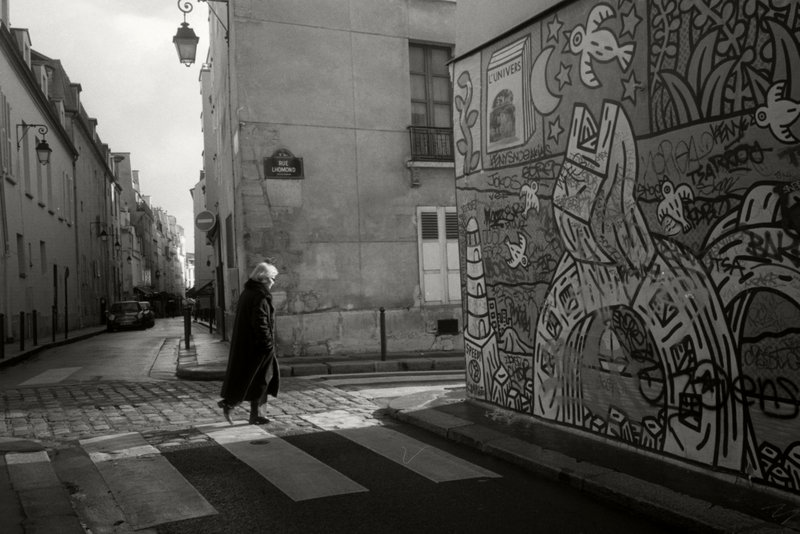
Paris is entitled to change, and Sylmor is entitled to cherish its traditional fabric and allude to the texture I remember. The fragments she has collected in the show’s handsome silver prints contribute a sense of melancholy to the place. Her images are principally of graffiti applied to the surfaces of the great city.
Additional Photos
The prints strike me as a tristful effort on the part of the photographer to hold back the flood of change. In the end, stencils and spray-painted walls cannot replace the texture of a time. Rick and Ilsa will always have Paris; we won’t.
Sylmor has named her portion of the show “Paris Street Art,” and explains that there is an underground art scene fueled by public graffiti and work in stencil (in French, pochoir). Her images beautifully support the existence of such images. Sylmor knows her Paris, and selects work that engages the location.
The stenciled images play to the scene sometimes by odd contradiction, sometimes as an extension of the scene itself. Tightrope walkers amble in places onto which they should not have ventured; dense forms full of windings and turnings have nicely clipped edges to suit the tailored corner on the Rue Rataud.
The location is always appealing and quite generic, but the figures speak more of the professional artist and of cleverness than they do of anger or protest. There is professionally plotted joy, but very little spontaneity.
I say this not in diminution of Sylmor’s accomplishment — it is a very fine show — but to point out that it does not reveal images that record critical moments. No one on these walls calls some noted figure an assassin or equates a political party with excrement. Rather, the images take over public space and through improbabilities charm the public, perhaps even the Parisians.
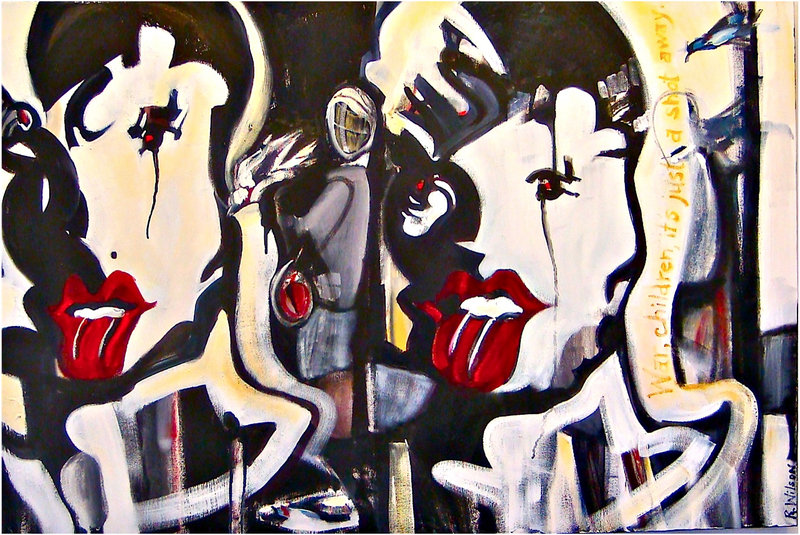
The Addison Woolley event has two parts, and is presented under the full name of “seductive/CONCERTS.” The formidable other part is made up of the paintings of Ronnie Wilson.
The announcement of the show advises that it takes us to an imaginary world where its participants will make us dream, reflect, smile and shiver. I think that the burden of making us shiver rests on Wilson’s shoulders. I don’t think her paintings quite take us to that point, but they do mount an assault on our ability to accept an image that is essentially mystical and derive some rational narrative from it.
The artist may not require this of us. She may be content to have the images prompt us toward independent excursions. Such events are unlikely to occur inside a gallery, so we must anticipate that their intentions in that regard would more fully reveal themselves in other places at other times.
Titles such as “Desire,” “The Fire,” “The Self Is a Failed Strategy” and “One of Our Masks” and supplied quotations from the Buddha may help you. But prime to this is the intensity of the images. Achieved, I think, through great effort, they have an obvious emotional determination.
The mask-like images seem almost carved into the canvas and confront the viewer. You either meet them head-on or turn your head. They want you to define yourself. A large painting of a tattooed gorilla is formidable enough on first impression to make you retreat. After study, it acquires a tenderness that I cannot describe.
GRAHAM WOOD’S work is a pleasure to see. If you’re a bit intrepid, you can arrange to do so at Running with Scissors in Portland this month.
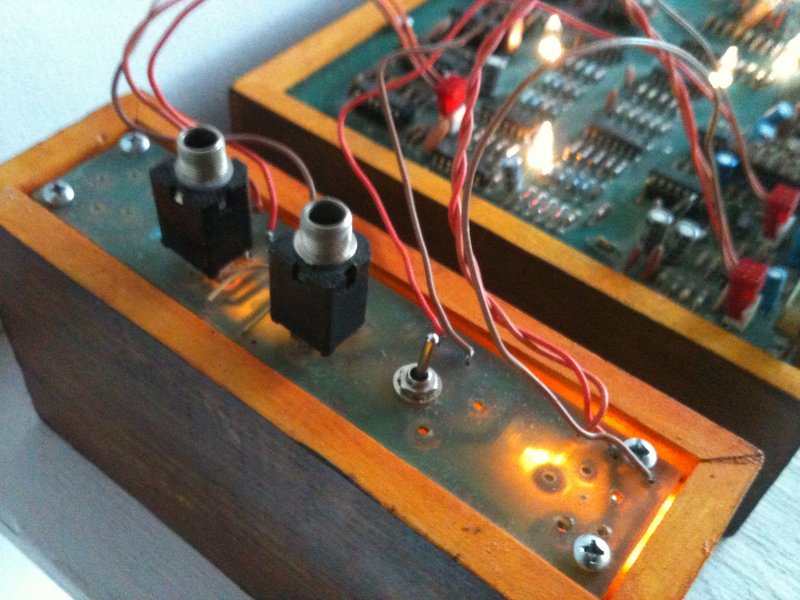
Grouped under the title “Drifting Outdated Electronics,” the show consists of 10 works executed primarily in wood and another four which, through the inclusion of circuit boards, fit the title of the show.
Among the first group, at least half are composed of loose geometric pieces fitted into supporting horizontal tracks that permit the viewer to compose a piece. I didn’t feel challenged to do so, but whoever came before me did a great job. They provide the opportunity to develop mountain ranges, urban skylines and, in a particularly beautiful work titled “Back Cove Trees #2,” I might have created a splendid glade of trees.
“Running with Little Scissors” is an interior-lit, fragile-looking, ephemeral architectural facade. “Light Houses” is a vast community of what I take to be tiny traditional Japanese buildings demurely lighted. The circuit board pieces are small, nicely cased, complex geometric constructions that incorporate tiny electronic components into tiny urban groupings.
This is a show that will charm you.
Philip Isaacson of Lewiston has been writing about the arts for the Maine Sunday Telegram for 46 years. He can be contacted at:
pmisaacson@isaacsonraymond.com
Send questions/comments to the editors.

Success. Please wait for the page to reload. If the page does not reload within 5 seconds, please refresh the page.
Enter your email and password to access comments.
Hi, to comment on stories you must . This profile is in addition to your subscription and website login.
Already have a commenting profile? .
Invalid username/password.
Please check your email to confirm and complete your registration.
Only subscribers are eligible to post comments. Please subscribe or login first for digital access. Here’s why.
Use the form below to reset your password. When you've submitted your account email, we will send an email with a reset code.